
CDL Diabetes Medical Certification: MCSA-5870 Guide
Diabetes does not automatically disqualify a commercial driver. The federal process depends on whether insulin is used, the quality of the driver's monitoring records, complications that could affect safe operation and the certified medical examiner's independent judgment. Preparing the correct form before the DOT examination prevents avoidable delays.
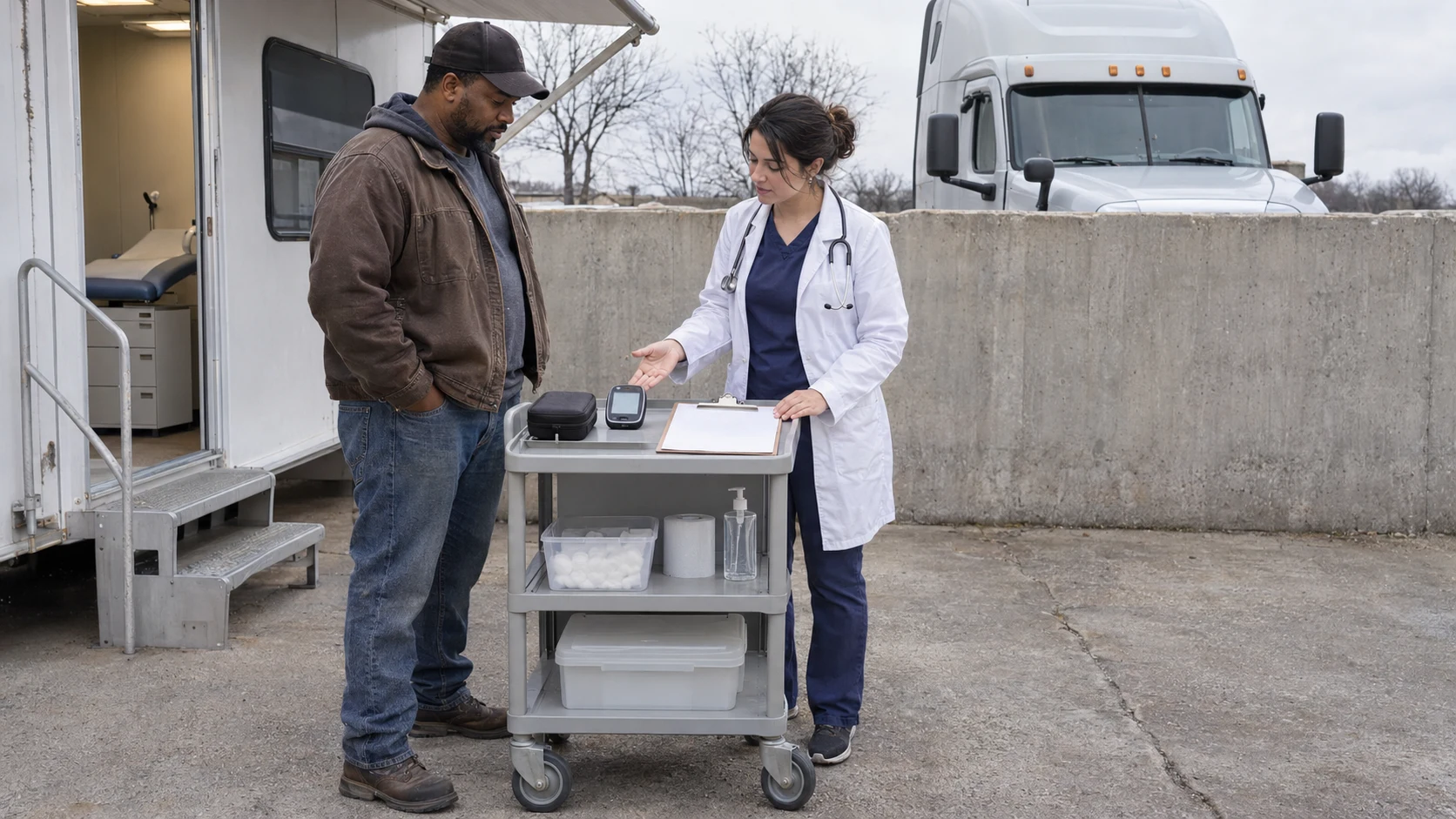
The federal standard for insulin-treated diabetes appears in 49 CFR 391.46. Since the 2018 diabetes rule, an interstate driver who uses insulin no longer applies for a Federal diabetes exemption. Instead, the driver's treating clinician supplies information on MCSA-5870 and a certified medical examiner makes the qualification decision.
This process is about fitness to operate a CMV safely, not about the diagnosis alone. A driver still must meet every other applicable medical standard, hold the correct CDL or commercial learner's permit, complete required entry-level driver training and satisfy the carrier's qualification requirements.
Start by identifying the correct diabetes pathway
| Driver situation | Federal form | Who completes it | Key timing |
|---|---|---|---|
| Diabetes treated with insulin | MCSA-5870 is required | Treating clinician who manages and prescribes insulin | Medical examination must begin within 45 days after the clinician signs |
| Diabetes not treated with insulin | MCSA-5872 is optional | Treating healthcare provider, when the medical examiner requests it | No special 45-day rule in §391.46; follow the examiner's instructions |
The treating clinician and the certified medical examiner have different jobs. For an insulin-treated driver, the treating clinician is the healthcare professional authorized by State licensing rules who manages and prescribes the insulin. That clinician reports the treatment history, monitoring, complications and stability. The examiner listed on FMCSA's National Registry decides whether the driver is physically qualified.
Do not ask a primary-care office to sign MCSA-5870 if that professional does not manage and prescribe the insulin. Likewise, a treating clinician's signature is not a Medical Examiner's Certificate. Review ProntoCDL's medical-card guide for the separate MCSA-5876 and electronic reporting process.
What MCSA-5870 documents
The current MCSA-5870 page links to the official Insulin-Treated Diabetes Mellitus Assessment Form. The form asks the treating clinician to address:
- when insulin use began and whether the regimen is stable;
- whether at least three months of electronic glucose-monitoring records exist and were reviewed;
- how often monitoring occurs and whether it follows the prescribed treatment plan;
- severe hypoglycemic episodes during the preceding three months;
- HbA1C testing, including the most recent result when available;
- diabetic complications, hospitalizations and end-organ effects; and
- the required attestation concerning stable insulin treatment and proper control.
The form contains sensitive medical information. Keep it under the control of authorized people, send it through the method the clinic and examiner specify, and avoid placing it in an ordinary driver-document binder that may be shown during unrelated roadside contacts.
Use the 45-day window correctly
The examiner must receive the signed MCSA-5870 and begin the federal examination no later than 45 calendar days after the treating clinician signs it. The safest sequence is to schedule both appointments first, then place the treating-clinician visit close enough to the examination that rescheduling will not consume the entire window.
- Confirm the professional who manages and prescribes the insulin.
- Download the current MCSA-5870 rather than relying on an old saved copy.
- Arrange access to the electronic glucose records before the clinician visit.
- Ask the clinician's office how the completed form will be transferred.
- Verify that the certified medical examiner received every page before examination day.
- If the form becomes older than 45 days before the examination begins, obtain a newly completed form.
The 45-day period is not a certificate duration and does not add time to an expiring medical card. A driver should plan around the existing MCSA-5876 expiration date because the Handbook states that the certificate expires at midnight on the date shown and has no grace period.
Prepare the three months of electronic records
For certification up to the maximum period, §391.46 requires at least the preceding three months of blood-glucose self-monitoring records while the driver is treated with insulin. The readings must come from an electronic glucometer that stores every reading, records its date and time and permits electronic downloading. The driver provides a printout or the device itself to the treating clinician during the required evaluation.
A handwritten log can help the driver explain meals, illness, schedule changes or symptoms, but it does not replace the required device-generated record. Before the appointment, confirm that the meter's clock is accurate, data can be downloaded and the clinician can receive the export. Do not delete an unusual reading; accurate context is more useful than an incomplete record.
If the driver does not yet have three months of compliant electronic records, the rule permits the medical examiner—using discretion—to issue a certificate for no more than three months. After the driver supplies three months of compliant records and the clinician completes a new MCSA-5870, the examiner may issue a certificate for the remaining qualification period, up to the regulatory maximum.
Certification length and the medical examiner's decision
An insulin-treated driver who qualifies under §391.46 may receive MCSA-5876 for no more than 12 months. That is a maximum, not a promised term. The examiner may choose a shorter period when closer monitoring is appropriate or may find the driver not qualified when the regulatory requirements are not met.
The examiner considers MCSA-5870 but uses independent medical judgment. The driver must maintain a stable insulin regimen, properly control the diabetes and be free of complications that might impair safe CMV operation. The examiner also evaluates the other federal systems and standards—vision, cardiovascular status, neurological function, limb function and medication effects among them.
Advanced diabetic retinopathy is a specific bar for an insulin-treated driver: severe non-proliferative diabetic retinopathy or proliferative diabetic retinopathy results in permanent disqualification under §391.46. Other complications are evaluated under the applicable standards. The hearing guide and SPE guide explain separate qualification pathways when those conditions are involved.
Severe hypoglycemia creates an immediate stop-driving duty
Federal rules define a severe hypoglycemic episode as one that requires the assistance of another person or results in loss of consciousness, seizure or coma. When such an episode occurs after certification, the insulin-treated driver is prohibited from operating a CMV.
The driver must report the event to the treating clinician and be evaluated as soon as reasonably practicable. The driving prohibition continues until the clinician:
- determines that the cause of the episode has been addressed;
- determines that the driver is again maintaining a stable insulin regimen and proper control; and
- completes a new MCSA-5870.
The driver retains that new form and provides it to the medical examiner at the next examination. A dispatcher, employer or driver cannot substitute a symptom-free shift for the required clinical evaluation. If an episode affects a trip already in progress, prioritize a safe stop and follow the carrier's emergency and medical-reporting procedures.
Non-insulin-treated diabetes and optional MCSA-5872
The insulin-specific requirements in §391.46 do not apply to diabetes that is not treated with insulin. FMCSA's Handbook says a medical examiner may certify a driver with well-controlled non-insulin-treated diabetes for up to 24 months, but the decision is individualized. A shorter certificate or additional information may be appropriate based on control, symptoms, treatment effects and complications.
MCSA-5872 is optional. It helps the examiner communicate with the treating provider about diagnosis, monitoring and stability; it is not a new mandatory federal gate for every driver with non-insulin-treated diabetes. Follow the examiner's request instead of completing a form that was not asked for.
The examiner may still evaluate complications under another physical standard. Recurrent hypoglycemia can raise loss-of-consciousness concerns; neuropathy or amputation can affect limb and neurological standards; cardiac, kidney, vision or blood-pressure effects may require their own review. A medication being lawful does not automatically prove that the condition and treatment are compatible with safe driving. Use the prescription-medication guide to prepare that discussion.
Renewal planning for an insulin-treated driver
Because the federal maximum is 12 months, an insulin-treated driver should treat medical renewal as an annual operating requirement. Start early enough to resolve a missing data export, delayed specialist report or recently changed treatment plan without letting the current certificate expire.
- Track the MCSA-5876 expiration date separately from the CDL expiration date.
- Keep using the prescribed electronic monitoring system throughout the year.
- Confirm that the meter retains or exports at least the required three-month history.
- Schedule the treating-clinician evaluation before the medical-examiner visit, but inside the 45-day window.
- Bring current medication information, device records and requested specialist reports.
- Verify the new examination result reached the State CDL record using the steps in the NRII medical-card guide.
Motor carriers should also update the driver qualification file with current medical evidence as required. The employer's recordkeeping duty does not replace the driver's responsibility to avoid operating after expiration or after a disqualifying event.
Practical appointment checklist
- Use the current official form and read every driver instruction before the appointment.
- Confirm whether insulin is currently part of the treatment; this determines the federal pathway.
- Identify the correct treating clinician and obtain the signature date.
- Export at least three months of dated, timed electronic readings when insulin is used.
- Bring the glucose meter if the treating clinician or examiner requests it.
- Prepare an accurate medication list and relevant specialist information.
- Disclose severe hypoglycemic episodes and complications completely.
- Make sure the medical examination begins within 45 days after MCSA-5870 is signed.
- Review the new certificate for the correct name, dates and restrictions before leaving.
- Do not drive during a required stop-driving period or after the certificate expires.
For the rest of the qualification process, continue with ProntoCDL's driver application guide, employer road-test guide and CLP supervision guide.
CDL diabetes certification FAQ
Can a person with insulin-treated diabetes qualify to drive an interstate CMV?
Yes. A driver with insulin-treated diabetes may qualify under 49 CFR 391.46 when the treating clinician completes MCSA-5870, the certified medical examiner finds a stable insulin regimen and proper control, the driver meets the other physical standards, and no permanent disqualifying diabetic retinopathy is present.
Is MCSA-5870 the driver’s DOT medical certificate?
No. MCSA-5870 is an assessment completed by the healthcare professional who manages and prescribes the driver’s insulin. The certified medical examiner reviews it and makes the federal qualification decision. If qualified, the examiner issues MCSA-5876.
How long is a signed MCSA-5870 usable for the examination?
The certified medical examiner must receive the completed form and begin the examination no later than 45 calendar days after the treating clinician signs it. A form that ages past that window should be replaced before the examination begins.
How much glucose-monitoring history does an insulin-treated driver need?
For certification up to the 12-month maximum, the driver generally needs at least the preceding three months of readings from an electronic glucometer that stores the readings, records their dates and times, and permits electronic downloading. A shorter certificate of no more than three months may be issued at the medical examiner’s discretion when that history is not yet available.
What must an insulin-treated driver do after a severe hypoglycemic episode?
The driver must stop operating a CMV, report the episode to the treating clinician and be evaluated as soon as reasonably practicable. Driving may resume only after the clinician determines the cause was addressed, confirms a stable regimen and proper control, and completes a new MCSA-5870.
Is MCSA-5872 required for diabetes that is not treated with insulin?
No. FMCSA describes MCSA-5872 as an optional form that a medical examiner may use to obtain information about diagnosis, monitoring and stability. Non-insulin-treated diabetes is evaluated individually under the physical-qualification standards.
Continue with the medical-card guide, medication guide and driver qualification checklist.