
CDL Employment Application Guide: 3-Year & 10-Year History
A commercial-driver application is more than a résumé. Federal rules require a signed record with specific identity, licensing, driving-experience, safety and employment information before a covered driver operates for the carrier.
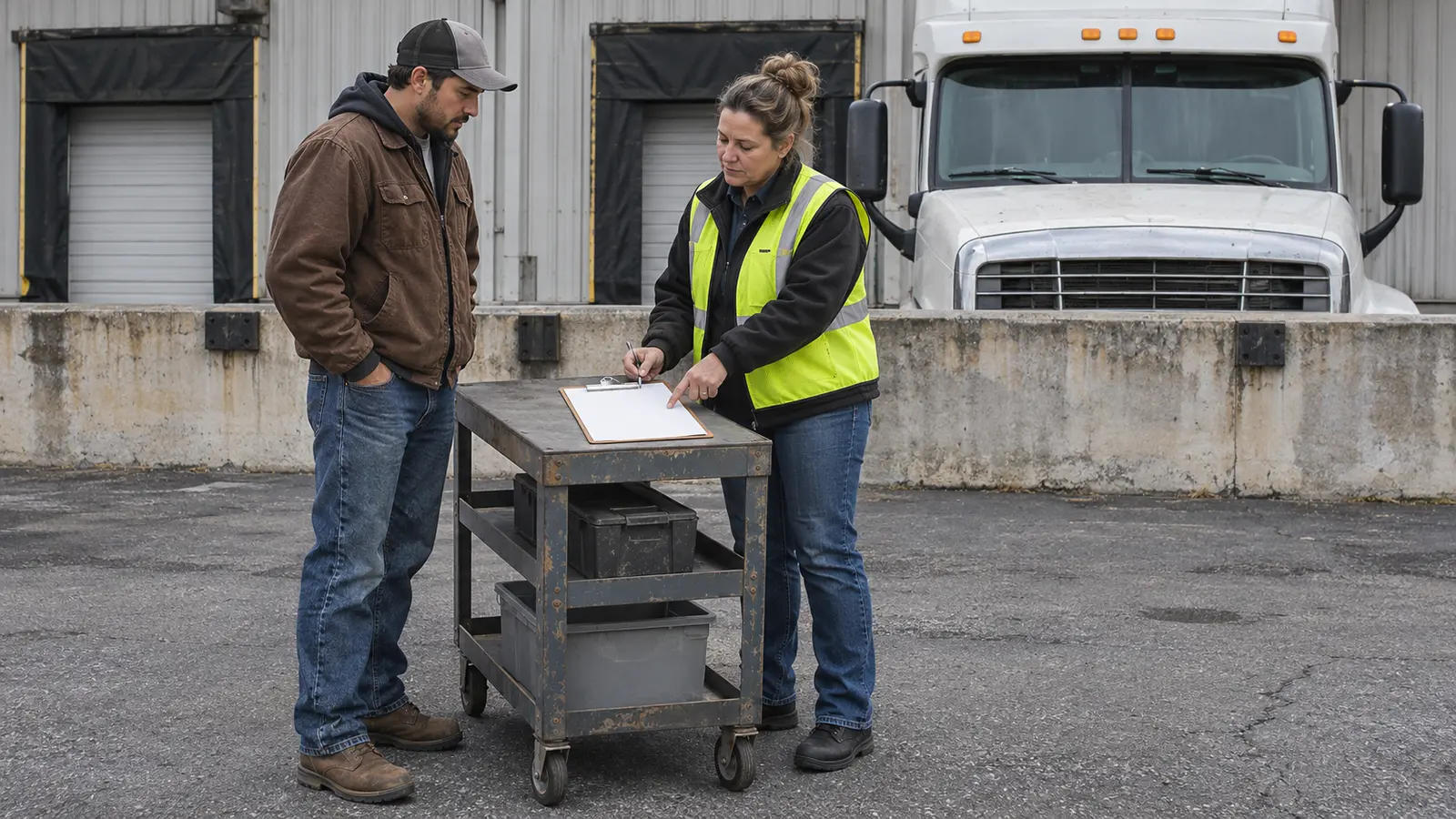
A job application that is acceptable for a warehouse or office position may not satisfy the Federal Motor Carrier Safety Regulations. Under 49 CFR 391.21, a covered driver must complete and sign an application containing specified information before the motor carrier first permits that person to drive a commercial motor vehicle.
FMCSA does not prescribe one mandatory layout. A carrier may use a paper form, electronic workflow or its own tailored application, but the required information cannot disappear because the design changed. This guide helps applicants prepare accurate records and understand how the application connects to the carrier's separate verification duties.
Who needs the regulated application?
The requirement follows the driving function, not just the job title. FMCSA's Motor Carrier Safety Planner explains that covered owner-operators and mechanics who drive CMVs on public roads need an application just as employed company drivers do. A carrier should determine whether an exemption or special provision applies, but it should not assume that “independent contractor,” “occasional driver” or “mechanic” removes Part 391 duties.
The application must be completed and signed before the carrier allows the applicant to drive. Orientation, background screening and a valid CDL do not substitute for that signed record. The application then becomes one of the initial documents in the driver qualification file.
The 3-year and 10-year histories are different
| Lookback | Who it covers | What must be listed |
|---|---|---|
| Previous 3 years | Every applicant subject to the federal application rule | All employers, not only driving employers |
| Previous 7 additional years | An applicant seeking to operate a CMV that requires a CDL | Employers for whom the applicant operated a CMV |
| Total 10-year CMV window | CDL applicants with earlier qualifying CMV work | The 3-year general history plus qualifying CMV-driving employers from years 4–10 |
The extra seven years do not turn the whole application into a ten-year list of every non-driving job. They extend the record for employers where the CDL applicant operated a commercial motor vehicle. Start with the most recent work and move backward month by month so overlaps and gaps are visible.
FMCSA's example application asks applicants to explain gaps longer than one month. School, military service, self-employment, caregiving and unemployment should be described truthfully rather than hidden. “No employer” can be a valid fact; an invented employer is not.
Information the application should capture
Carrier forms vary, but the federal application framework and FMCSA's current example organize the record into practical groups:
- Applicant identity: legal name, address and other identifying information required by the carrier's compliant process.
- Three-year residence history: enough prior addresses to cover the required period without unexplained date gaps.
- License history: licensing jurisdictions and motor-vehicle licenses or permits held during the preceding three years, including identifying numbers, class and expiration.
- Driving experience: equipment class and type, operating dates and approximate experience. Examples include straight trucks, tractor-semitrailers, doubles and tank vehicles.
- Safety disclosures: the required accident record and motor-vehicle convictions or forfeitures for the prior three years, excluding parking violations from the conviction list.
- License actions: requested information about denials, suspensions or revocations.
- Employment history: employer names and addresses, dates, position, reason for leaving and the indicators needed to identify FMCSR-covered and DOT safety-sensitive work.
- Certification: the applicant's dated signature confirming the entries are true and complete to the best of the applicant's knowledge.
A carrier may ask for additional job-related information. Applicants should read the entire form, mark genuinely nonapplicable items clearly and use extra pages when the provided lines are too short. Do not squeeze a ten-year history into three entries by dropping employers.
Build a reliable timeline before applying
Reconstruct the timeline from records rather than memory alone. Useful sources include tax documents, pay statements, electronic logs, prior applications, employment portals, military records and carrier contact lists. For each period, record the month and year, employer's legal name, full mailing address, phone number, position, equipment operated and reason for leaving.
Exactness matters because carrier names change, terminals close and payroll companies may differ from the fleet name on the door. If a former carrier was acquired or dissolved, identify both the historical employer and the best current records contact when known. Keep facts separated from estimates; label an approximate date honestly instead of presenting a guess as certain.
Use a secure carrier channel for sensitive identifiers. Confirm the recipient and web address before transmitting personal information, and avoid sending a completed application to an unverified email account or recruiter profile.
Accidents, convictions and license actions
FMCSA's example form separates accidents from traffic convictions. That distinction matters. A crash does not automatically mean a conviction, and a citation is not necessarily a final conviction. Report each item in the correct section with the requested date, location and outcome.
For the three-year accident record, the example application requests the date, nature of the event, fatalities, injuries and chemical spill information. The conviction section asks for non-parking motor-vehicle convictions and forfeitures, including the violation, jurisdiction and penalty. If the form asks whether a license was denied, suspended or revoked, answer the question directly and attach a short explanation when required.
Supporting documents can prevent confusion: final court dispositions, reinstatement notices and complete crash reports are more useful than an applicant's recollection of an unfinished case.
The application is not the same as the carrier investigation
The applicant supplies the history; the motor carrier performs required inquiries. Under 49 CFR 391.23, the carrier obtains licensing records and investigates former-employer safety performance. Those records do not simply duplicate the application.
The lookback periods also differ. A CDL application can include ten years of qualifying CMV employment, while the standard federal safety-performance-history investigation generally reaches DOT-regulated employers from the preceding three years. ProntoCDL's safety performance history guide explains the 30-day response timeline and the driver's review, correction and rebuttal rights.
After records are assembled, the carrier may also need a road test or accepted equivalent. The FMCSA employer road-test guide explains that separate qualification step.
What the carrier retains
49 CFR 391.51 requires the completed application in the driver qualification file. The general retention period is the duration of employment plus three years after employment ends. That differs from certain annual records that may be removed three years after execution.
The application is a starting document, not proof that every qualification condition has been satisfied. The carrier still manages MVR inquiries, medical status, road-test records and ongoing review. ProntoCDL's annual MVR guide covers the recurring 12-month check after hire.
Application preparation checklist
- Map ten full years by month: identify every job in years 1–3 and every qualifying CMV employer in years 4–10.
- Explain gaps: record school, military service, self-employment or unemployment accurately.
- Verify employer details: legal name, address, phone number and dates.
- List all recent licenses: include every jurisdiction and license or permit held in the prior three years.
- Describe equipment precisely: separate straight truck, tractor-semitrailer, doubles, tank and passenger experience.
- Separate crashes from convictions: use final documents to report the correct category and outcome.
- Read every yes/no question: especially FMCSR coverage, DOT drug/alcohol testing and license actions.
- Sign and date: confirm attachments are referenced and the complete package is delivered securely.
Practical takeaways
- A covered driver must complete and sign the application before operating a CMV for the carrier.
- Carriers may design their own forms, but the federal minimum information must remain.
- All covered applicants list every employer from the prior three years.
- CDL applicants add qualifying CMV-driving employers from the preceding seven additional years.
- The ten-year application history and three-year safety-performance investigation are separate requirements.
- Accident, conviction and license-action disclosures should be reported in their correct categories.
- Owner-operators and mechanics who drive covered CMVs may also need the application.
- The signed application stays in the DQ file through employment and for three years afterward.
CDL employment application FAQ
Does every CDL applicant need to complete a federal driver employment application?
A driver covered by 49 CFR 391.21 must complete and sign an application before the motor carrier first allows that person to drive a CMV. FMCSA guidance says this includes owner-operators and mechanics who operate covered vehicles on public roads, not only people with “driver” in the job title.
Is there one required FMCSA employment application form?
No. FMCSA guidance says carriers may design their own forms, but each form must contain at least the information required by 49 CFR 391.21(b). FMCSA also publishes an example application that carriers may adapt.
What is the difference between the 3-year and 10-year employment histories?
Every covered applicant lists all employers from the preceding three years. A CDL applicant must also identify employers for whom the applicant operated a CMV during the preceding seven additional years, producing a ten-year CMV-driving history.
Does the carrier investigate safety performance for all ten years?
Not under the standard 49 CFR 391.23 safety-performance-history requirement. The application can contain ten years of qualifying CMV employment, while the required former-employer safety-history investigation generally covers the preceding three years. The two lookback periods serve different purposes.
What if the applicant was unemployed or self-employed?
The applicant should account for the period accurately rather than inventing an employer. FMCSA’s example form asks applicants to explain employment gaps longer than one month. A carrier may request supporting details for self-employment, military service, school or unemployment.
How long is the signed application retained?
The employment application becomes part of the driver qualification file. Under 49 CFR 391.51, the carrier retains that file throughout the driver’s employment and for three years afterward.
Ready to organize the full hiring packet? Use the DQ-file checklist, then review the former-employer safety-history process so the application and verification records remain distinct.