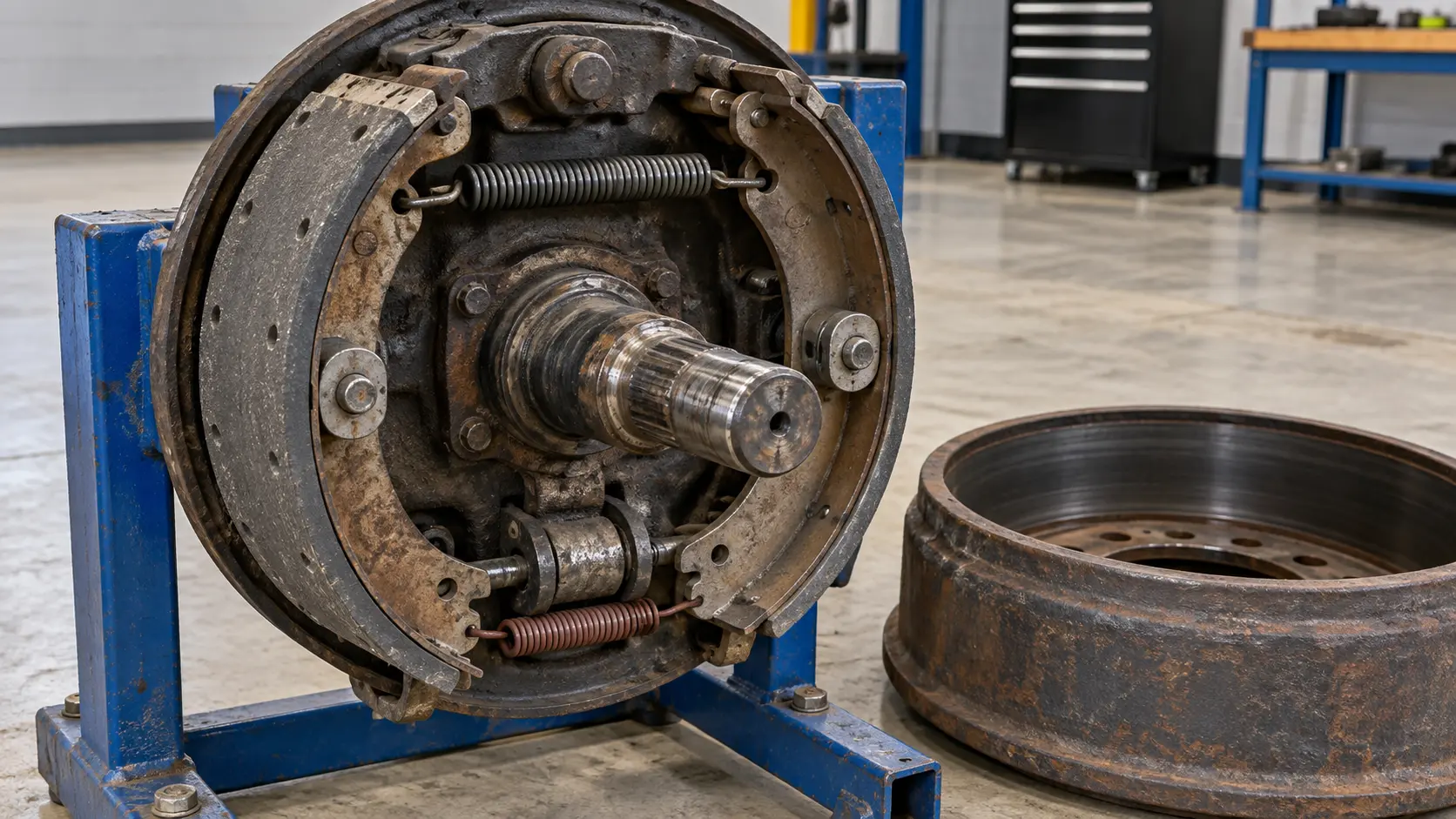
 AIR BRAKES
CDL Brake Drum and Lining Inspection: Cracks, Wear and Contamination
Inspect drums, rotors, linings and pads for cracks, wear, contamination, missing material and heat clues without unsafe disassembly.
Read article → Start FreeStart Practice
Browse practical CDL preparation, ELDT, safety, inspection and trucking-career guidance created for future professional drivers.
AIR BRAKESInspect drums, rotors, linings and pads for cracks, wear, contamination, missing material and heat clues without unsafe disassembly.
Read article →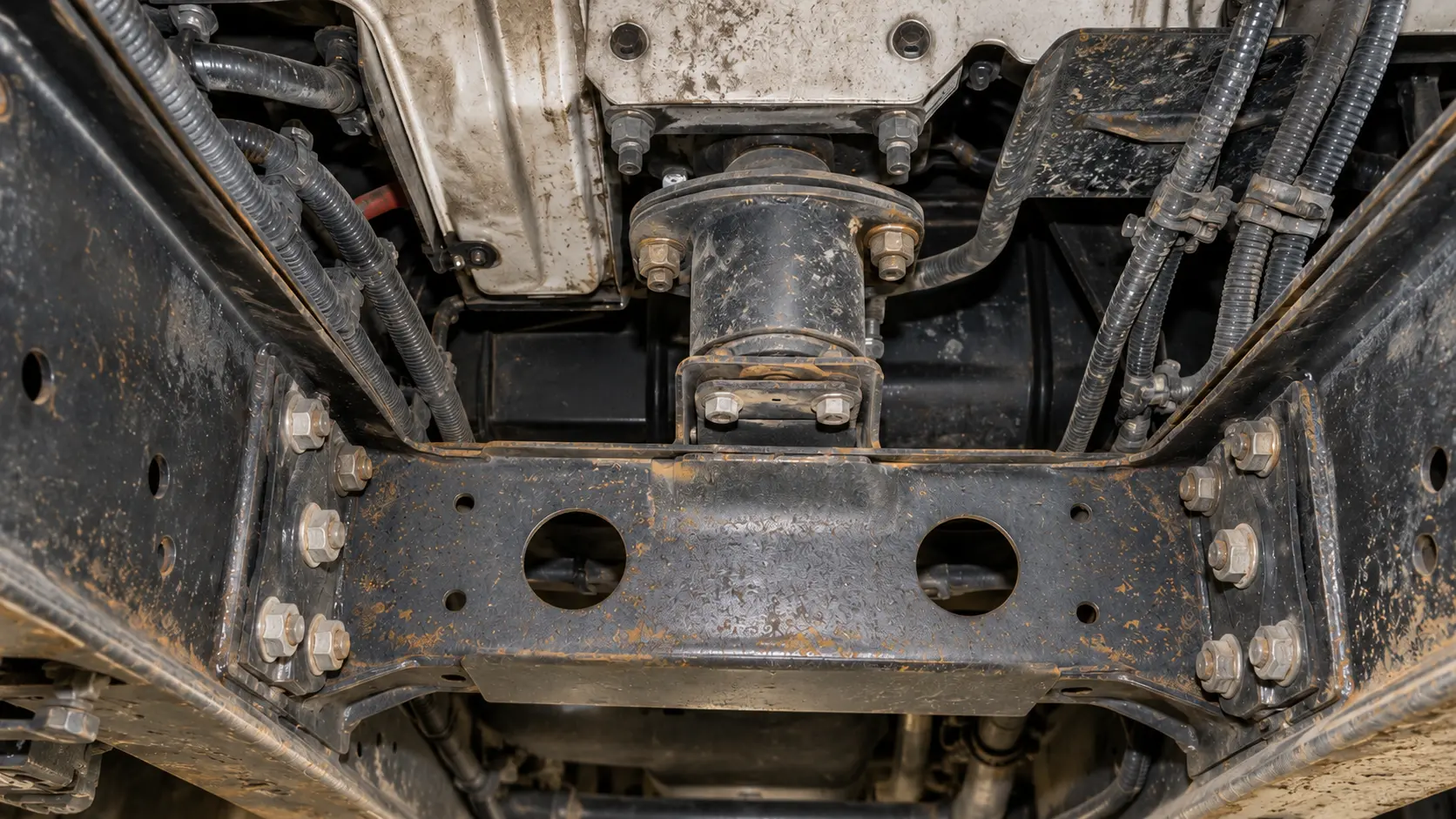 VEHICLE INSPECTION
Inspect frame rails, flanges, crossmembers, fasteners and mounts safely, then report cracks, movement clues and questionable repairs precisely.
Read article →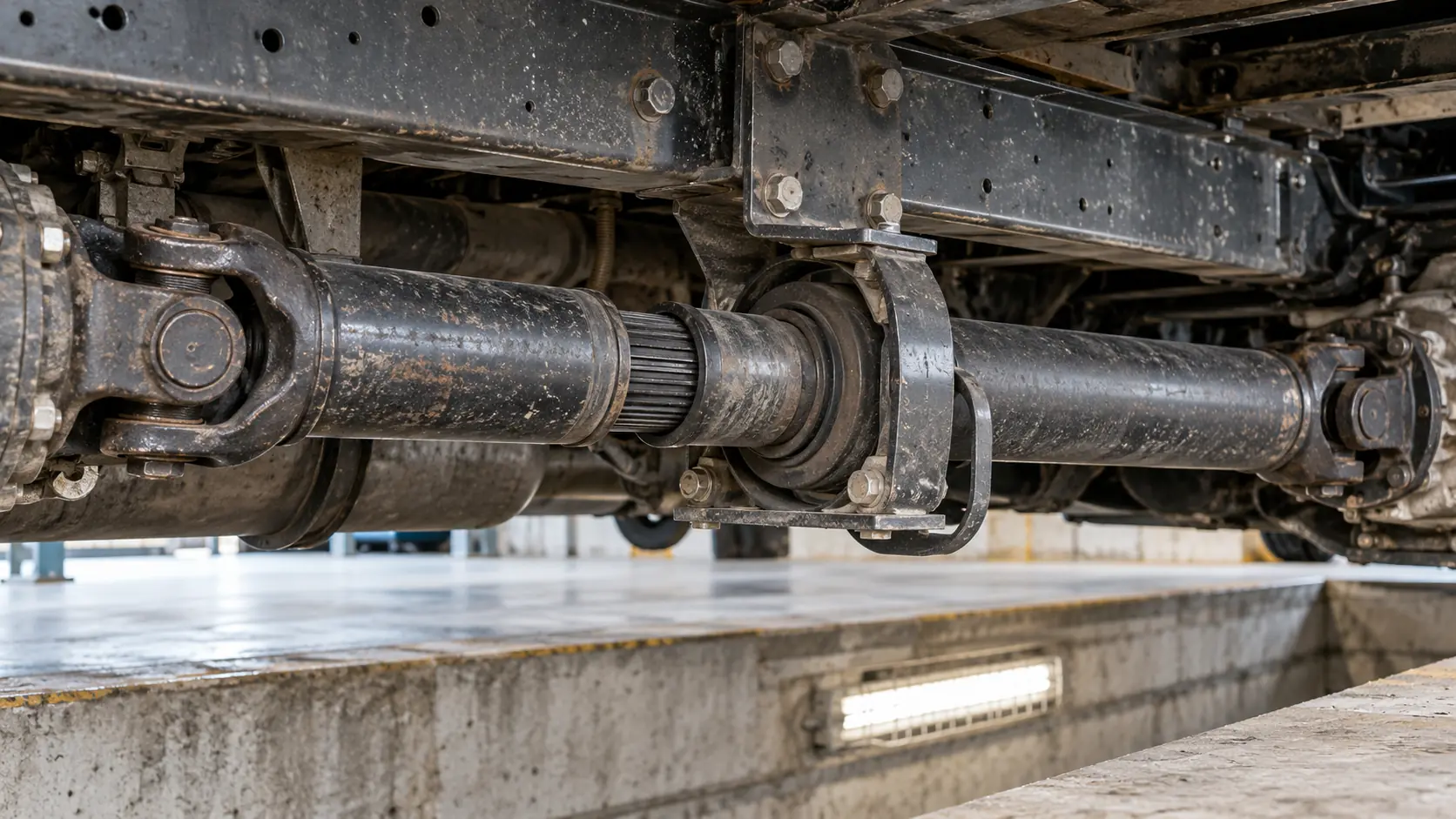 VEHICLE INSPECTION
Inspect driveshaft tubes, U-joints, slip joints, carrier bearings and guards safely, then recognize symptoms that require a stop.
Read article →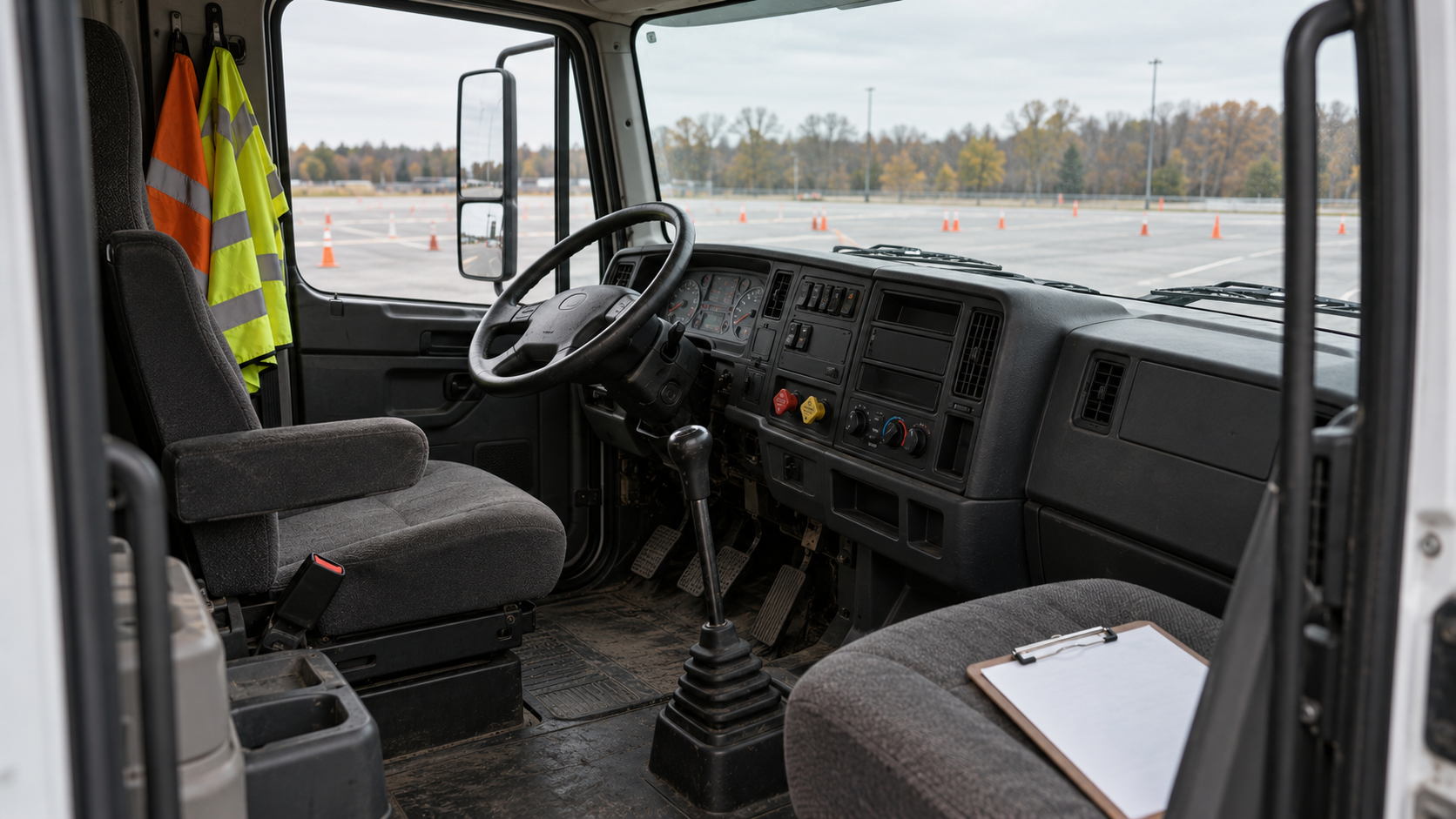 ELDT GUIDE
Learn who may teach ELDT theory, range and public-road training, how credentials and experience differ, and what trainees should verify.
Read article → HOURS OF SERVICE
Compare an optional 34-hour restart with rolling recap hours, protect consecutive off-duty time and avoid cycle-limit mistakes.
Read article → HOURS OF SERVICE
Learn what qualifies, how property and passenger limits change, why only necessary time is allowed and how to document the exception.
Read article →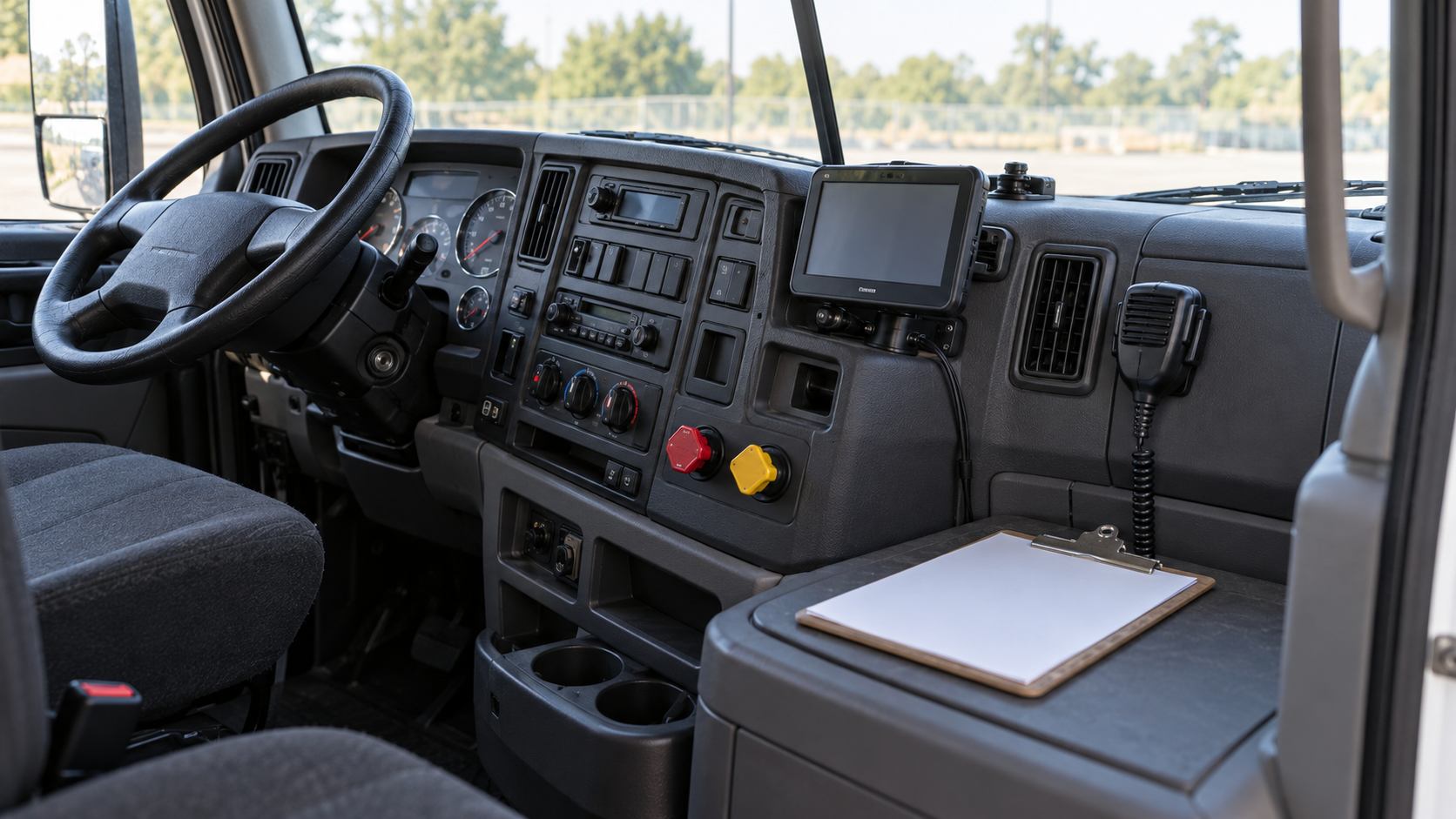 DRIVER RIGHTS
Learn the federal coercion test, how to communicate a regulatory conflict, preserve evidence and use the correct complaint process.
Read article →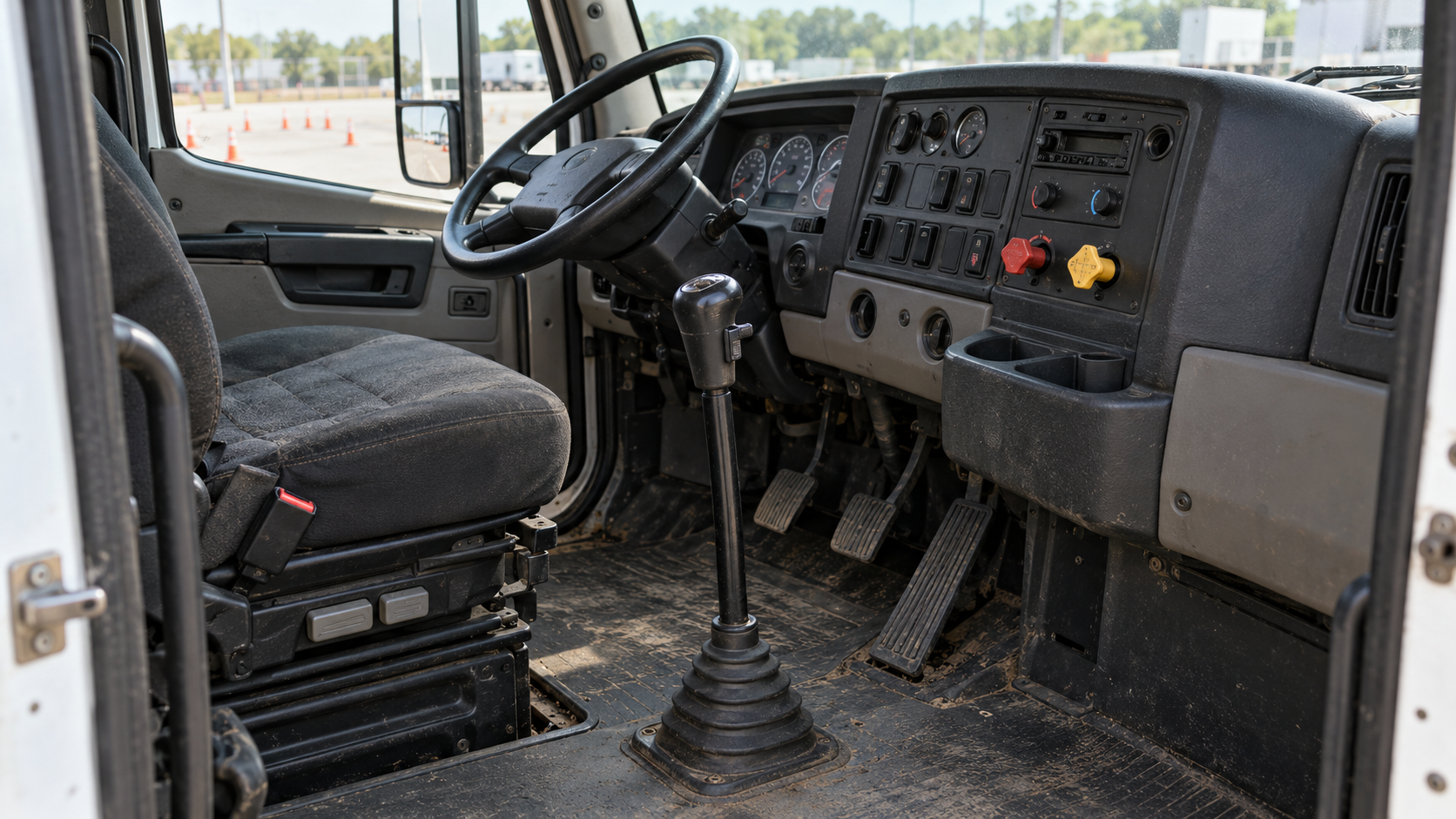 CDL COMPLIANCE
Learn what the standardized CDL restriction codes prohibit, how the test vehicle creates them and how to plan for removal.
Read article →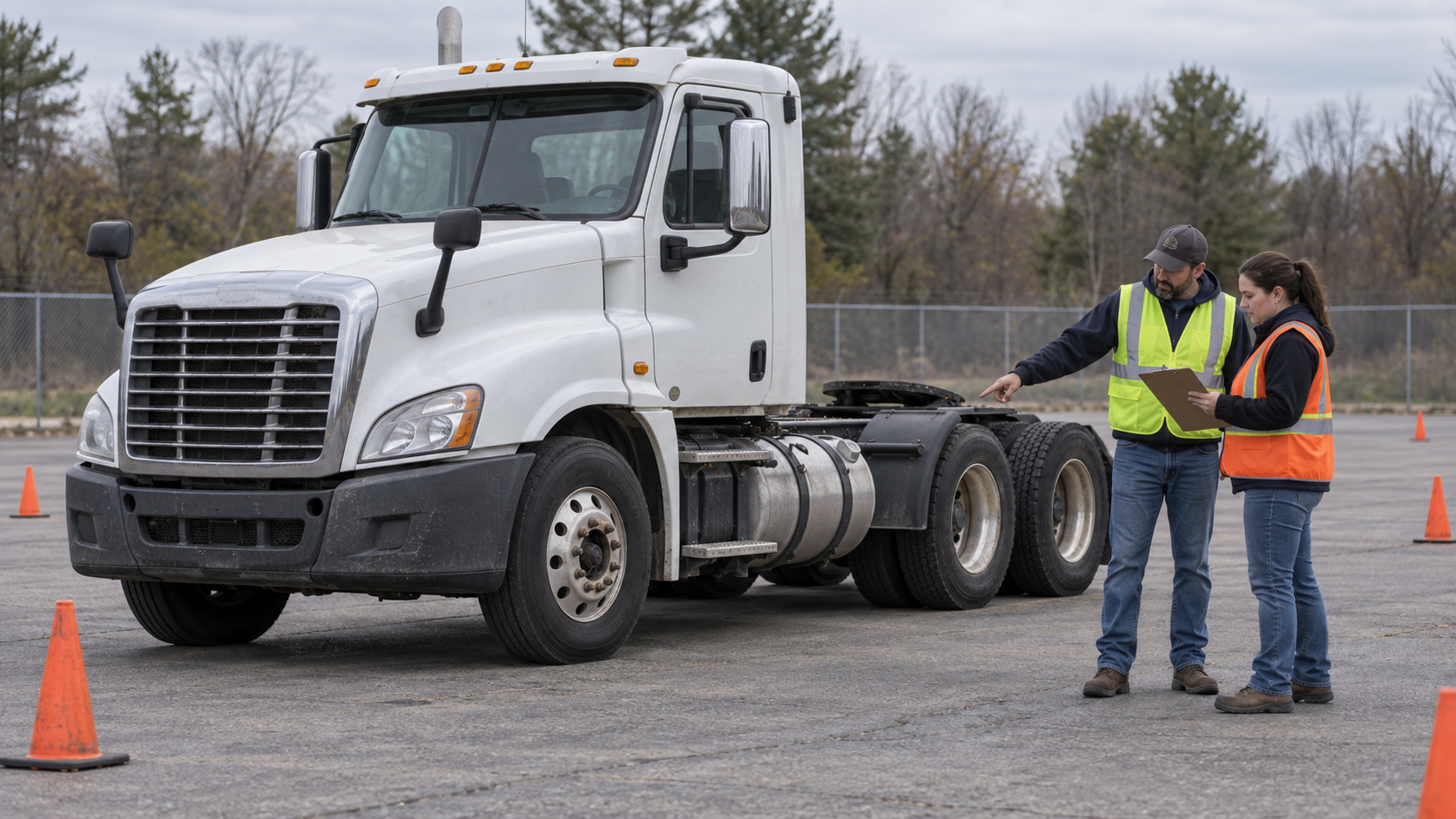 ELDT GUIDE
Understand why federal ELDT uses curriculum, an 80% theory score and documented driving proficiency instead of one universal hour minimum.
Read article → DRIVING SAFETY
Build a repeatable visual-search routine for looking ahead, checking mirrors, recognizing hazard clues and preserving time and escape space.
Read article →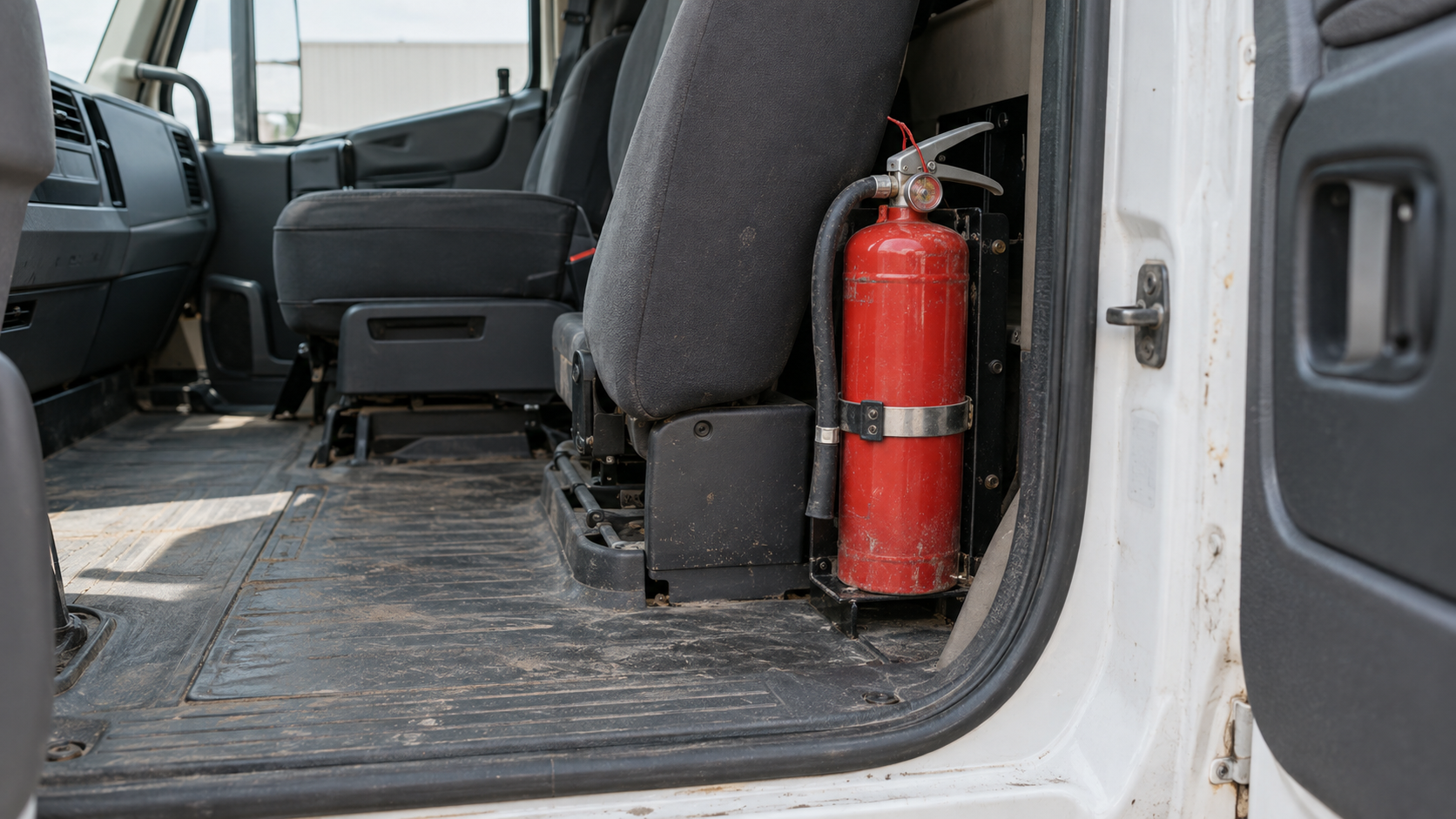 EMERGENCY SAFETY
Learn how to stop, evacuate, call for help, protect the scene and decide whether extinguisher use is safe during a commercial-vehicle fire.
Read article →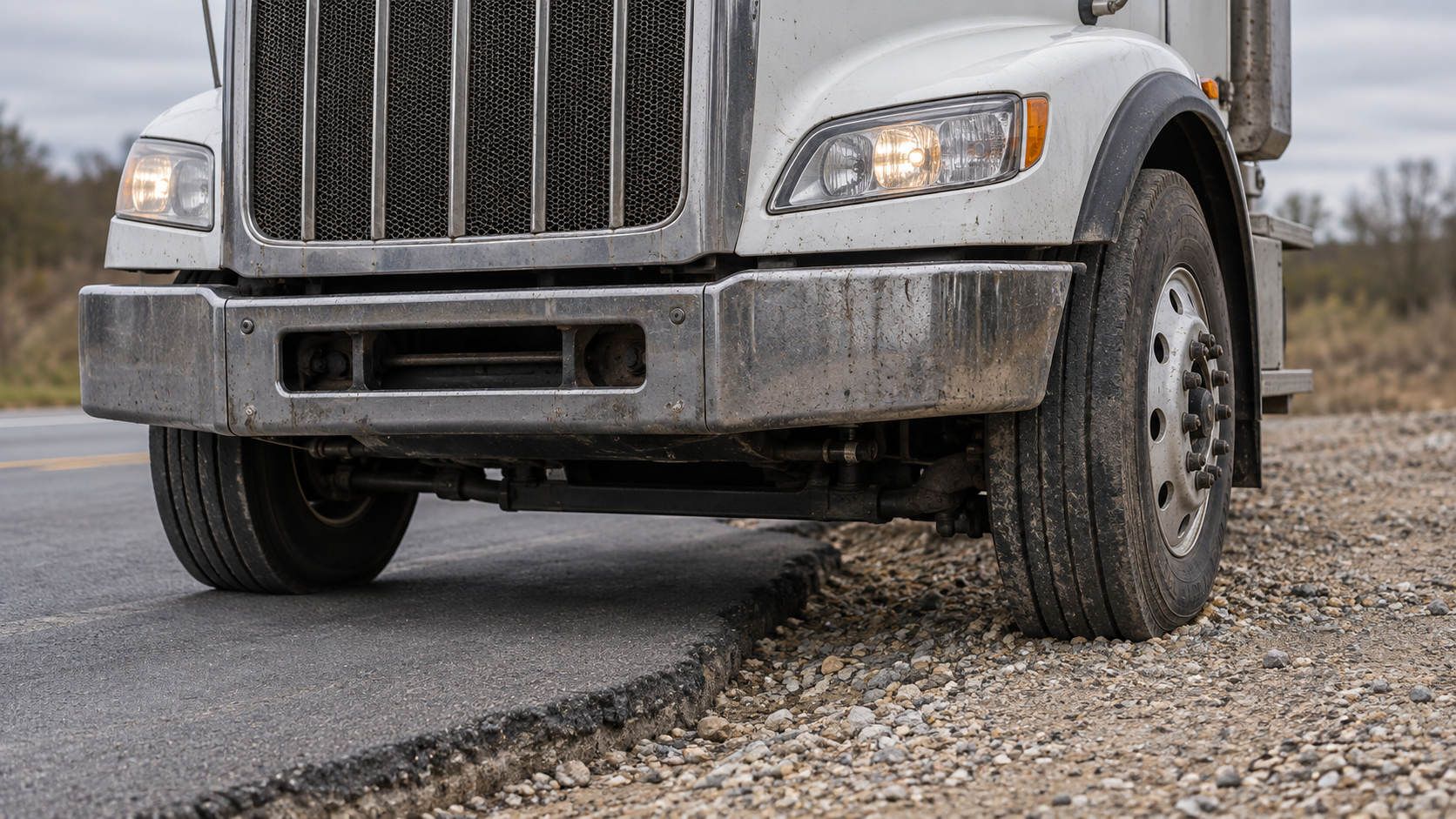 DRIVING SAFETY
Learn how to stabilize a CMV after wheels leave the pavement, slow on the shoulder and use a controlled steer-countersteer reentry.
Read article →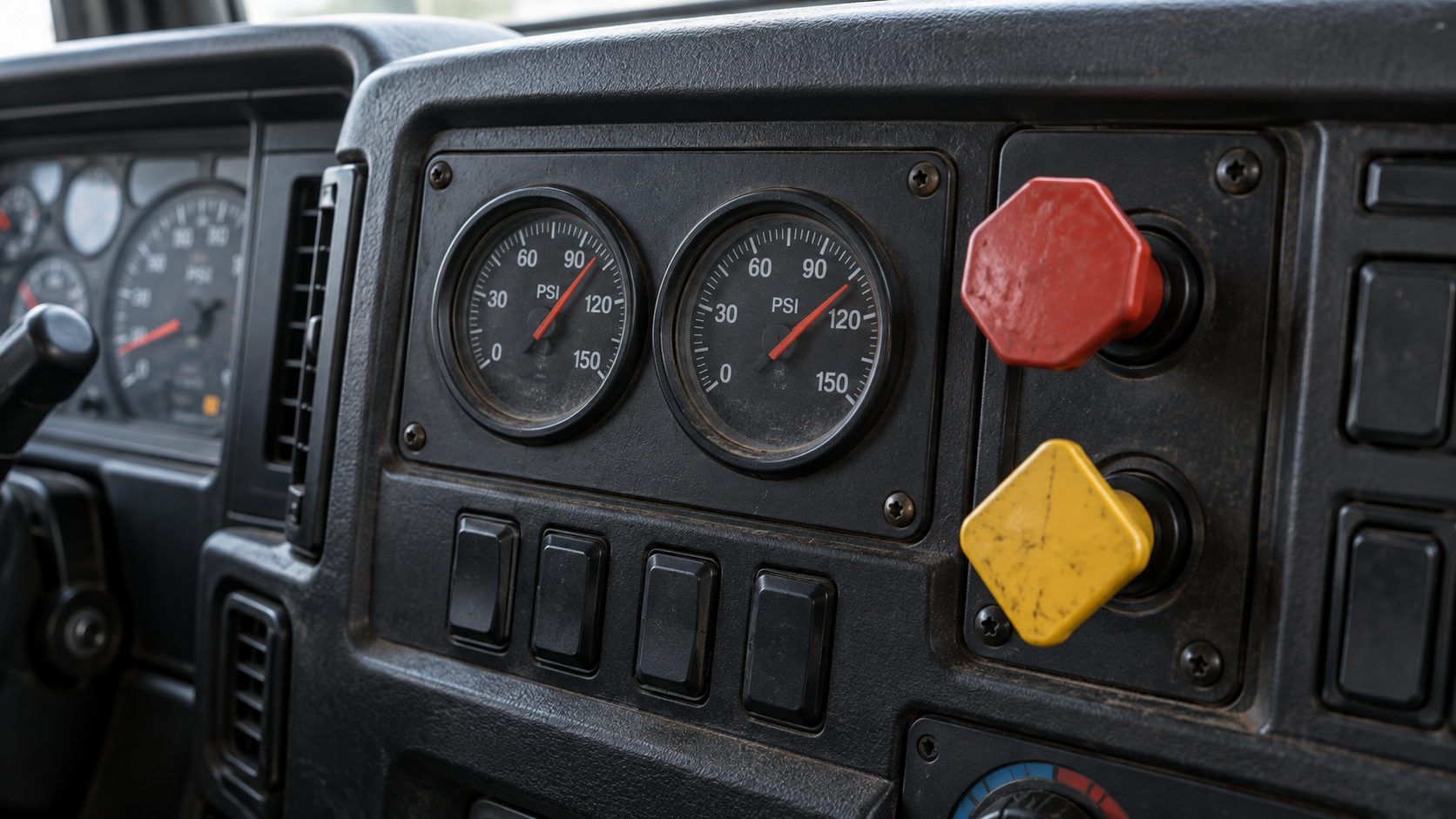 AIR BRAKES
Learn a safe check sequence for static and applied leakage, low-air warning, spring-brake pop-out, pressure buildup, governor operation and brake response.
Read article →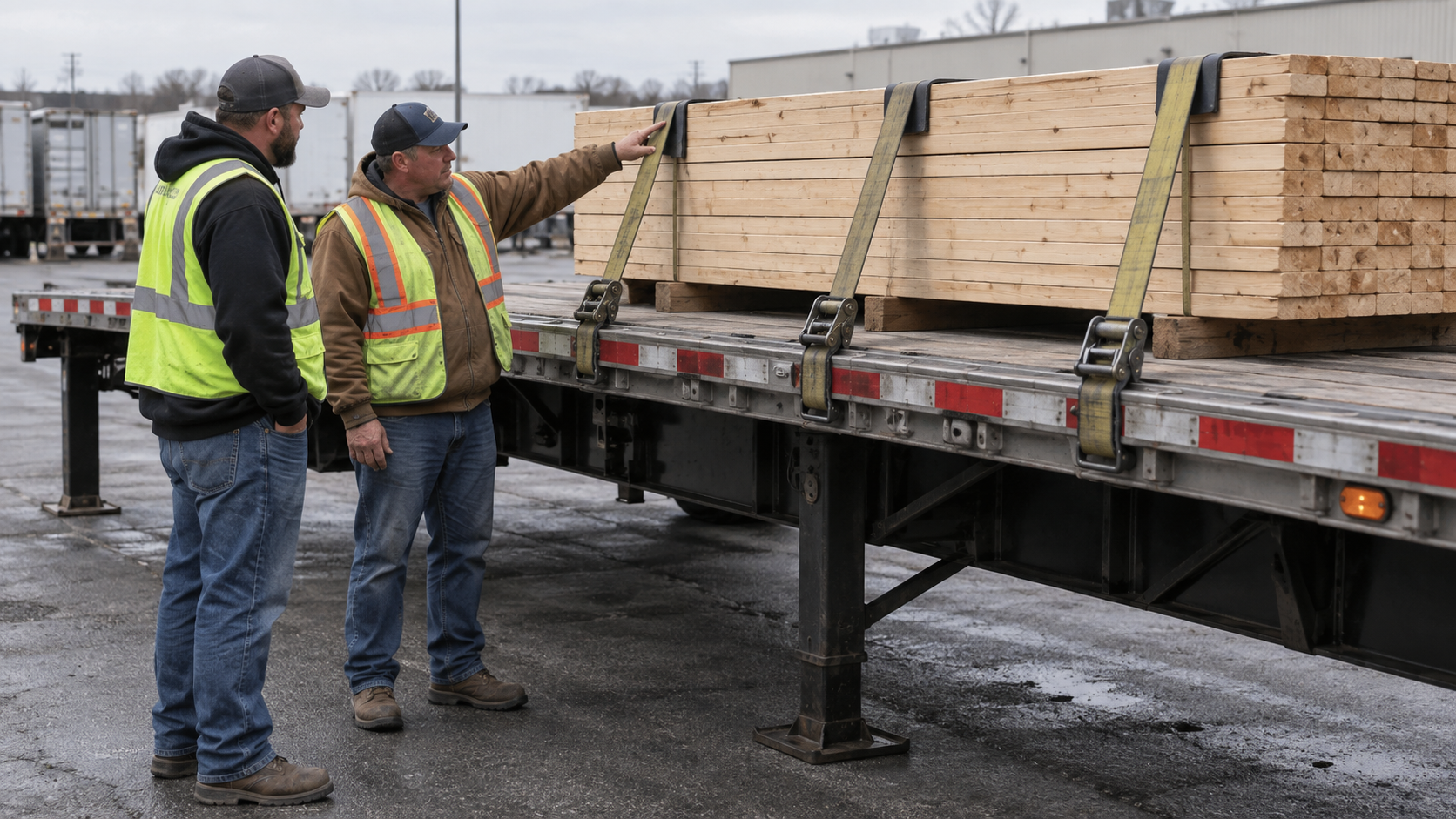 CARGO SAFETY
Learn federal tiedown-count and working-load-limit rules, inspect straps and anchors, use edge protection and avoid common cargo-securement errors.
Read article →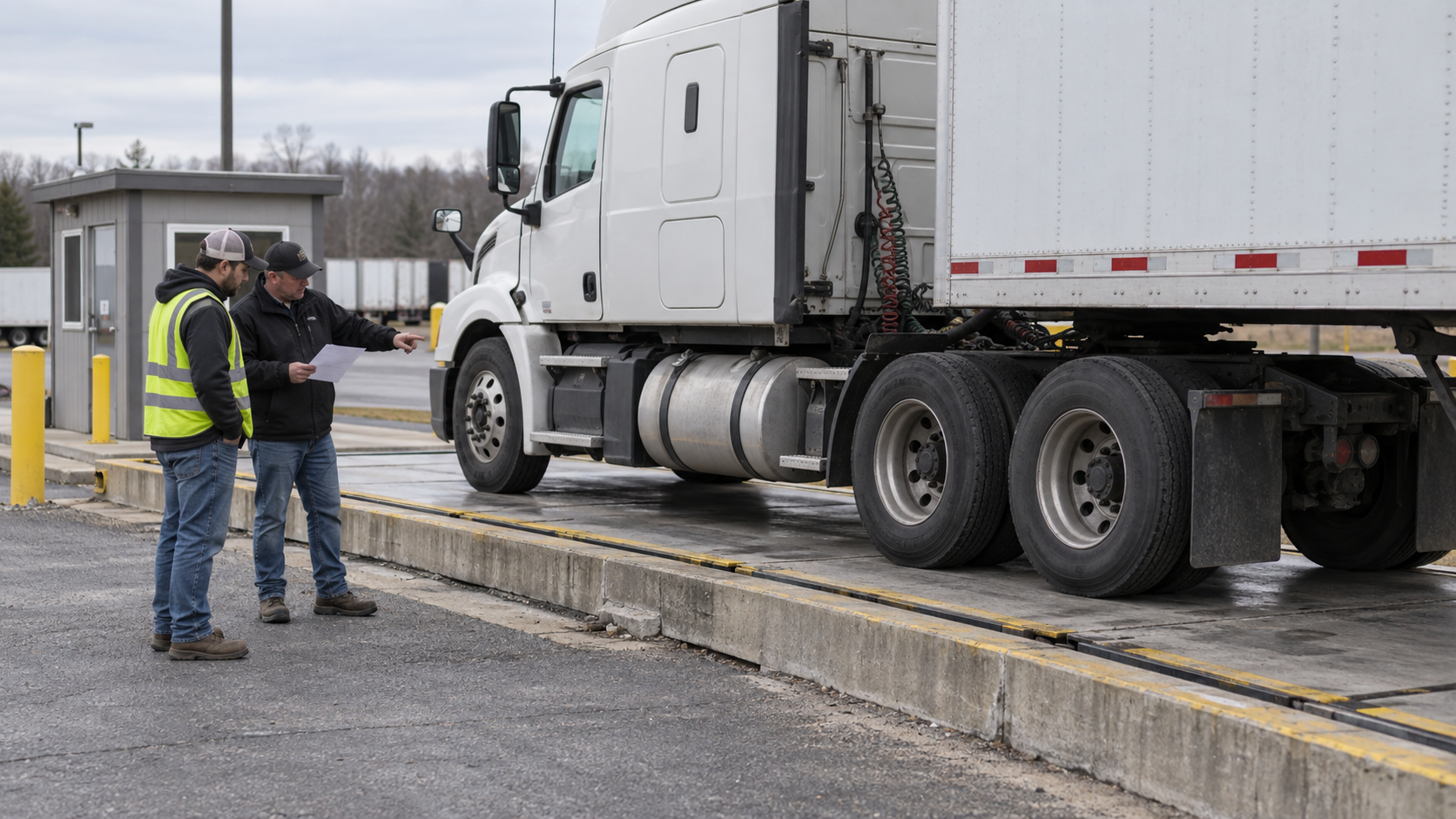 CARGO SAFETY
Read axle-scale tickets, understand federal weight baselines, adjust sliding tandems safely and reweigh before an overloaded axle reaches the road.
Read article →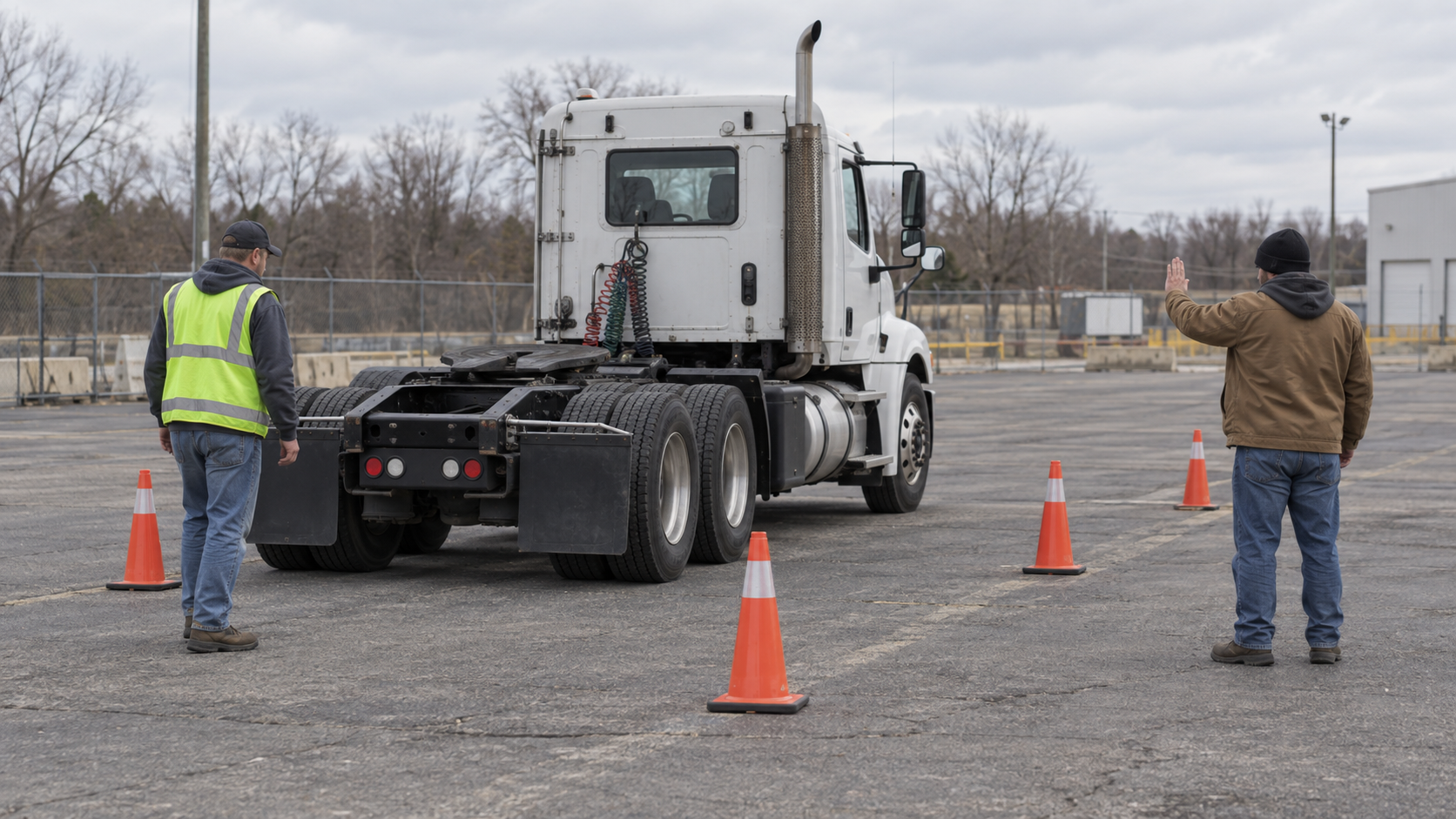 BASIC CONTROL SKILLS
Build a safer backing routine with GOAL, a clear setup, mirror scanning, spotter signals, small corrections, pull-ups and stop decisions.
Read article →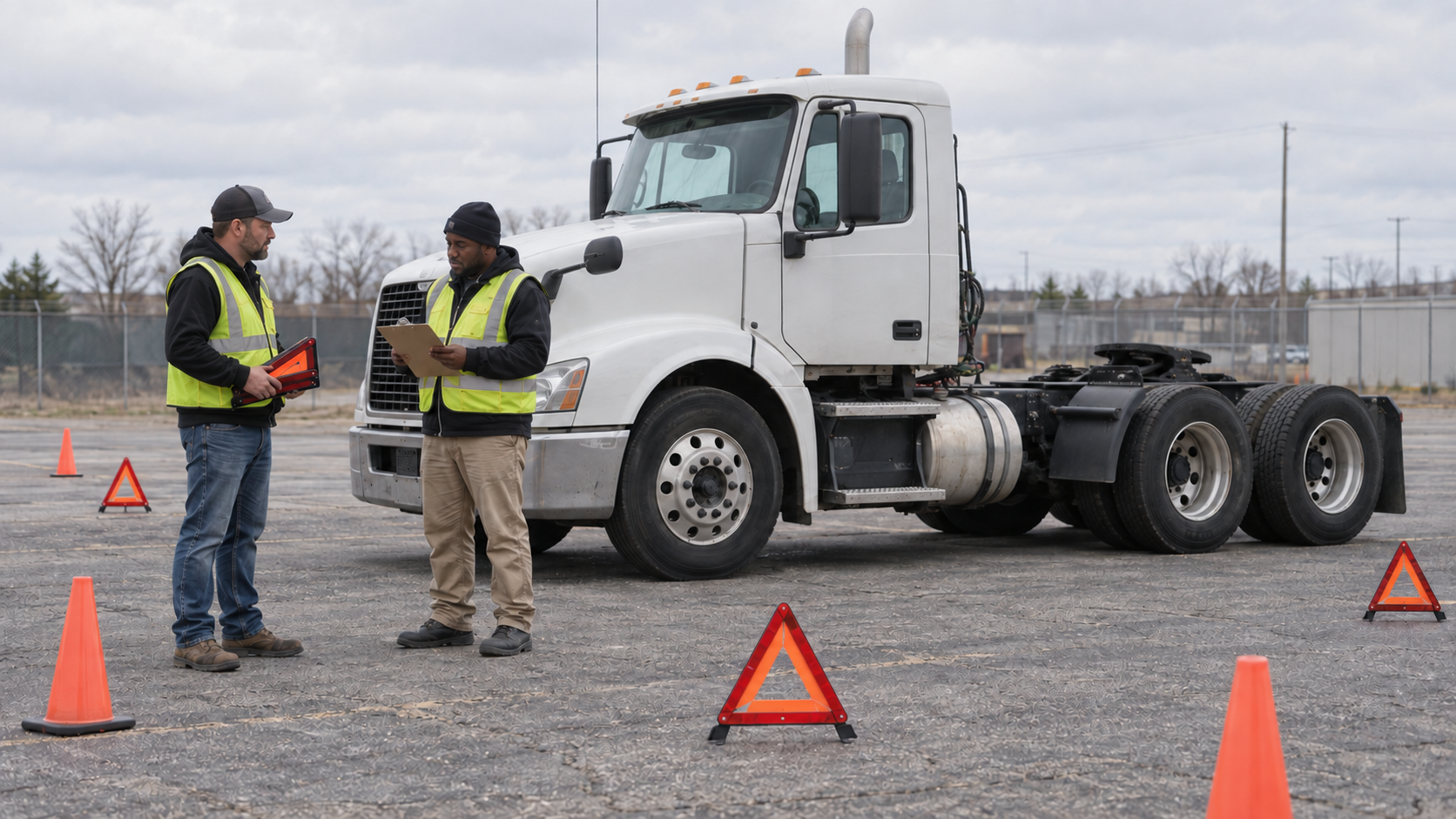 CDL COMPLIANCE
Protect the scene, understand federal post-accident testing triggers, document objective facts, log time correctly and wait for a safe return-to-service decision.
Read article →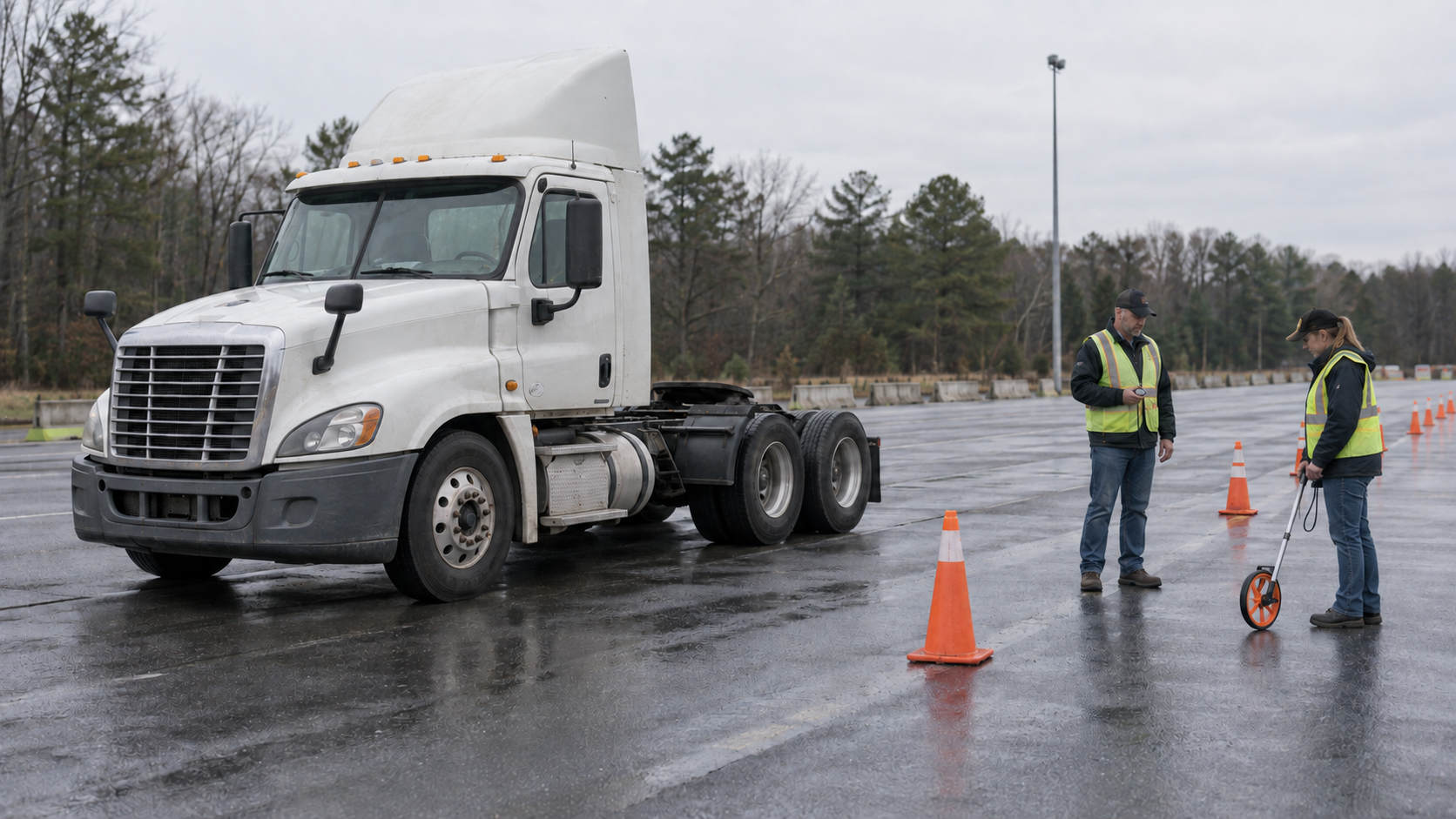 DRIVING SAFETY
Learn to measure a time gap, adjust stopping space for conditions and rebuild a safe interval after traffic cuts in.
Read article →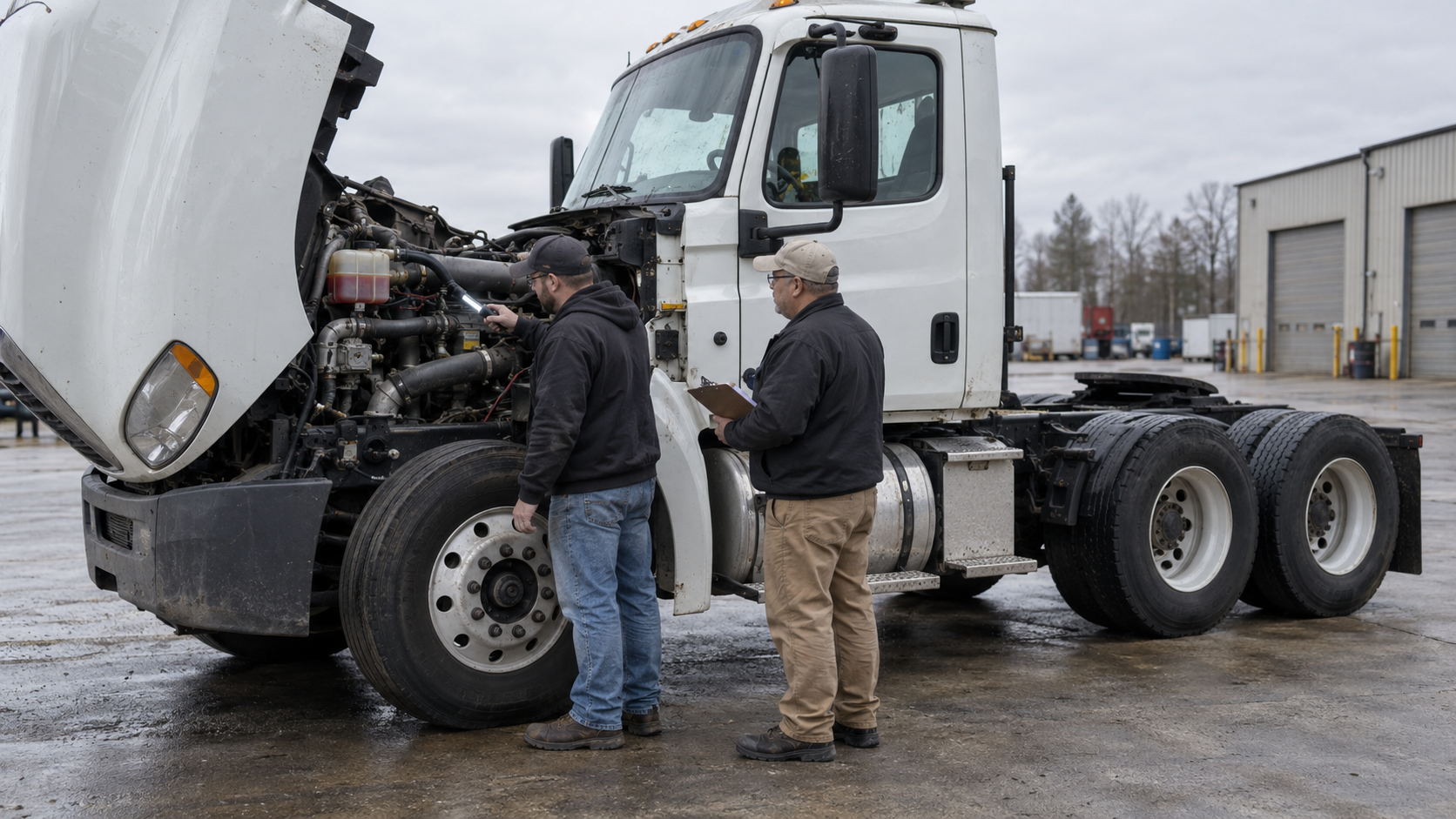 VEHICLE INSPECTION
Build a safe, repeatable engine-compartment check for fluids, belts, hoses, wiring, leaks, driven accessories and mounts.
Read article →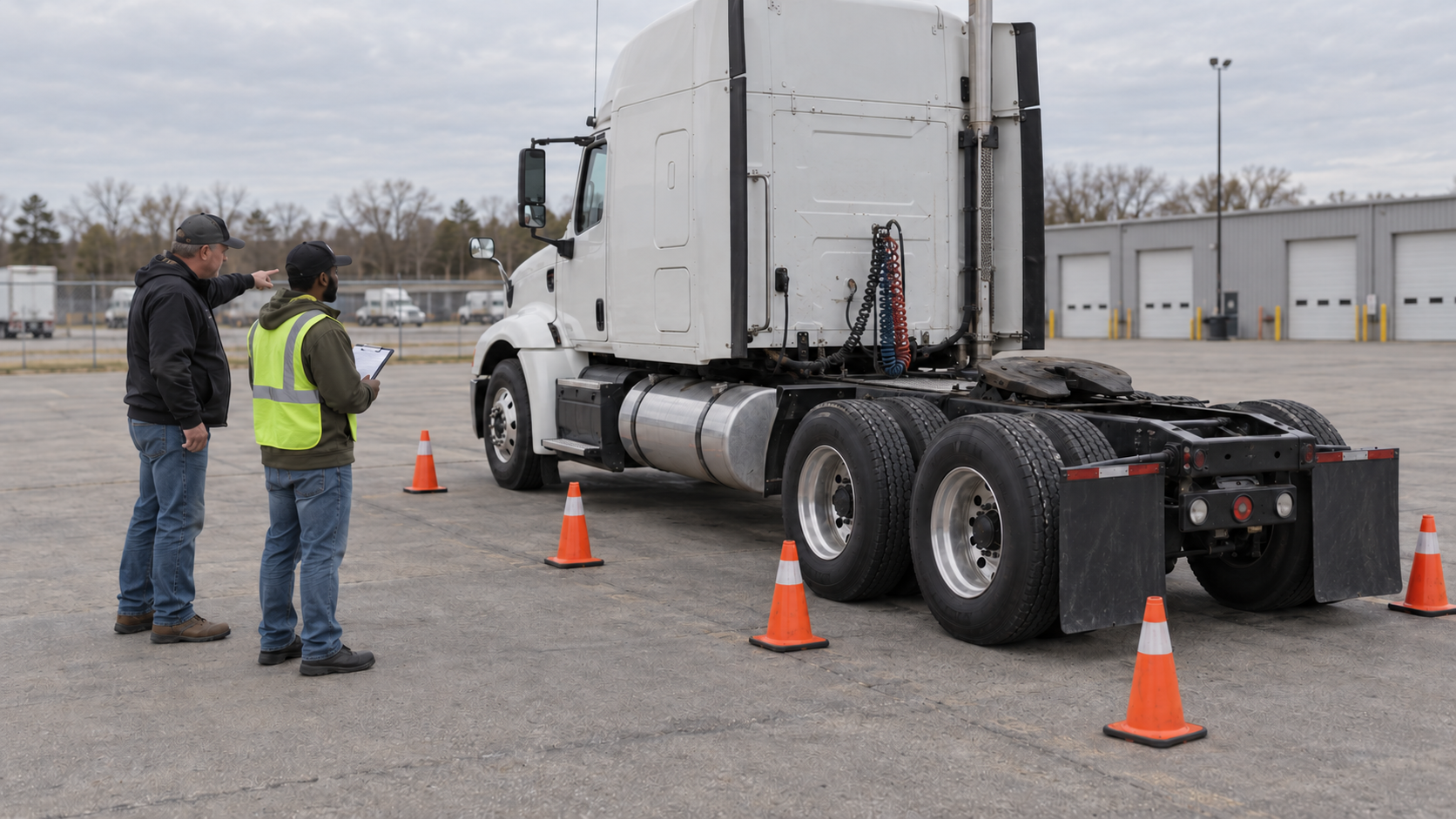 DRIVING SAFETY
Learn a repeatable lane-change routine for mirror checks, signaling, gap selection, trailer tracking, merging and aborting an unsafe move.
Read article →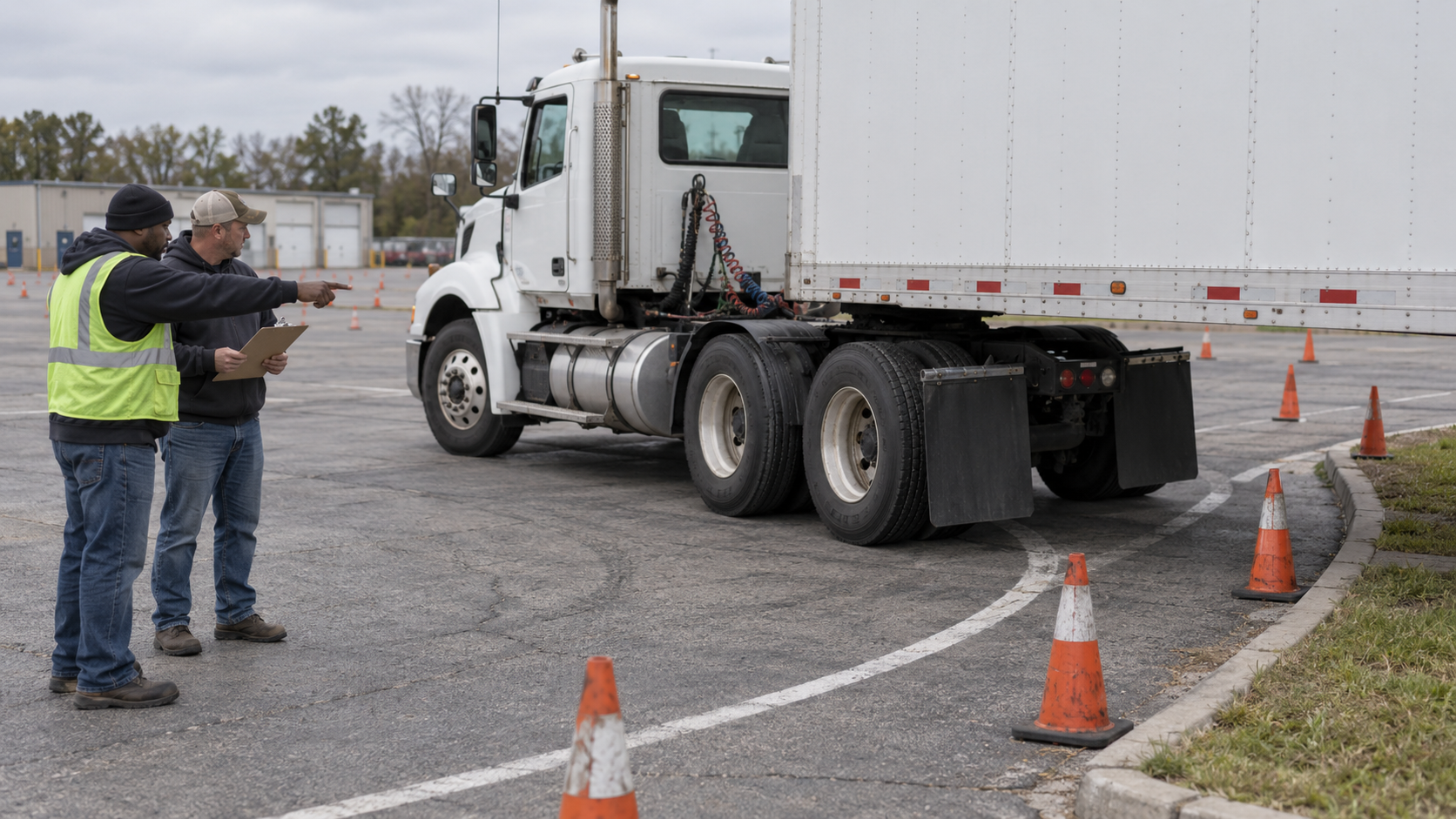 DRIVING SAFETY
Learn to set up safe right turns, manage trailer off-tracking, protect the curb side, use a moving mirror sequence and avoid button-hook turns.
Read article →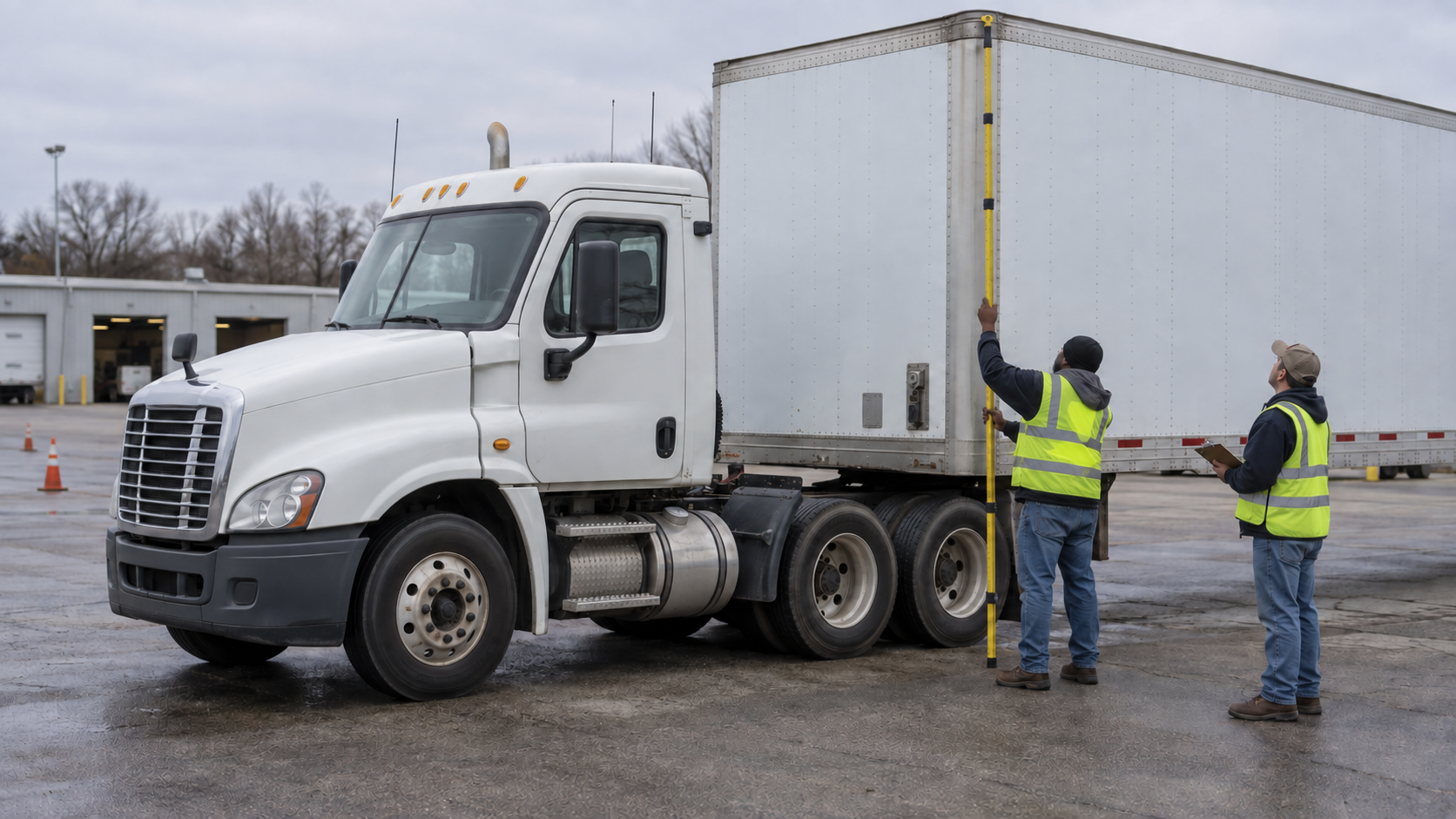 ROUTE SAFETY
Learn to measure vehicle height, verify truck routes, read low-clearance warnings, stop before commitment and recover safely from a wrong route.
Read article →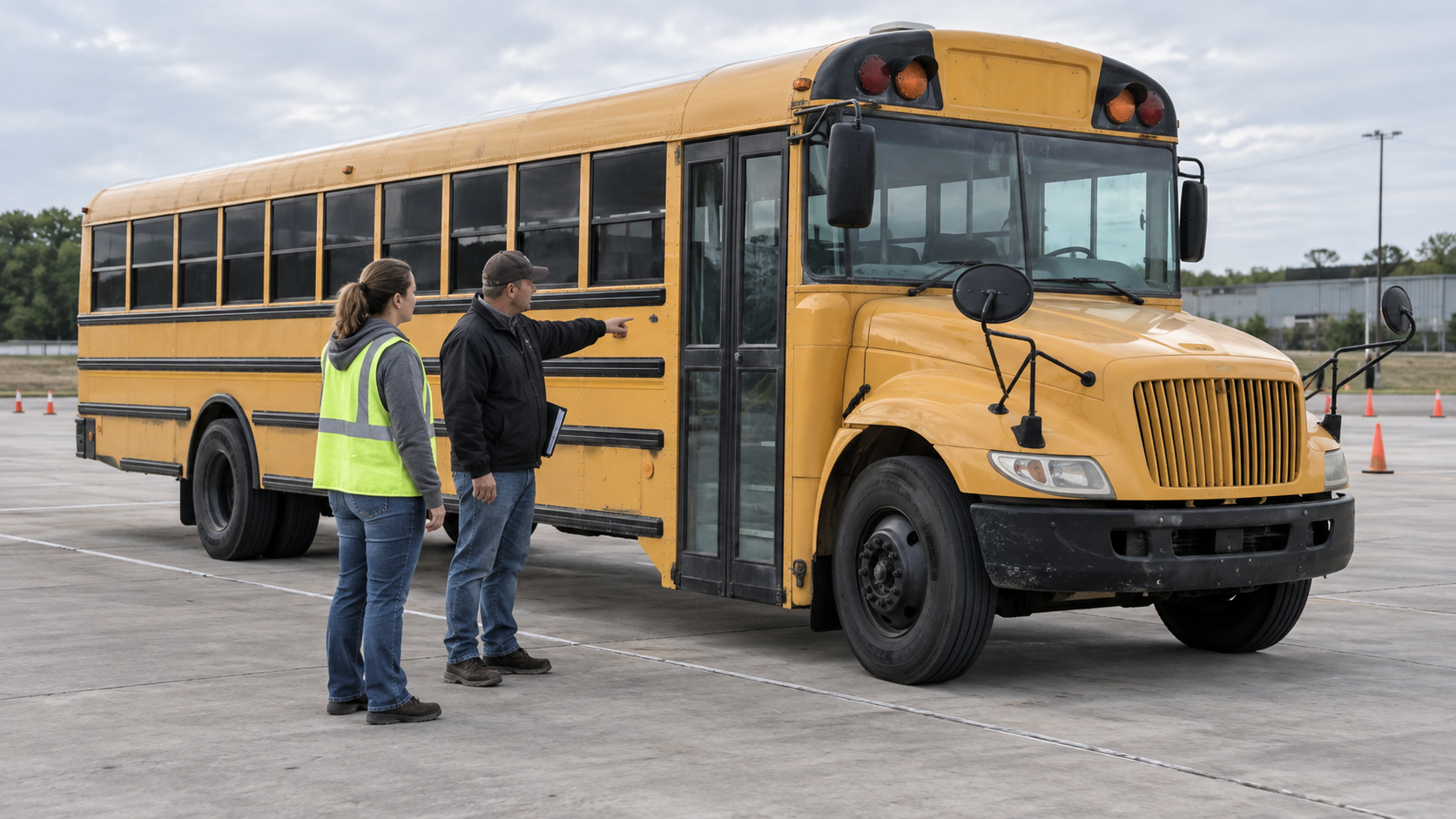 CDL ENDORSEMENTS
Learn how P and S endorsements differ, when ELDT applies, what the tests cover and how the training vehicle can limit your CDL.
Read article → DRIVING SAFETY
Learn to prepare for darkness, manage glare, match speed to headlight sight distance, scan for hidden hazards and stop when vision is inadequate.
Read article → DRIVER WELLNESS
Learn how to recognize fatigue, separate HOS compliance from alertness, plan genuine rest and make a professional safe-stop decision.
Read article → DRIVING SAFETY
Learn how to assess crosswind risk, control speed and space, anticipate wind shadows and decide when conditions require stopping.
Read article →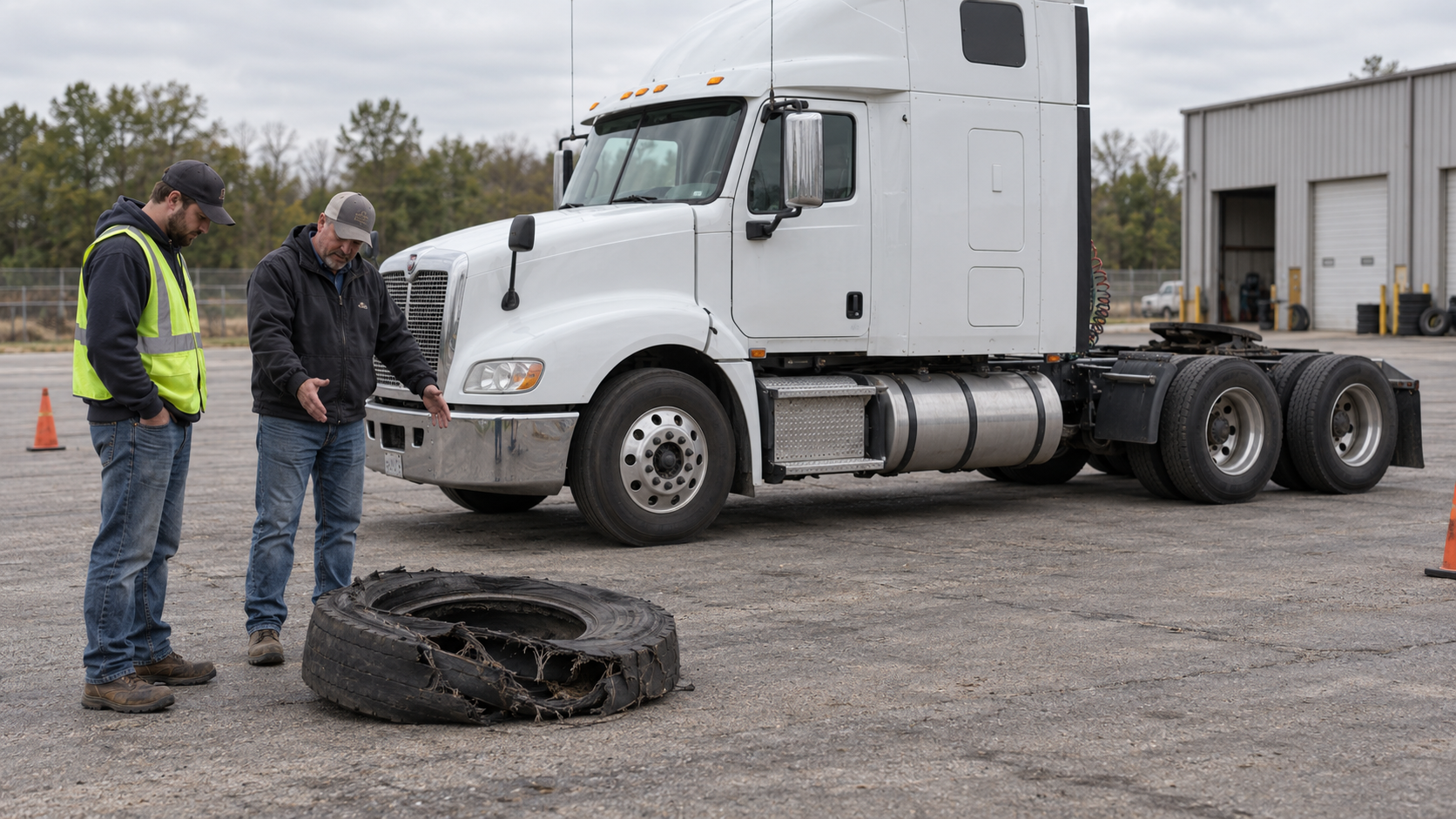 DRIVING SAFETY
Learn how to recognize a tire failure, hold directional control, slow without abrupt braking, stop safely and inspect before moving again.
Read article →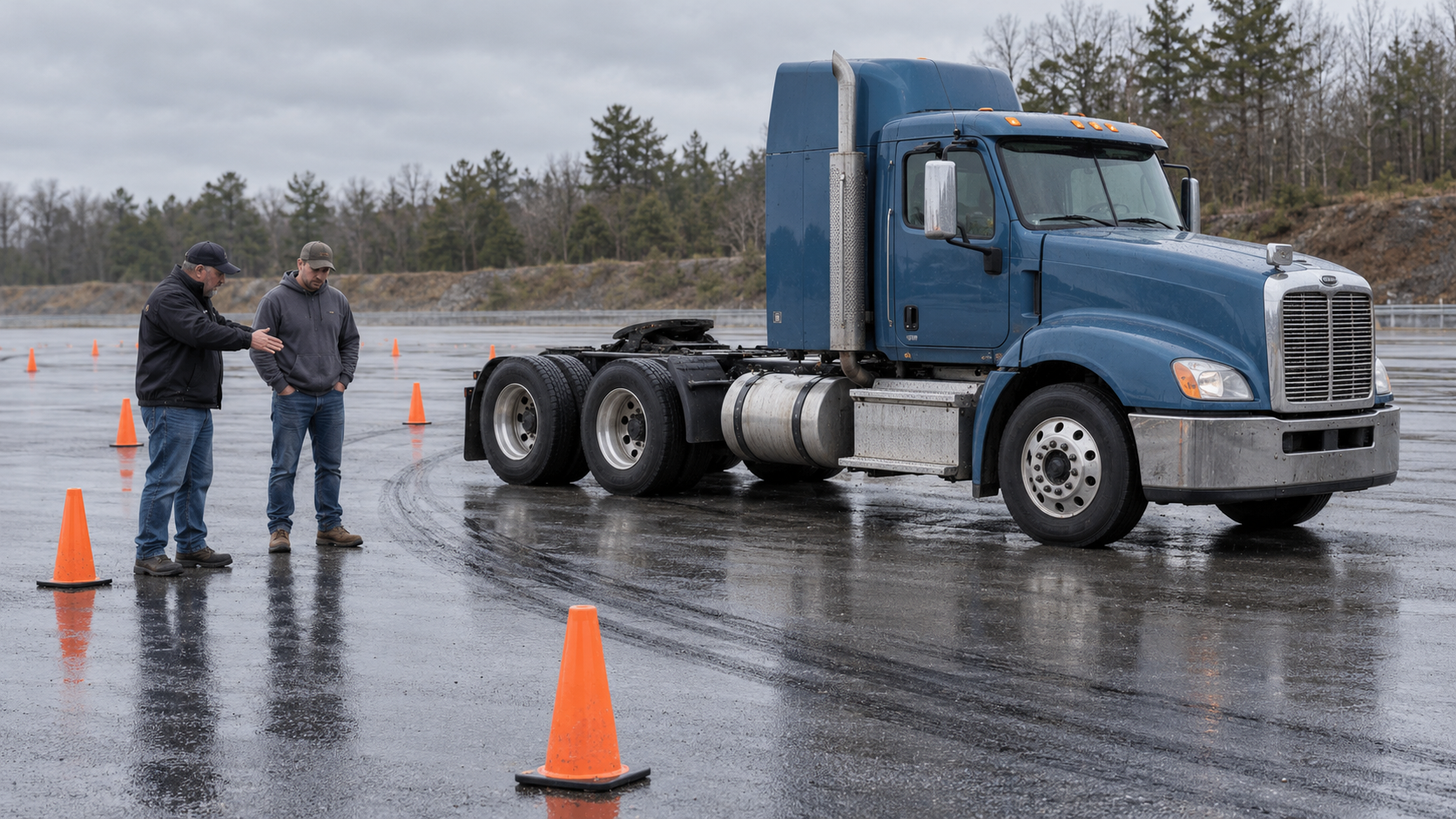 DRIVING SAFETY
Learn to prevent and recognize steering-, drive- and trailer-wheel skids, manage hydroplaning and make measured recovery inputs.
Read article →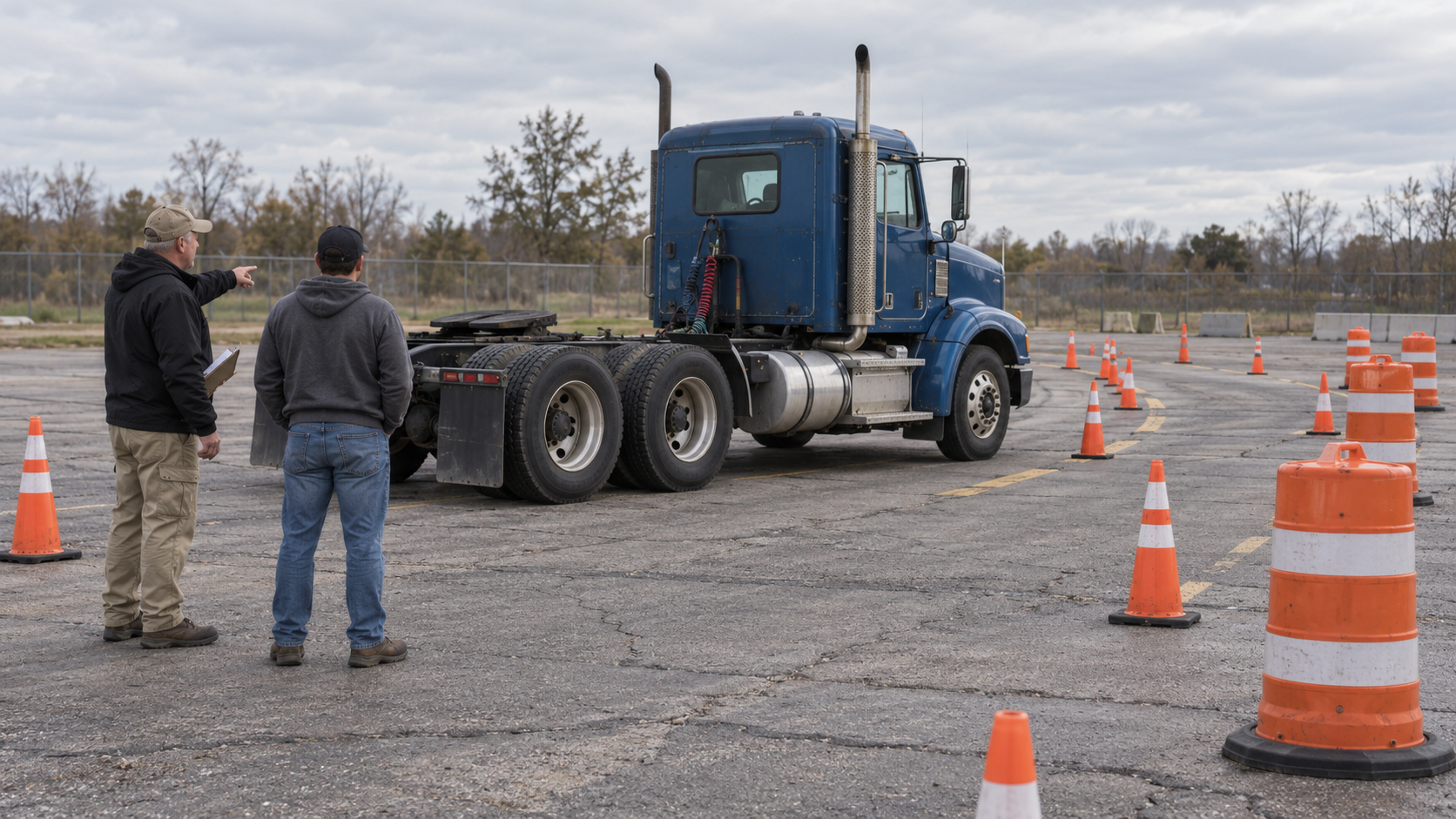 DRIVING SAFETY
Build a safer work-zone routine for speed changes, stopped traffic, flaggers, lane shifts, narrow clearances and roadside problems.
Read article →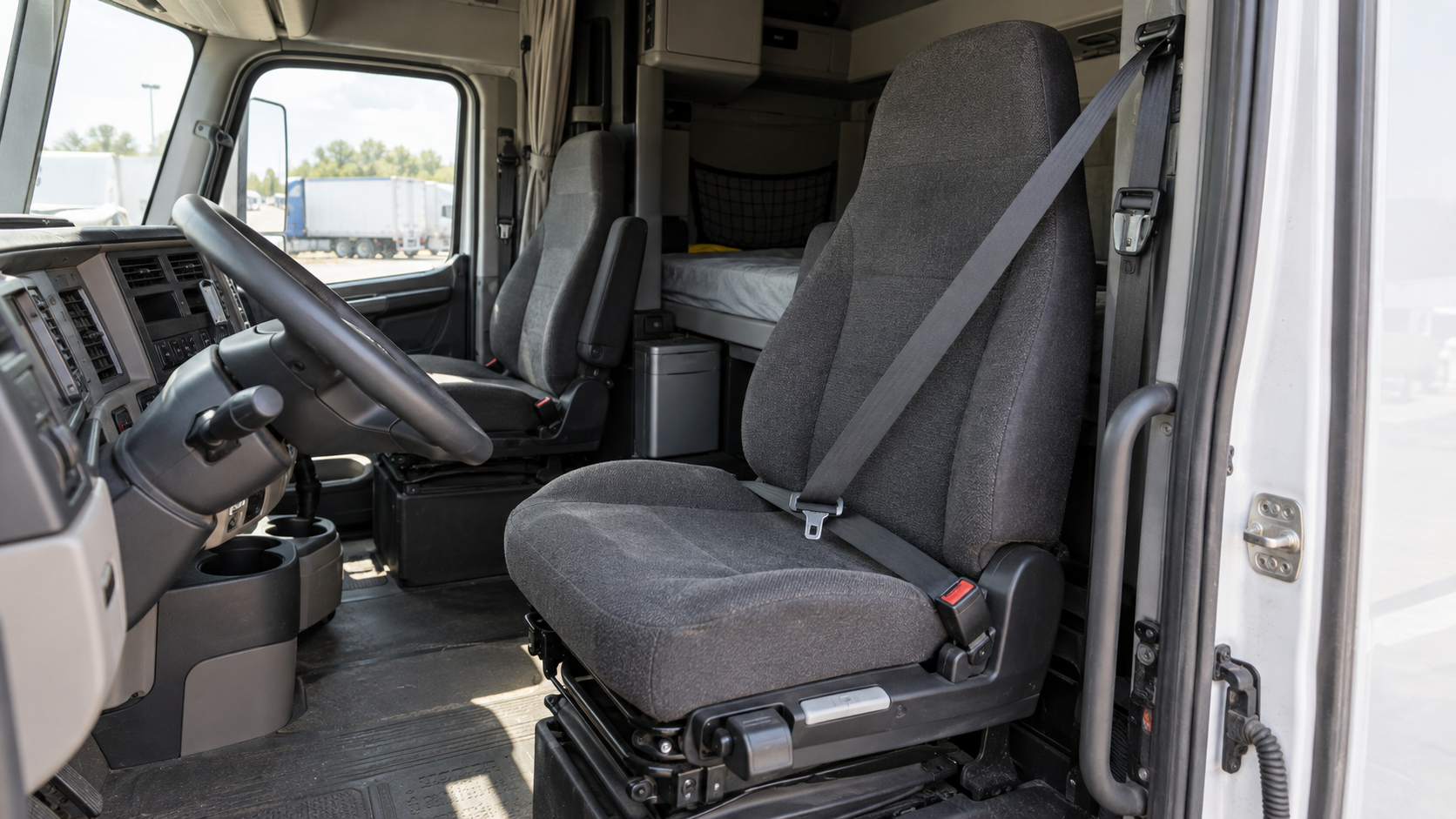 DRIVING SAFETY
Understand federal seat-belt duties, passenger restraint rules, sleeper-berth equipment, proper belt fit and a repeatable pre-trip check.
Read article → CDL COMPLIANCE
Understand the eight CVSA inspection levels, organize driver and vehicle records, present ELD data and handle inspection reports correctly.
Read article → DRIVING SAFETY
Plan safer mountain descents with deliberate entry speed, gear selection, brake-heat management, weather decisions and escape-ramp readiness.
Read article → REGULATORY EDUCATION
Learn which split-sleeper periods qualify, how 7/3 and 8/2 pairings change the 14-hour calculation, and how to avoid common log errors.
Read article → DRIVING SAFETY
Build a safer commercial trip plan around legal truck routes, bridge clearance, weight limits, hours, fuel, parking and last-mile access.
Read article → CDL COMPLIANCE
Understand the federal English-language driver qualification, the current two-step roadside assessment, out-of-service enforcement and practical preparation.
Read article → TRUCKING CAREERS
Learn what carriers verify in a DQ file, what applicants should prepare, and how MVR, PSP, Clearinghouse, medical and road-test records differ.
Read article → CDL COMPLIANCE
Understand NRII electronic reporting, the current 60-day paper-proof exemption, renewal timing and how to verify the State CDL medical record.
Read article → CDL COMPLIANCE
Learn how prohibited status affects a CDL or CLP, what employers and States check, and how the return-to-duty and reinstatement steps fit together.
Read article → CDL COMPLIANCE
Learn when an ELD malfunction requires paper logs, how to reconstruct records, what the carrier’s eight-day deadline means and what to present roadside.
Read article →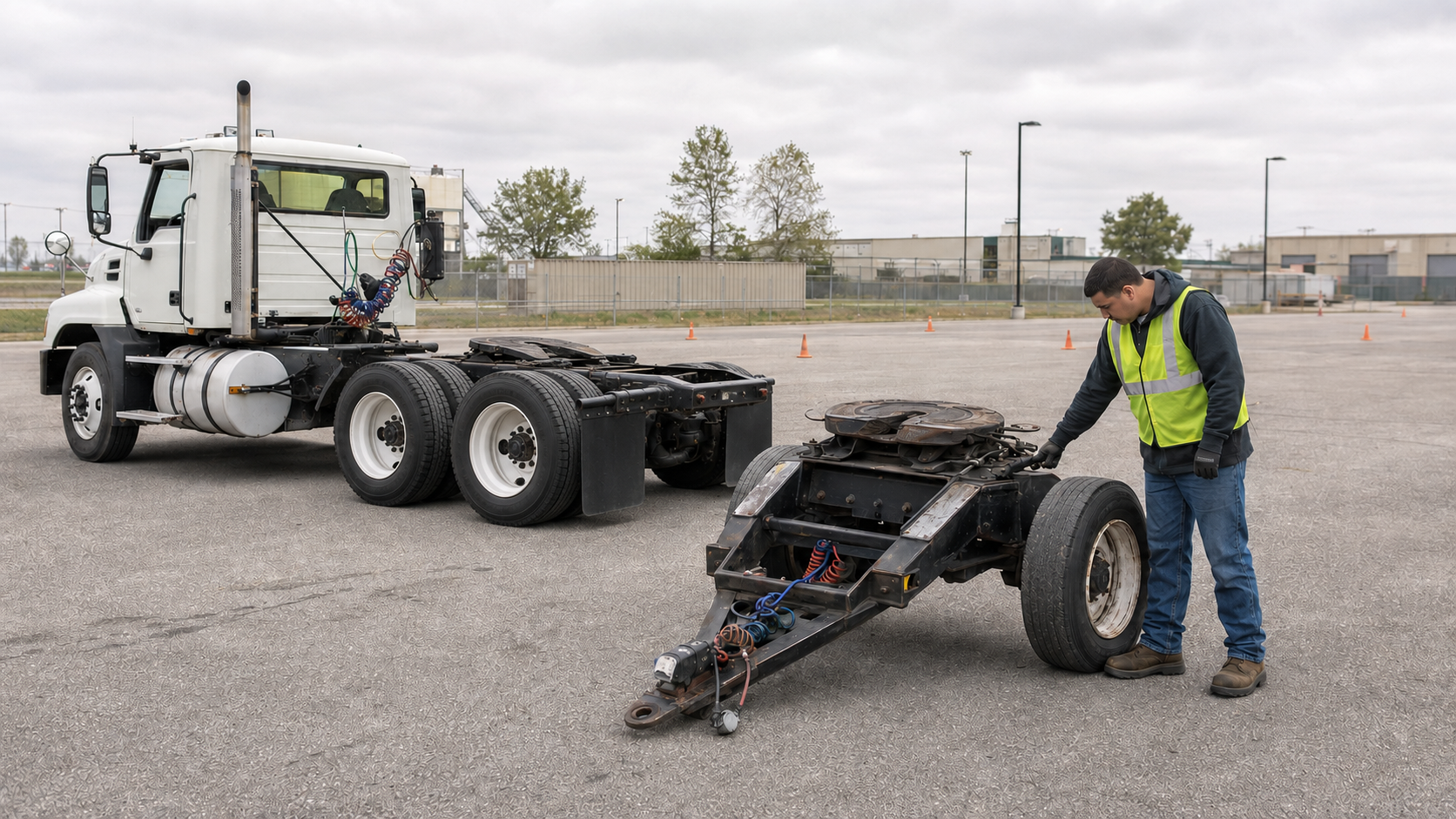 CDL ENDORSEMENTS
Learn what the CDL T endorsement covers, how converter dollies connect multiple trailers, which handling hazards matter and when federal ELDT applies.
Read article →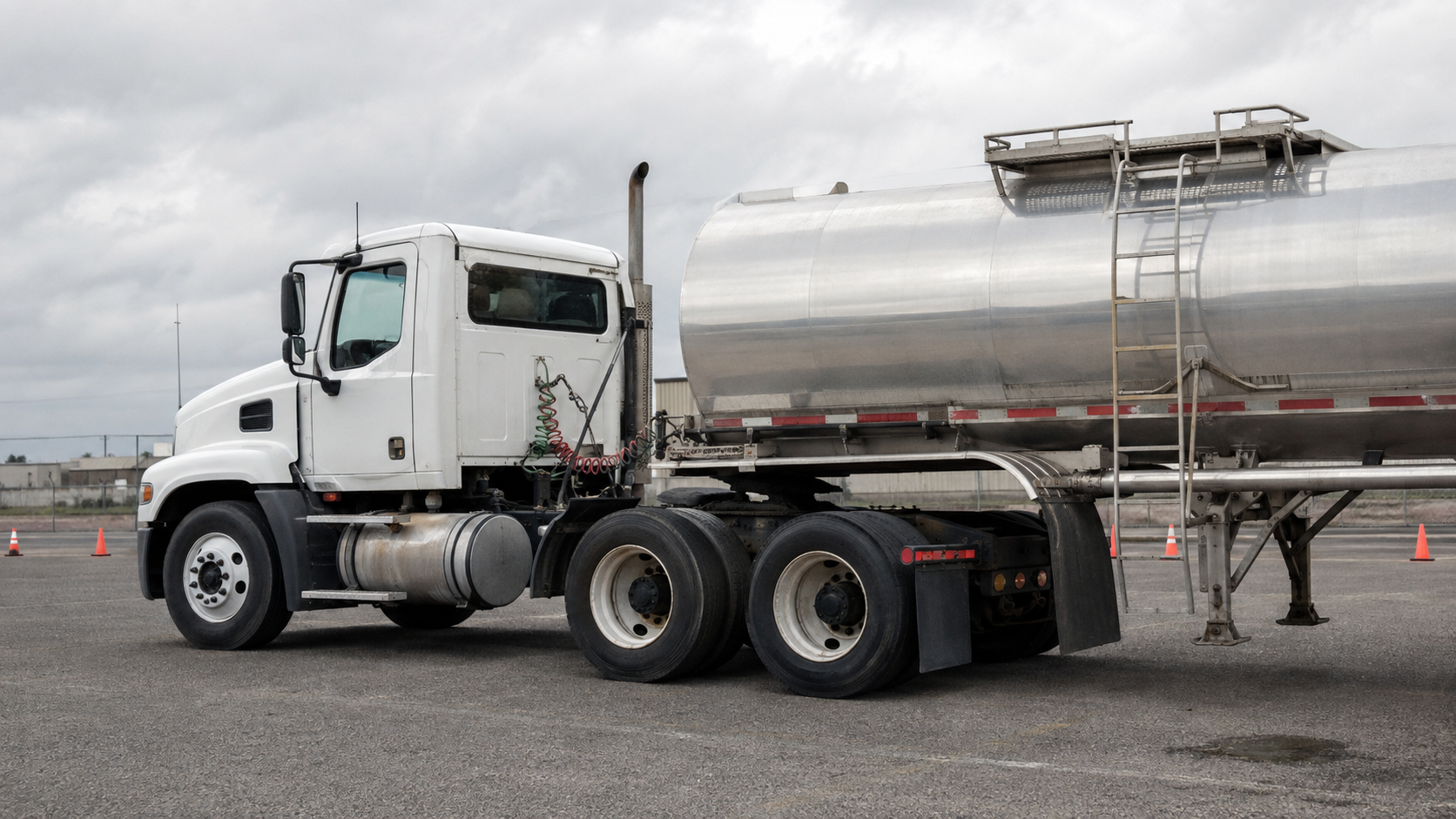 CDL ENDORSEMENTS
Learn the federal tank-size thresholds, how N differs from X, what the knowledge test covers, when IBCs count and when ELDT applies.
Read article →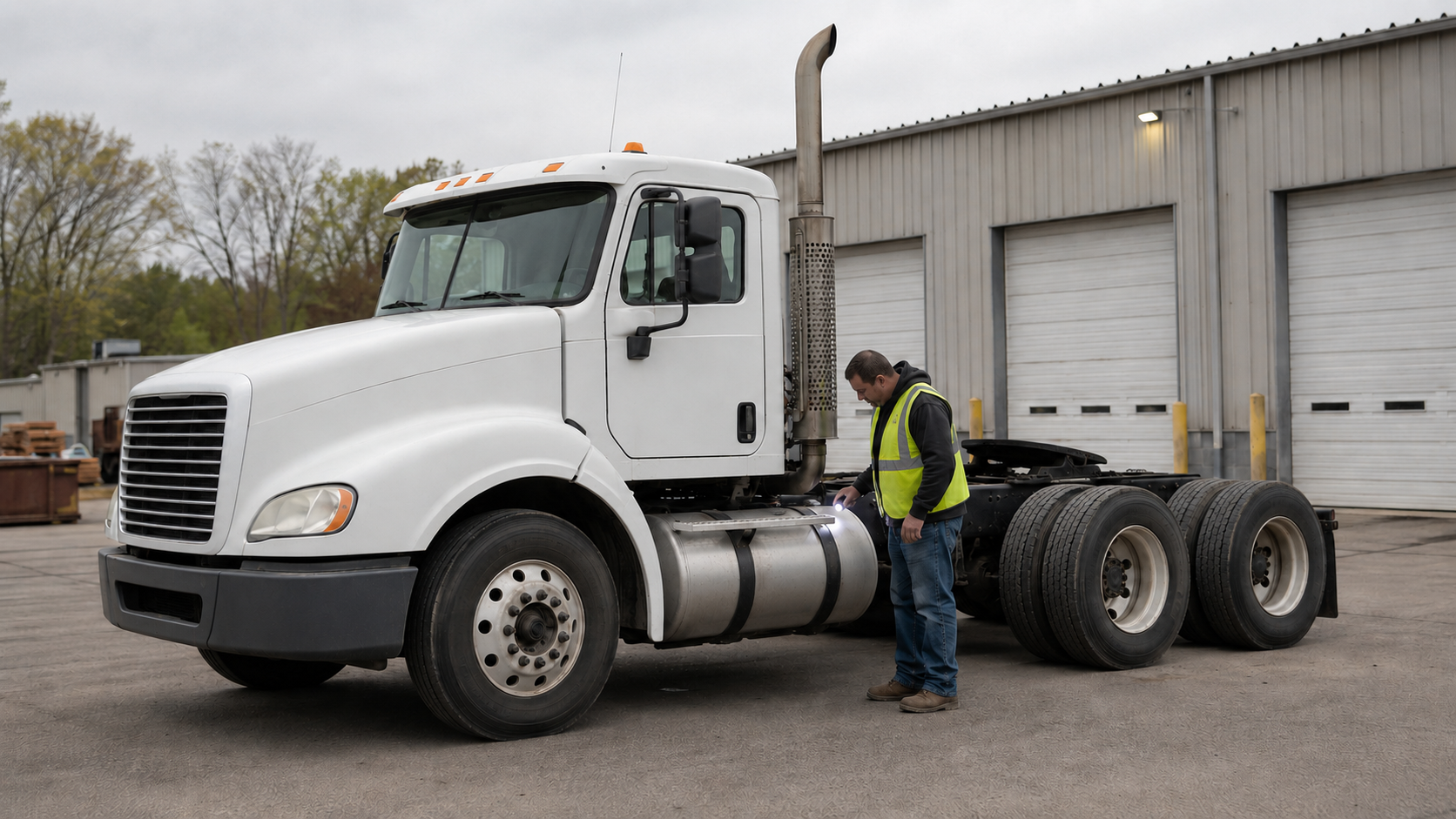 VEHICLE INSPECTION
Inspect fuel tanks, caps, straps and lines along with exhaust routing, joints, hangers and heat-clearance clues using a repeatable walkaround.
Read article →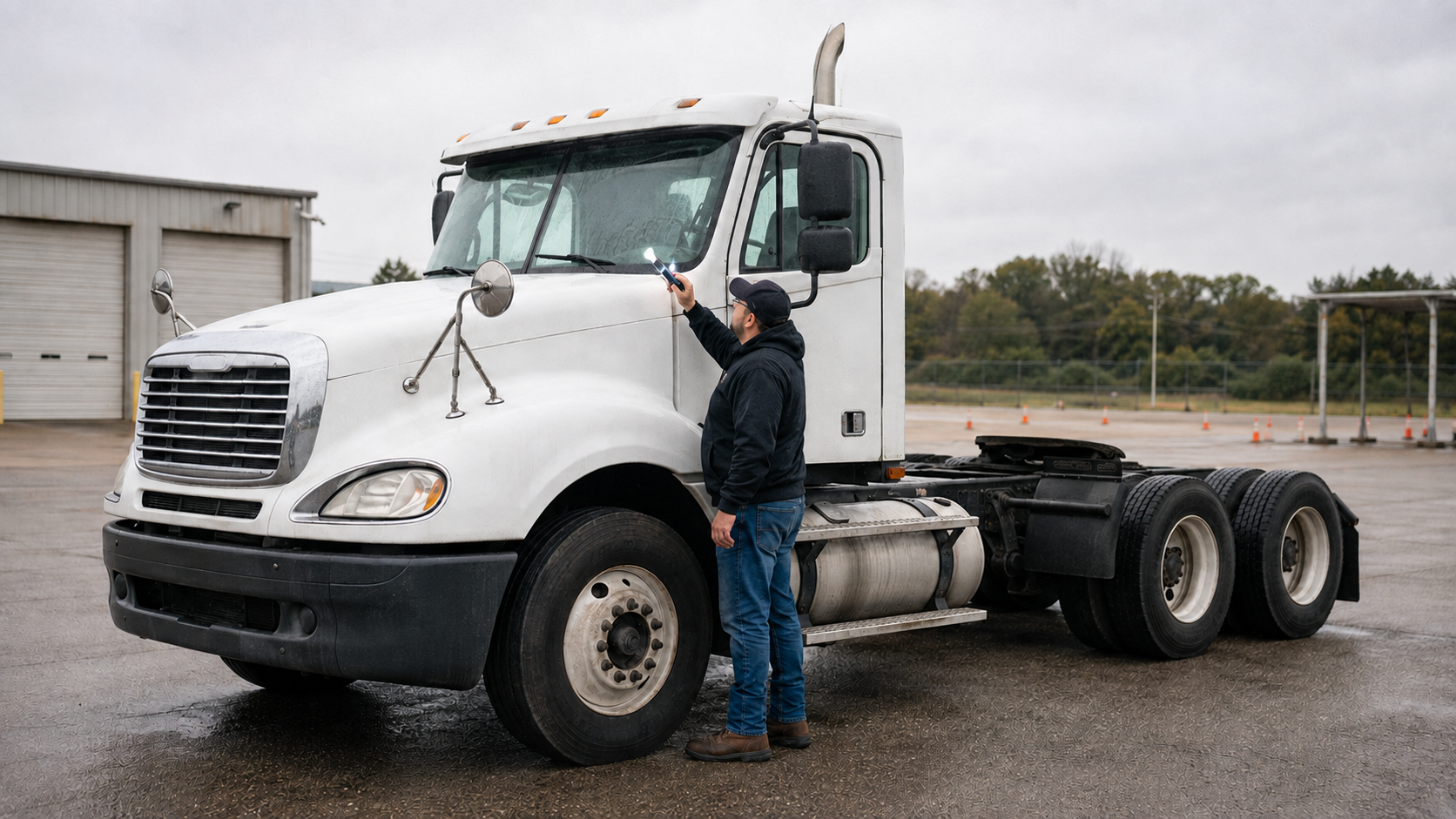 VEHICLE INSPECTION
Inspect windshield glass and obstructions, wiper sweep, washer spray, defroster airflow and mirror coverage as one driver-visibility system.
Read article →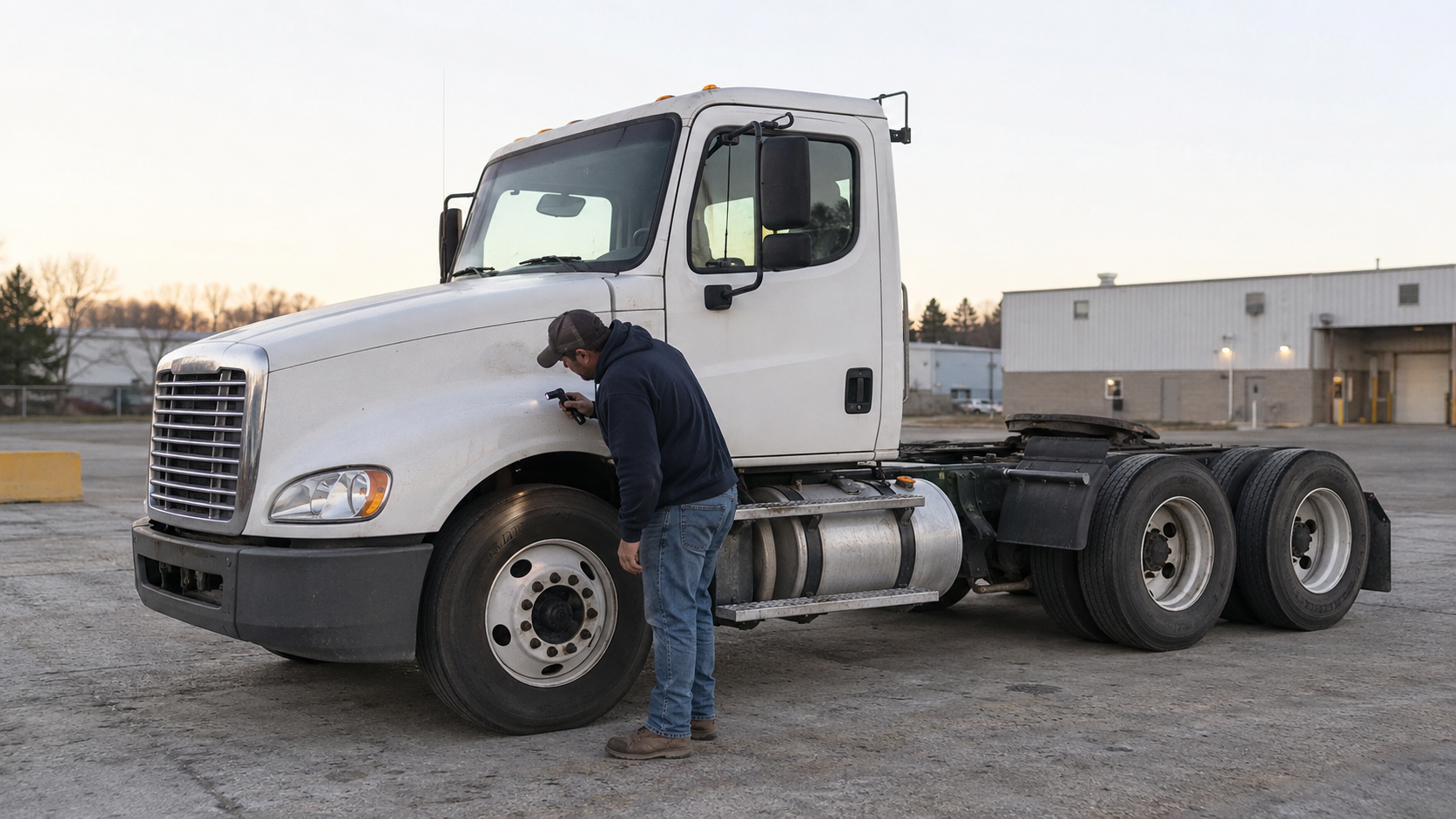 VEHICLE INSPECTION
Follow a repeatable route through steering-wheel lash, the power-steering system, gear and linkage, springs, air bags, axle-positioning parts and frame clues.
Read article → VEHICLE INSPECTION
Use a repeatable lighting-system check for headlamps, turn signals, clearance and identification lamps, side markers, stop and tail lamps, reflectors and conspicuity tape.
Read article →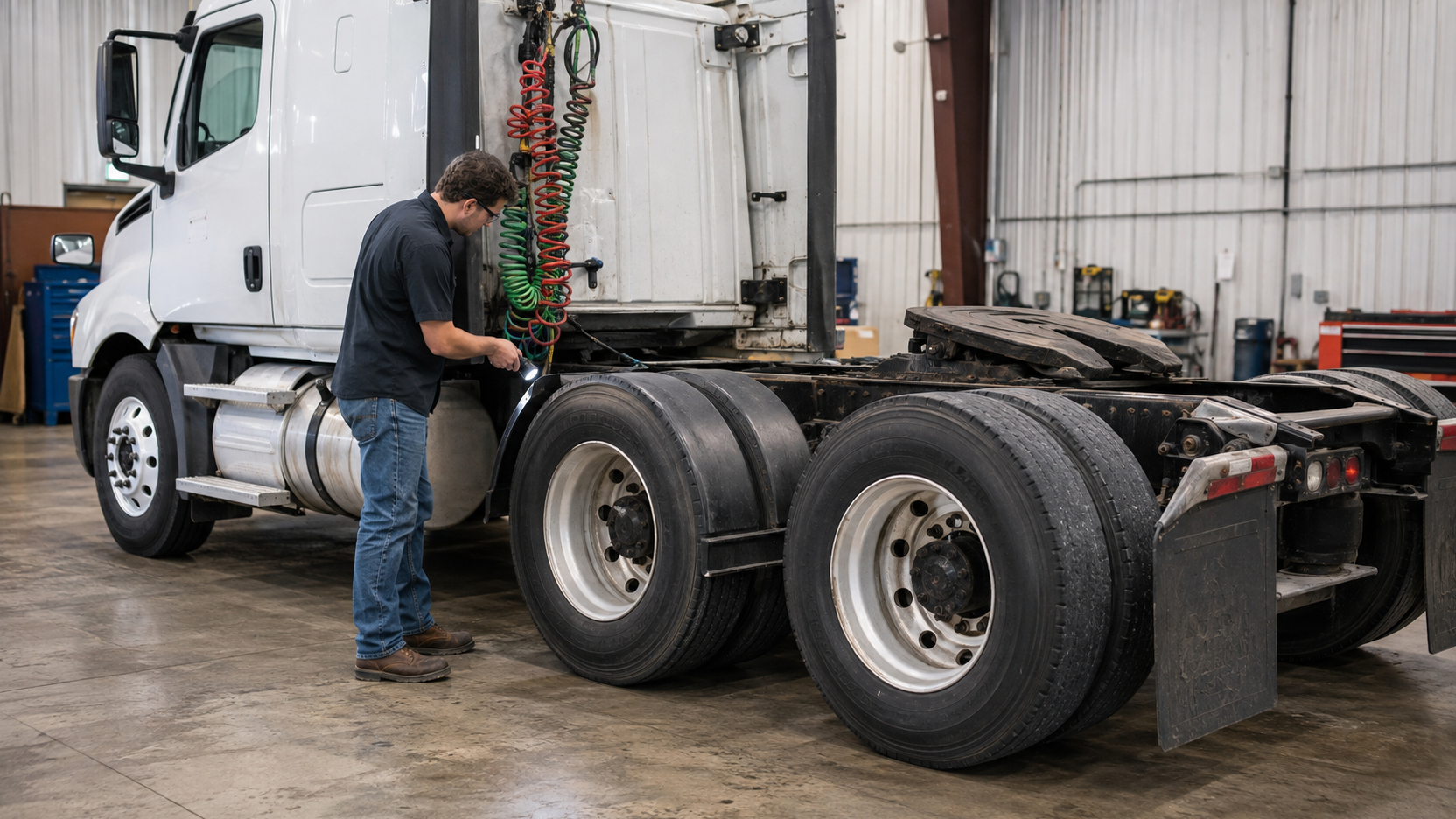 AIR BRAKES
Learn a safe, repeatable visual inspection for damaged brake hoses, leaking chambers, loose hardware, pushrod problems and out-of-adjustment warning signs.
Read article →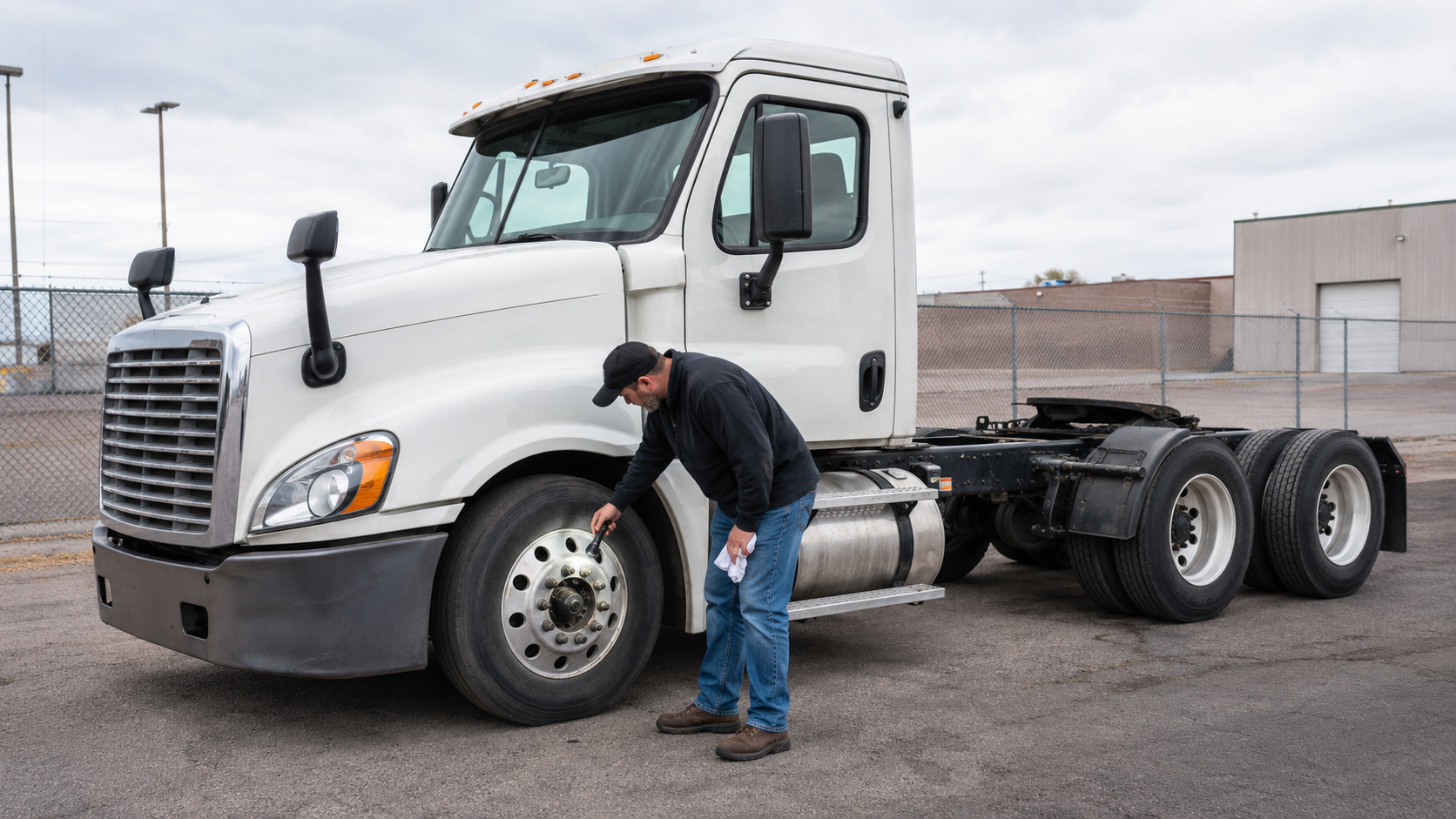 VEHICLE INSPECTION
Build a repeatable wheel-end inspection for cracked rims, elongated holes, loose fasteners, hub leaks, damaged valve stems and dual-wheel problems.
Read article →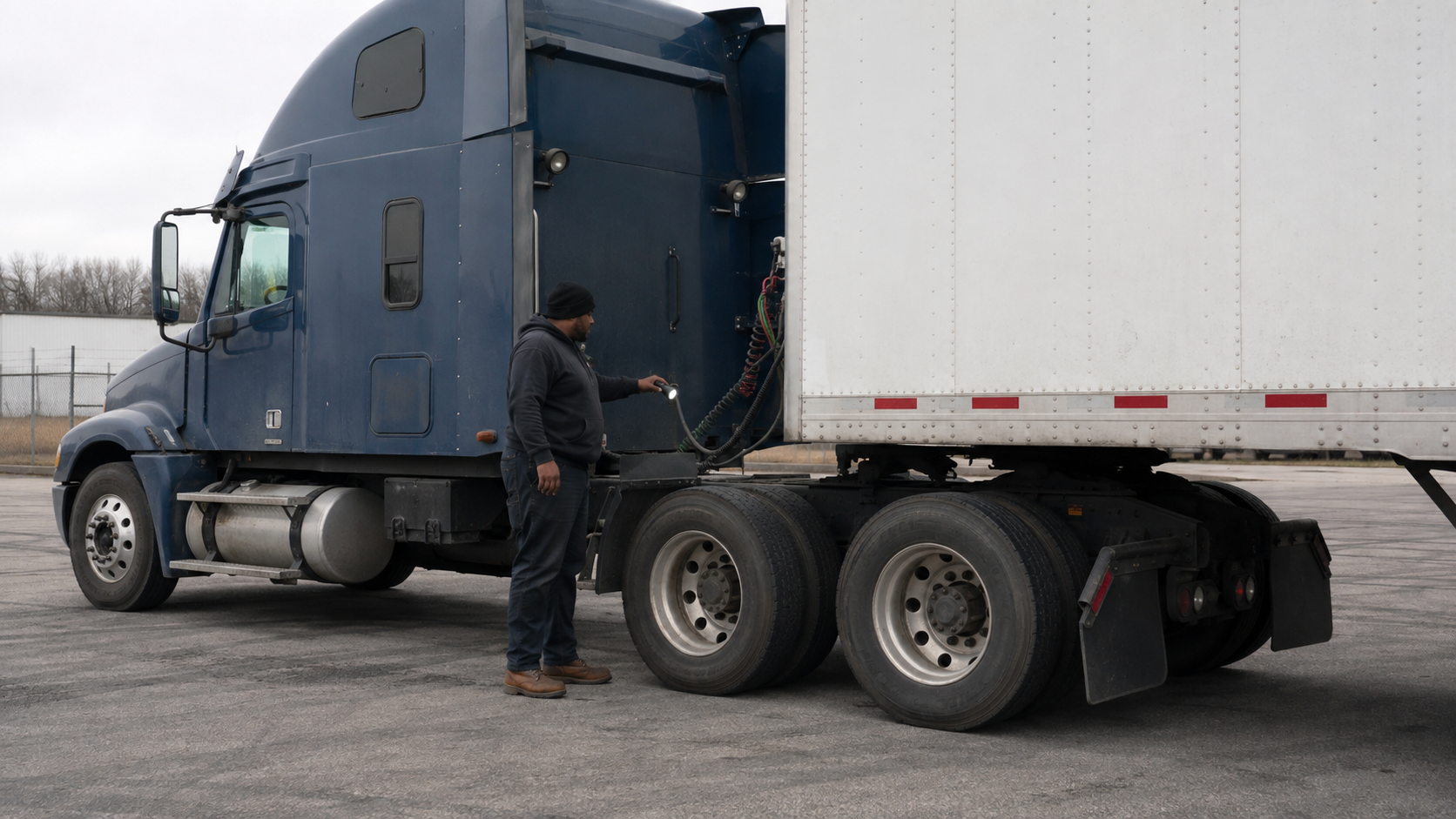 PRE-TRIP INSPECTION
Learn how to inspect the fifth wheel, kingpin, locking jaws, release arm, mounting hardware, air lines and electrical connection before moving a tractor-trailer.
Read article → DRIVING SAFETY
Learn when federal texting and hand-held phone restrictions apply, how compliant hands-free use works, and how to build safer dispatch and navigation habits.
Read article → CDL COMPLIANCE
Understand the four self-certification categories, medical-certificate filing and when a route or job change requires a status review.
Read article →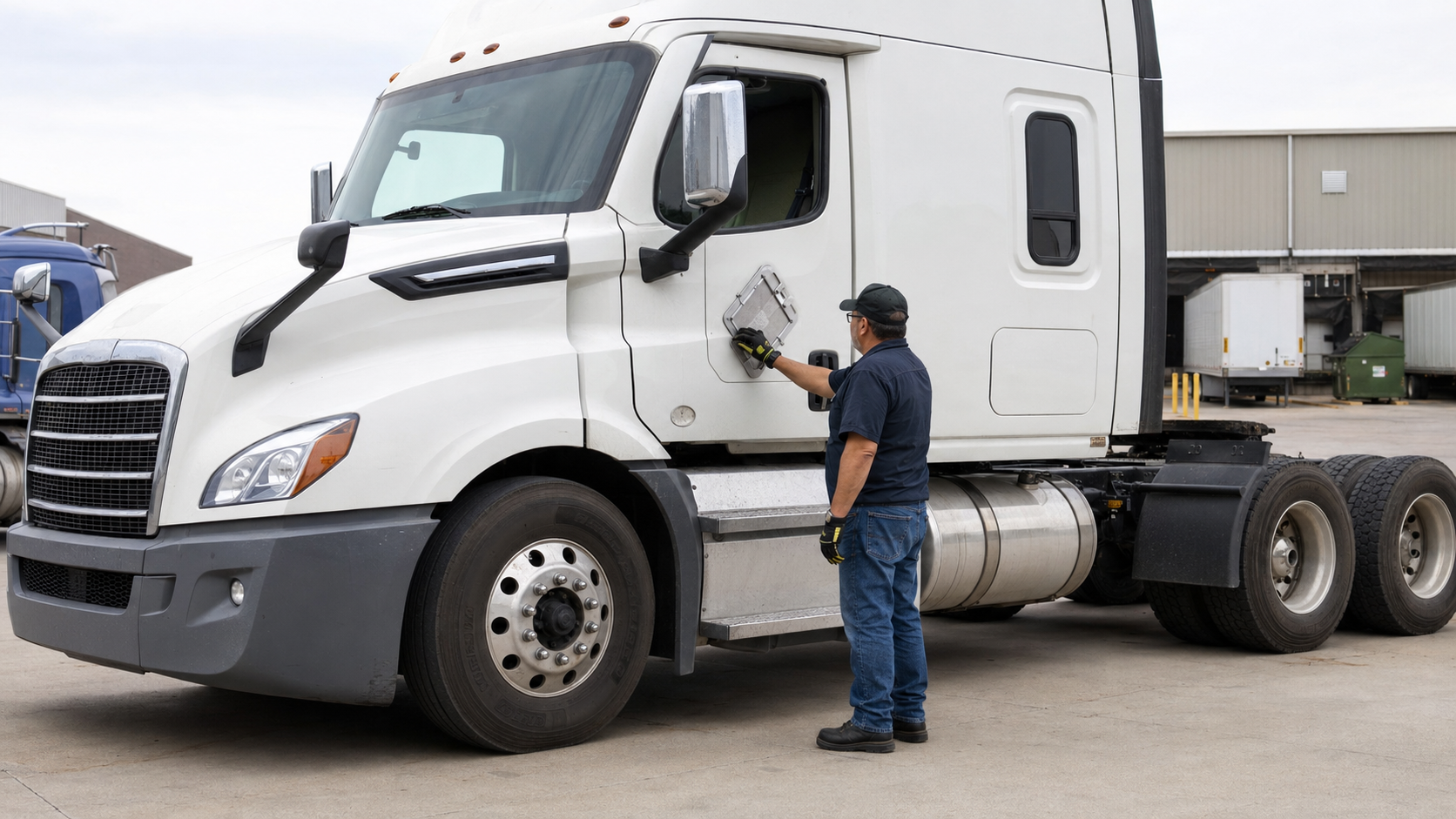 HAZMAT
Connect endorsement steps with shipping-paper checks, placards, securement and emergency readiness.
Read article → CDL STUDY
Organize General Knowledge, Air Brakes, Combination Vehicles and endorsement study into a repeatable seven-day cycle.
Read article →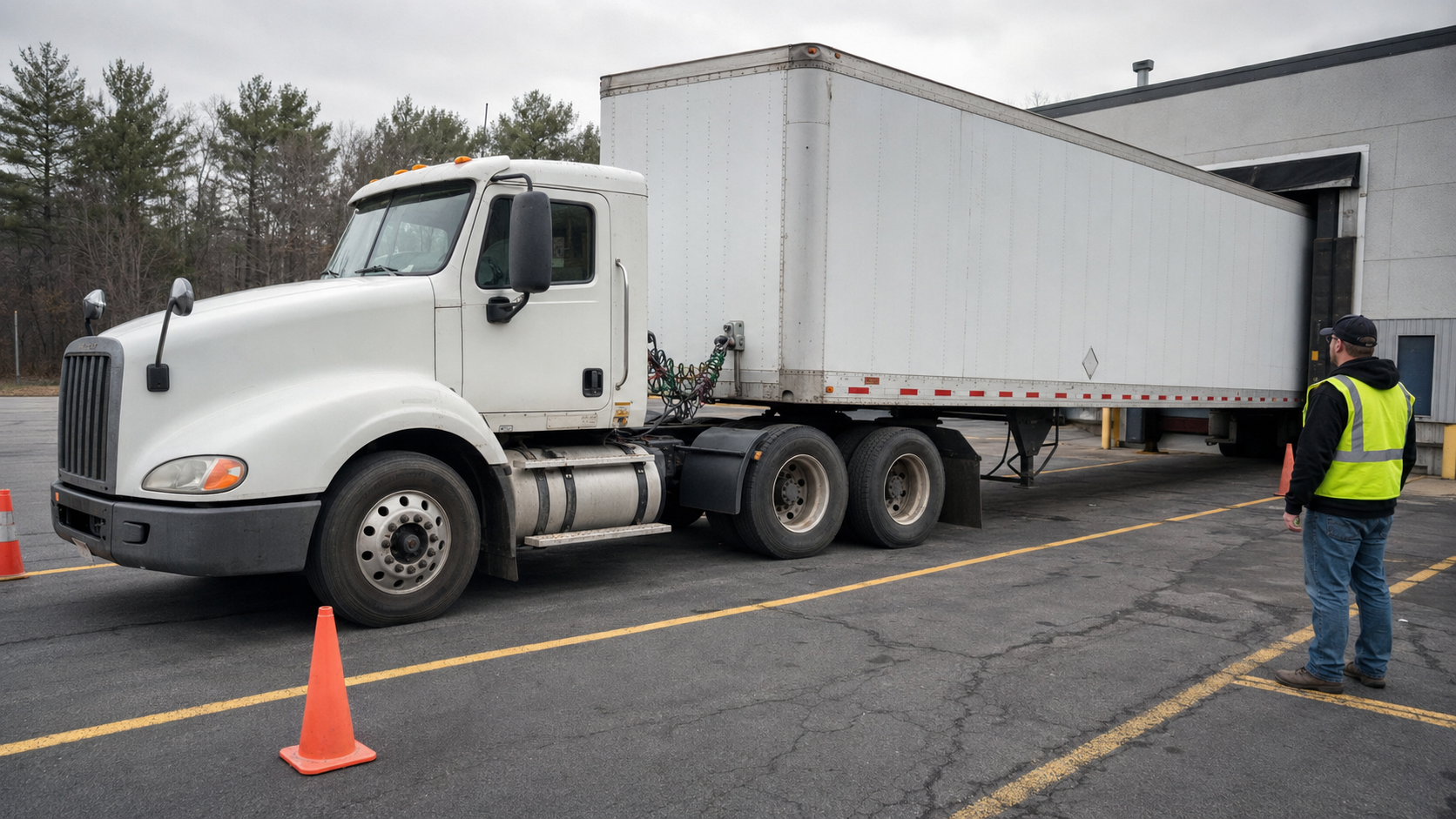 BASIC CONTROL SKILLS
Improve setup, mirror use, trailer tracking, slow-speed corrections, pull-ups and GOAL habits.
Read article → DRIVING SAFETY
Build safer habits with visual search, space management, speed control, communication and escape routes.
Read article →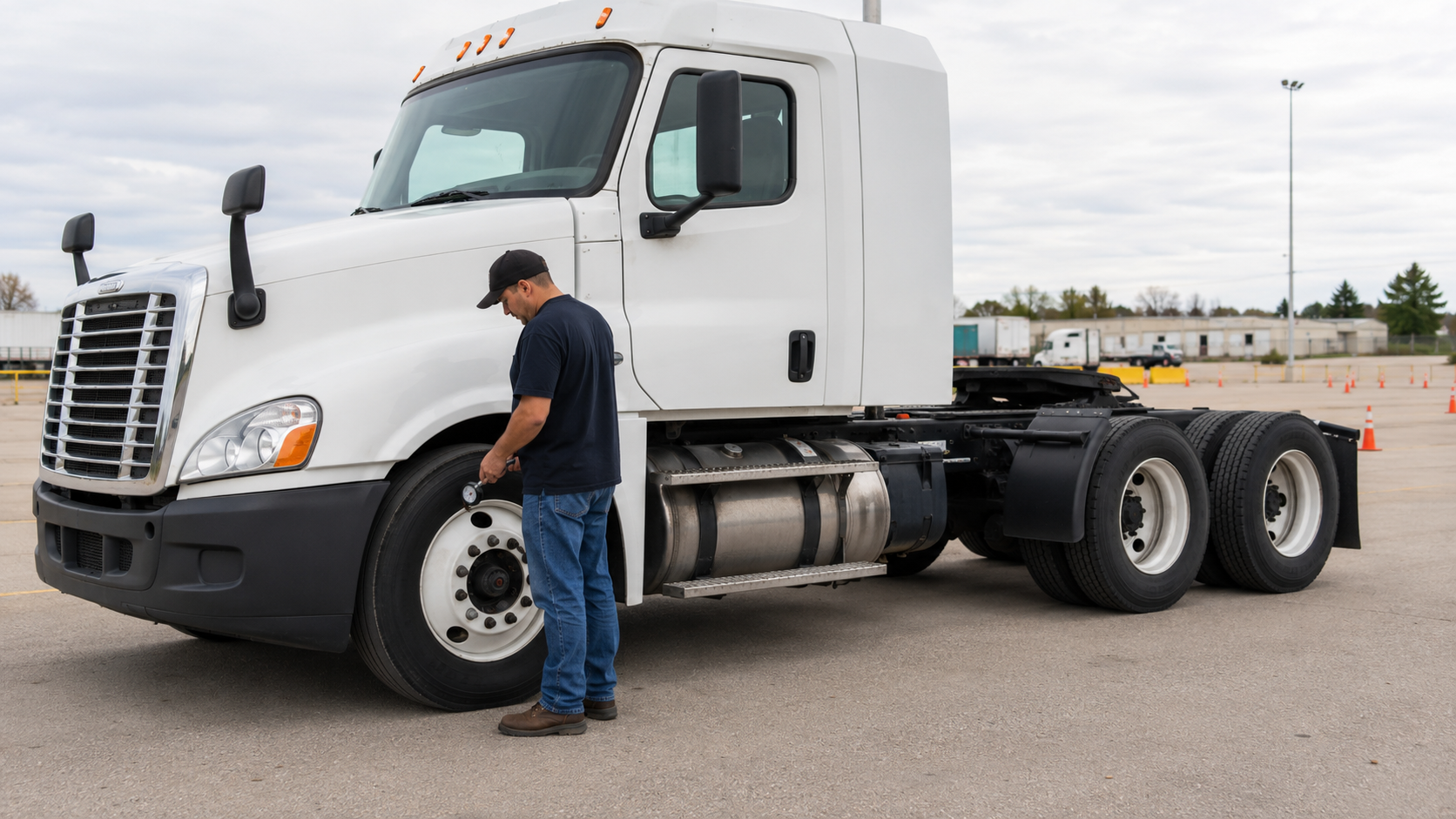 PRE-TRIP INSPECTION
Learn the 4/32 and 2/32 tread rules, proper pressure checks, prohibited defects and a repeatable tire-inspection routine.
Read article →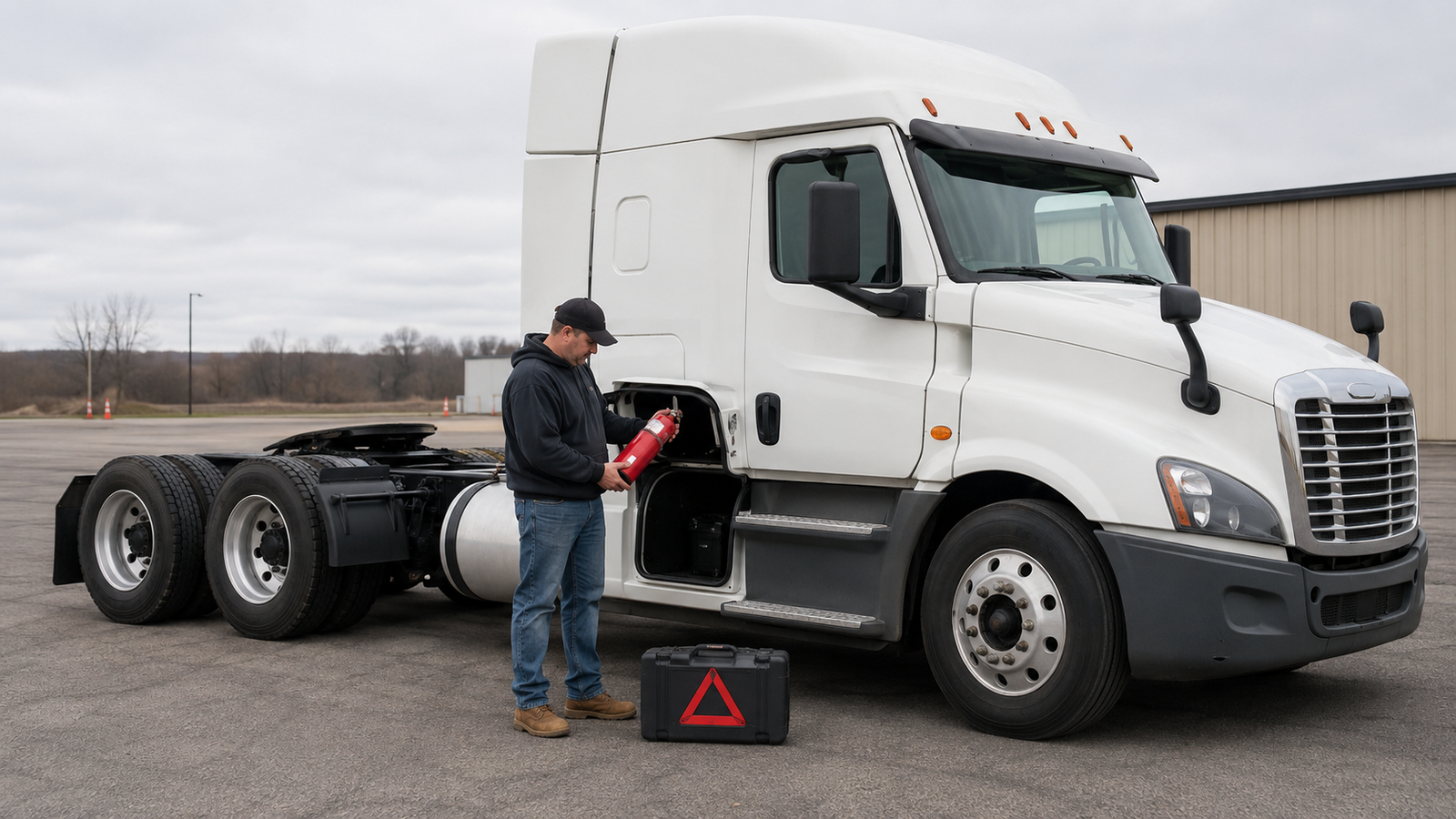 SAFETY EQUIPMENT
Learn current fire-extinguisher requirements, how to inspect warning devices, and the correct roadside triangle-placement patterns.
Read article → REGULATORY EDUCATION
Understand the 11-hour driving limit, 14-hour window, 30-minute break and 60/70-hour limits without mixing up the clocks.
Read article → VEHICLE INSPECTION
Learn a repeatable end-of-day inspection routine, when a federal DVIR is required, and how to document defects so maintenance can act.
Read article → DRIVING SAFETY
Learn which commercial vehicles must stop, how every CMV driver should approach tracks, and why clearance and gear choice matter.
Read article → CARGO SAFETY
Learn when drivers must recheck cargo, what to inspect, and how to recognize securement problems before they become roadside emergencies.
Read article → ELDT GUIDE
Confirm the correct curriculum, registered provider, completion record and final preparation before CDL or endorsement testing.
Read article → CDL PREP
A practical seven-day framework for combining handbook study, flashcards, practice questions and missed-answer review.
Practice this topic →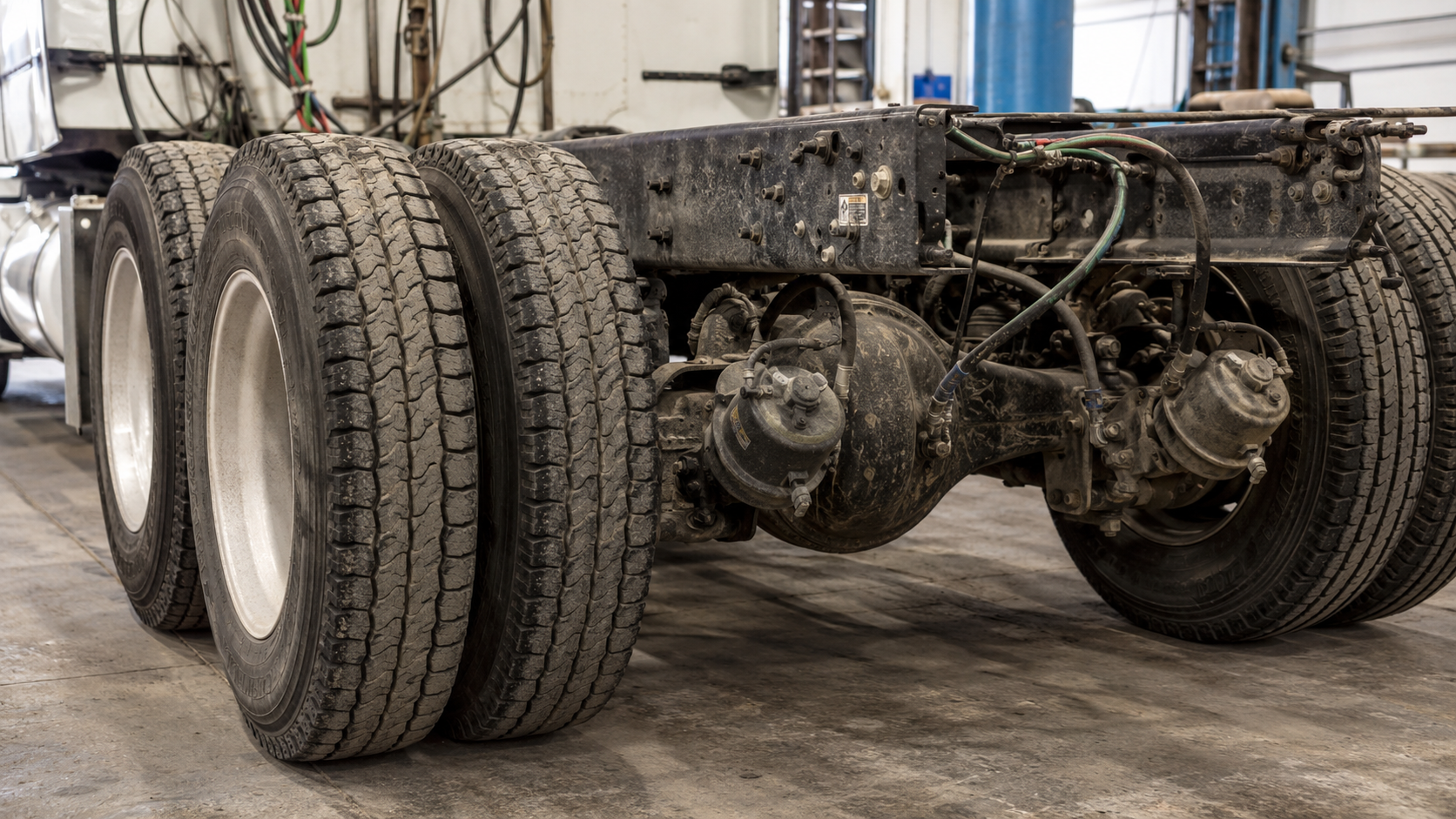 AIR BRAKES
Learn how pressure, spring brakes and heat affect commercial-vehicle braking performance.
Practice this topic →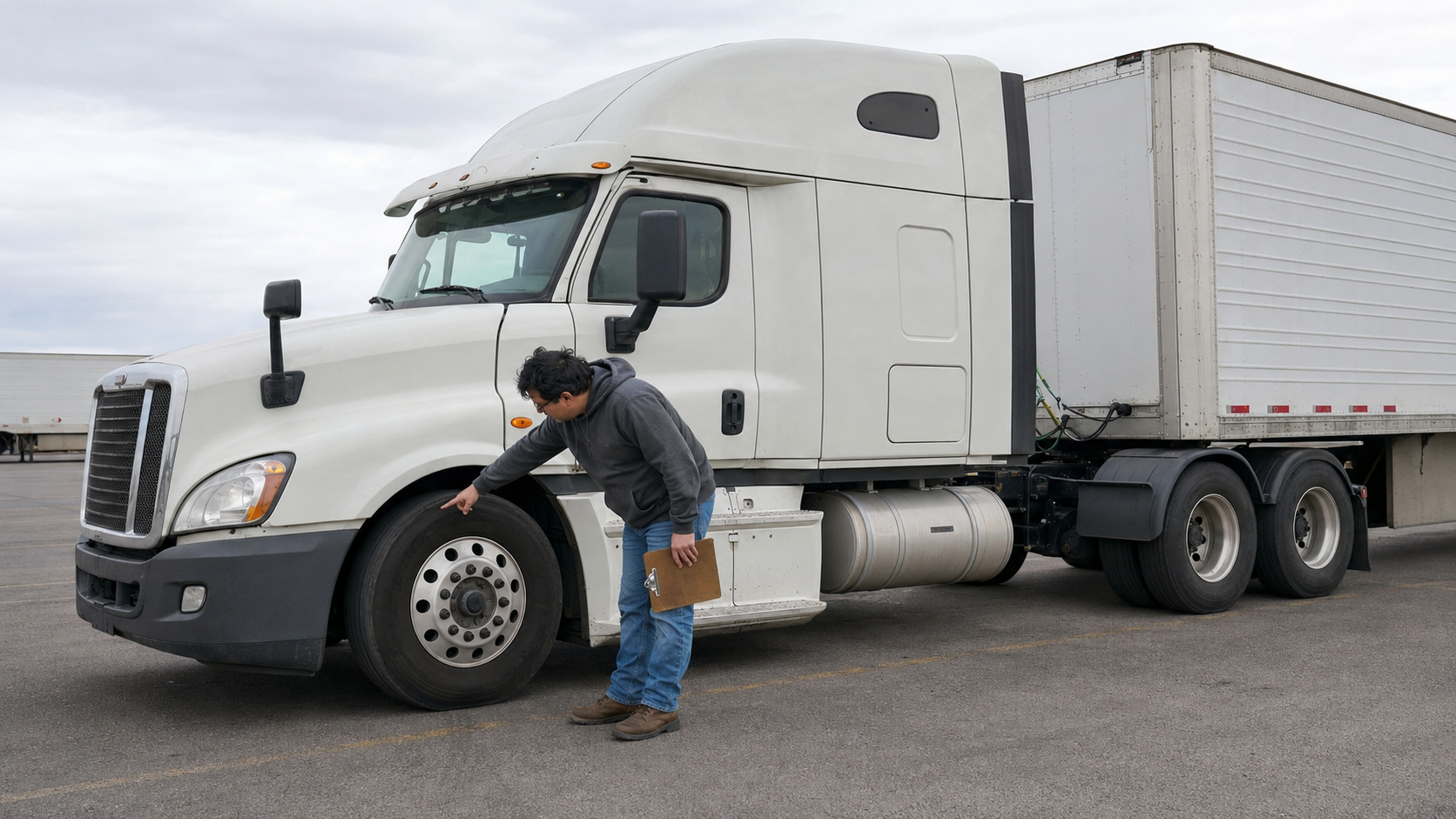 PRE-TRIP
Turn a long component list into a repeatable inspection system you can explain confidently.
Practice this topic →Independent CDL education, practice tools, and career resources for future commercial drivers across the United States.