
ELDT Before the CDL Skills Test: A Practical Readiness Checklist
Entry-Level Driver Training is more than an online box to check. It coordinates the correct curriculum, a registered provider, documented completion and—depending on the credential—behind-the-wheel proficiency.
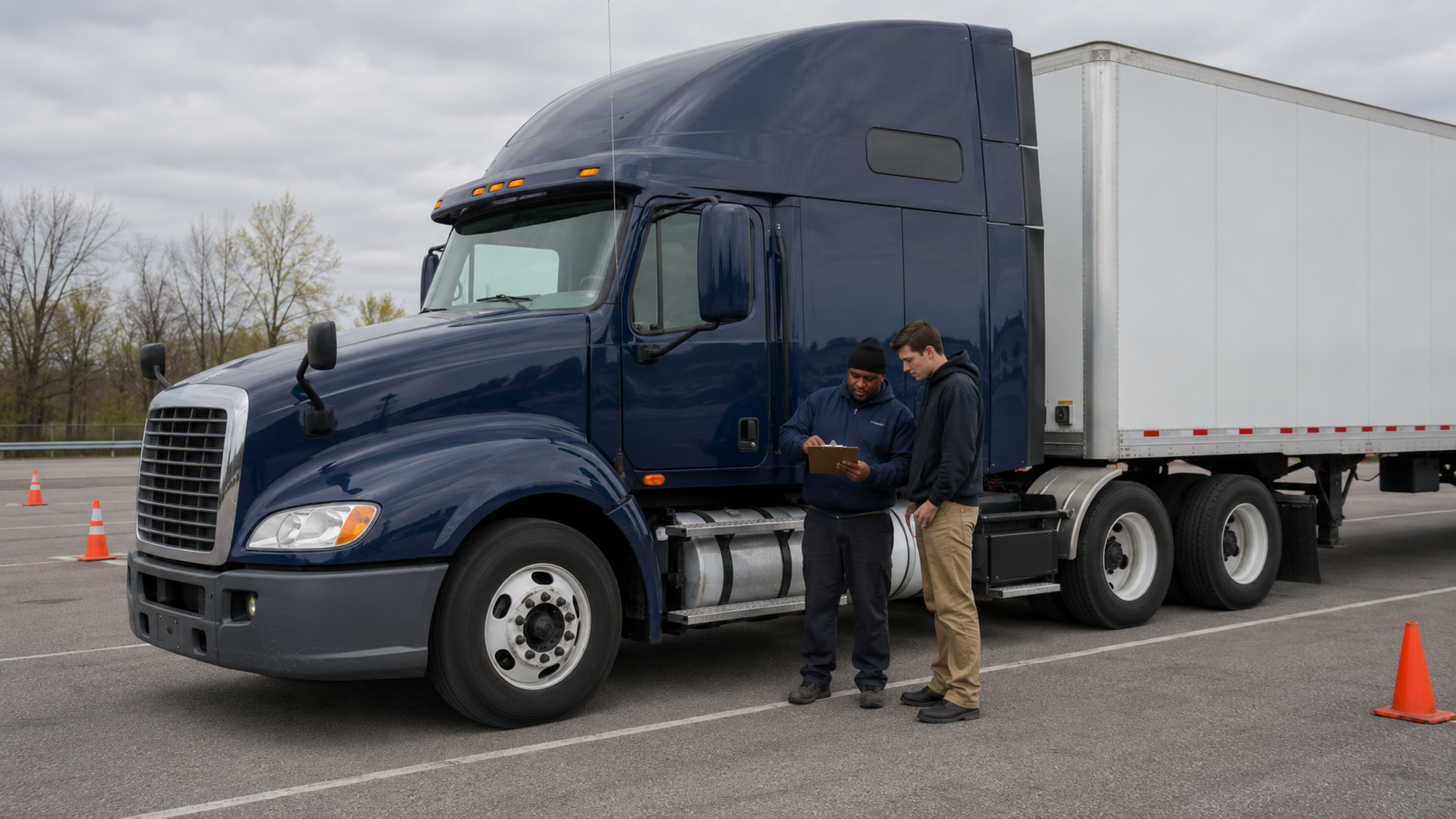
FMCSA’s ELDT rules establish a federal baseline for applicants seeking a Class A or Class B CDL for the first time, upgrading from Class B to Class A, or obtaining a Passenger, School Bus or Hazardous Materials endorsement for the first time. The rules have applied since February 7, 2022. Some applicants qualify for exceptions, and licensing jurisdictions may add requirements beyond the federal minimum.
Confirm which training applies to your exact credential before paying for a course or scheduling a test. Start with the official FMCSA ELDT overview and Training Provider Registry.
1. Match training to the credential
Class A and Class B applicants generally need theory and behind-the-wheel training. The driving portion includes range and public-road instruction completed to the provider’s proficiency standard. Passenger and School Bus endorsements also involve applicable theory and behind-the-wheel training. A first-time Hazardous Materials endorsement requires theory training but not an ELDT behind-the-wheel component.
One completion record does not automatically cover every future credential. A Class B driver later seeking Class A must complete the applicable upgrade curriculum. Endorsement curricula cover specialized responsibilities and are not interchangeable with general Class A or Class B training.
2. Choose a registered provider
Only a provider listed in FMCSA’s Registry can submit the certification required under ELDT. Ask whether the provider offers your exact curriculum, whether theory and driving may be completed through different registered providers, and how quickly records are submitted. FMCSA’s provider-selection guidance also recommends checking additional local training rules.
3. Understand what “complete” means
Federal rules do not set a minimum number of theory hours. The provider must cover required topics, and the trainee must earn an overall score of at least 80 percent. Federal rules also do not impose a universal minimum number of behind-the-wheel hours. The instructor determines whether the trainee has demonstrated proficiency in required range and public-road elements.
A course-completion screen is not the same as complete CDL readiness. Use the ProntoCDL Practice Center to reinforce terminology, air brakes, combination vehicles and inspections, while remembering that practice quizzes are educational tools—not the official ELDT assessment or licensing test.
4. Verify the record before test day
The licensing agency checks Registry data before administering the applicable Class A or B skills test, Passenger or School Bus skills test, or Hazardous Materials knowledge test. FMCSA says providers must submit certification information by midnight of the second business day after completion. Before traveling, check your Registry record and confirm that your name, permit information, training type and completion date are correct.
5. Use a test-ready checklist
- Confirm your CLP and medical documentation remain valid.
- Verify the required ELDT record appears in the Registry.
- Review the official commercial driver manual used by your licensing agency.
- Revisit missed questions instead of repeating only familiar quizzes.
- Practice a consistent pre-trip sequence and explain why each component matters.
- For a skills test, train in a representative vehicle and understand equipment-related restrictions.
Combine regulatory verification with knowledge and vehicle-control preparation. Explore the ProntoCDL study guides, check unfamiliar language in the CDL glossary, and use focused practice sessions to find weak areas early.
Frequently asked questions
Who must complete federal ELDT?
Generally, first-time Class A or Class B applicants, drivers upgrading from Class B to Class A, and first-time Passenger, School Bus or Hazardous Materials endorsement applicants must complete the applicable training unless an exception applies.
Is there a federal minimum number of ELDT hours?
No. Federal rules do not set minimum theory or behind-the-wheel hours. Theory trainees must cover required topics and earn at least 80 percent overall; behind-the-wheel trainees must demonstrate proficiency.
Can theory and behind-the-wheel training come from different providers?
Yes, provided each provider is registered for the applicable training and submits its completion information.
How quickly should completion appear in the Registry?
FMCSA requires providers to submit certification information by midnight of the second business day after completion.