
Can You Split ELDT Theory and Behind-the-Wheel Training?
Yes—federal Entry-Level Driver Training rules allow CDL applicants to complete theory with one registered provider and behind-the-wheel training with another. The flexibility is useful, but it creates a coordination job: both providers must be eligible, both must submit the correct Training Provider Registry record, and the applicable portions must be completed within the federal time limit.
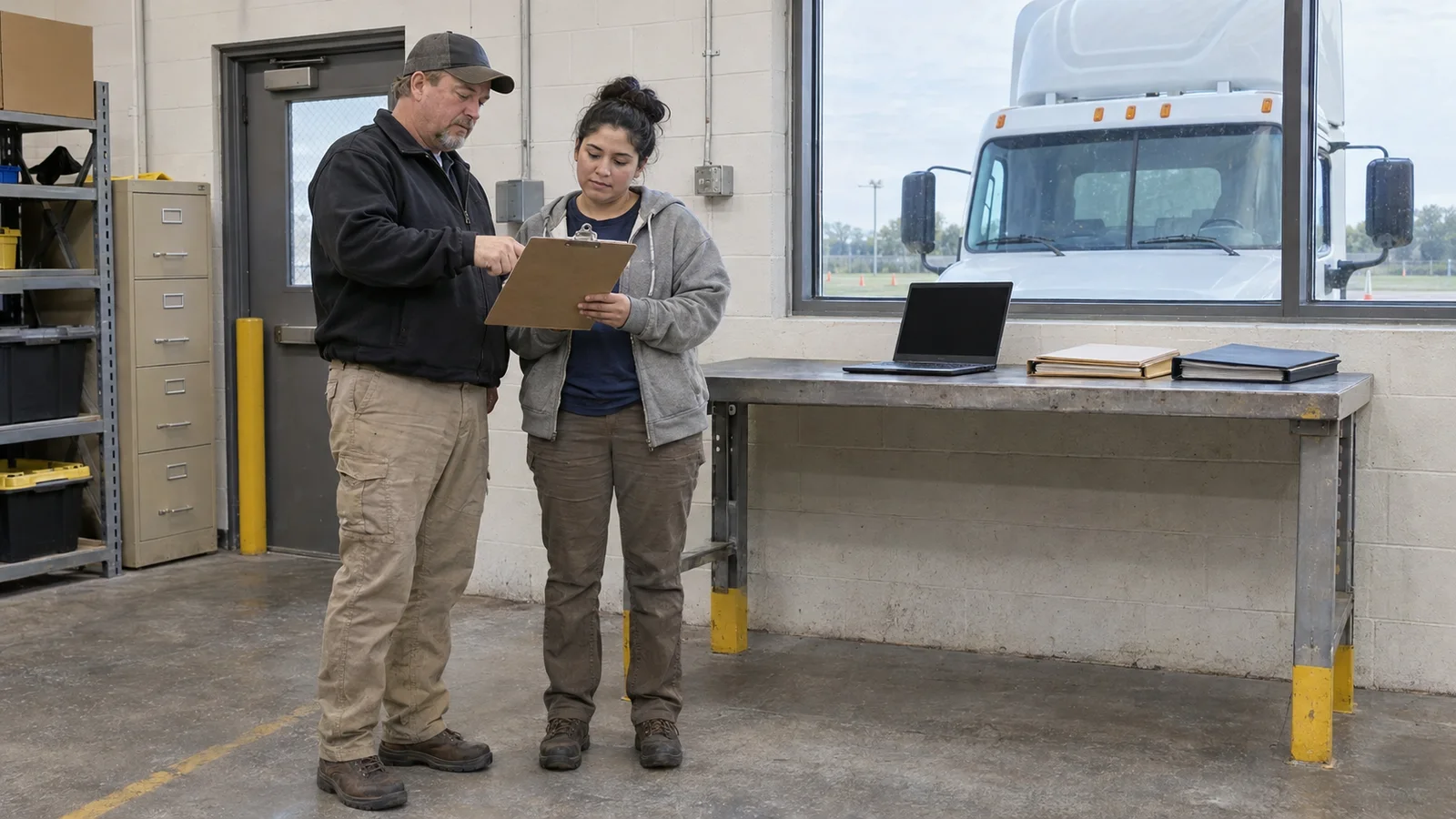
Splitting ELDT can reduce travel, fit an employer-sponsored driving program or let a trainee combine online knowledge instruction with local range and road practice. It is not a shortcut around any curriculum. Each provider remains responsible for the portion it delivers, and the State licensing agency must be able to verify all required completion records before the applicable skills or knowledge test.
The short answer: what may be split?
| Training combination | Federal answer | Key condition |
|---|---|---|
| Theory with Provider A; BTW with Provider B | Allowed | Both providers must be listed in the TPR for their training type and submit separate records |
| BTW range with Provider A; BTW public road with Provider B | Not allowed | One provider must deliver both BTW portions |
| Class A or B theory only | Not enough for the CDL skills test | The applicable range and public-road portions must also be completed |
| Hazardous-materials theory | BTW not federally required for H | Complete approved H theory before the H knowledge test |
FMCSA's current ELDT guidance expressly permits separate theory and BTW providers. It also says both the range and public-road portions of BTW must come from the same provider. The reason is practical as well as regulatory: the BTW provider evaluates and documents proficiency across the complete vehicle-control curriculum.
Both providers must be listed for the correct training
A school name appearing in the Training Provider Registry is not the end of the check. Confirm the exact training location and the precise offering you need: Class A theory, Class A BTW, Class B theory, Class B BTW, passenger, school bus or hazardous materials.
An online theory company may be properly listed for theory without offering a truck, range or public-road instruction. A local driving school may offer BTW only or may require enrollment in its combined program. Federal permission to split the portions does not require every provider to sell each portion separately.
Before paying a theory provider, contact the intended BTW provider. FMCSA specifically advises trainees to investigate availability because some driving schools require students to enroll in both theory and BTW. Ask for the answer in writing, including admission requirements, pricing, refund terms and the exact TPR curriculum the school will report.
There is no federally mandated training sequence
FMCSA says the theory, range and public-road portions do not have to be administered in a particular order. Theory does not have to be completed before a trainee obtains a commercial learner's permit. A provider may still use a logical sequence—for example, requiring basic knowledge modules before placing a trainee in a truck—as an instructional policy.
A different rule affects BTW admission: the provider must verify that an accepted BTW trainee holds the valid CLP or CDL applicable to the training. That means a person may begin theory before earning the permit, but the person cannot simply start regulated BTW training without the necessary credential.
The CLP supervision and restriction guide explains what the permit authorizes, who may supervise and why possession of a CLP does not replace ELDT completion.
The one-year completion clock
Under 49 CFR 380.603, an applicant—other than a person seeking only the H endorsement—must complete the applicable theory and BTW portions within one year of completing the first portion. The clock is easy to overlook when inexpensive online theory is completed months before the trainee has secured a truck school, employer program or funding approval.
Plan backward from the likely BTW start date. A quick online completion is not a good value if local BTW seats are unavailable until the record is close to expiring. Record the exact completion date shown in the TPR and leave enough margin for weather cancellations, permit delays, medical issues and retesting.
Hazardous-materials ELDT is different because it has a theory curriculum but no federal BTW component. ProntoCDL's hazmat driver guide covers the separate endorsement and operating responsibilities.
What each provider must teach and certify
The theory provider must cover every applicable topic in the federal curriculum and administer a written or electronic assessment. The trainee must score at least 80 percent. The provider reports successful theory completion; it does not certify driving proficiency it never observed.
The BTW provider must cover every applicable range and public-road element in a representative commercial motor vehicle and document that the trainee demonstrated proficiency. Federal ELDT does not impose one nationwide minimum number of BTW hours. Proficiency—not merely attendance—is the federal completion standard. State rules, school programs, employers and workforce funding may impose hour requirements beyond that floor.
ProntoCDL's ELDT hours and proficiency guide explains the difference between the federal minimum and a complete school program. The instructor qualification guide covers who may deliver each portion.
Two providers mean two completion records
When separate providers deliver the portions, each submits its own driver-specific certification. 49 CFR 380.717 requires electronic transmission by midnight of the second business day after successful completion.
The submitted information includes the trainee's name, license or permit number and State of issuance; CDL class or endorsement; theory and/or BTW type; BTW clock hours when applicable; provider name and TPR identification number; and completion date. With two providers, the records must align to the same trainee and the correct credential path.
Enter your legal name and license details exactly as they appear on the current credential. A missing digit, former license number, wrong State or name variation can prevent the licensing agency from matching the record. After each portion, use FMCSA's Check Your Record feature before relying on a test appointment.
What the State verifies before testing
For a first Class A or Class B CDL and a Class B-to-A upgrade, the licensing agency verifies applicable theory and BTW completion before the CDL skills test. First-time P and S applicants need the applicable training records before the endorsement skills test. A first-time H applicant needs the H theory record before the hazardous-materials knowledge test.
The federal categories are summarized below:
| Credential | Theory | BTW | Registry check before |
|---|---|---|---|
| First Class A or B / B-to-A upgrade | Required | Range and public road | CDL skills test |
| First passenger (P) | Required | Range and/or public road as applicable | P skills test |
| First school bus (S) | Required | Range and/or public road as applicable | S skills test |
| First hazardous materials (H) | Required | Not required by ELDT | H knowledge test |
A paper or emailed certificate can be useful for your own file, but it does not replace the electronic TPR record the State uses. The three-part CDL skills-test guide explains the inspection, basic-control and road-test sequence after eligibility is established.
If a record is missing or incorrect
- Identify which portion is missing. Check theory and BTW separately rather than assuming one provider reported both.
- Compare your current credential. Verify legal name, license or CLP number, State, class or endorsement and completion date.
- Contact the responsible provider. Only the provider that delivered the training should submit or correct its certification.
- Allow the reporting window. The deadline is midnight of the second business day after completion, not necessarily the same afternoon.
- Recheck before travel. Confirm the corrected record is visible before attending a State appointment.
FMCSA says a trainee is not penalized for a provider's failure to meet the reporting deadline, but the State cannot administer the applicable test until it can access the required certification. Routine provider failures can threaten the provider's TPR listing. Save enrollment agreements, receipts, completion notices and communications until the record is correct.
A practical split-provider checklist
- Search both providers in the TPR and verify the exact location and training type.
- Ask the BTW provider whether it accepts theory completed elsewhere before paying for theory.
- Confirm that one BTW provider will deliver both range and public-road portions.
- Map the one-year deadline from the first completed portion.
- Obtain the applicable CLP before the BTW provider admits you to regulated driving instruction.
- Give both providers identical legal-name, license-number and State information.
- Verify the theory record after theory and the BTW record after driving completion.
- Do not rely on a paper certificate alone when planning a skills or H knowledge test.
- Keep contracts, receipts and written acceptance policies in case coordination fails.
ELDT split-provider FAQ
Can I take ELDT theory online and behind-the-wheel training at a different school?
Yes. FMCSA allows theory and behind-the-wheel training to be delivered by separate providers. Each provider must be listed on the Training Provider Registry for the applicable training type and must submit its own completion record.
Can range and public-road ELDT come from different providers?
No. Although theory may be separate, FMCSA guidance requires the range and public-road portions of behind-the-wheel training to be delivered by the same registered provider.
Must ELDT theory be completed before behind-the-wheel training?
Federal ELDT rules do not mandate that sequence. However, a behind-the-wheel provider must verify the trainee holds the applicable valid CLP or CDL, and a school may impose a reasonable instructional sequence in its own program.
How long can I wait between theory and behind-the-wheel ELDT?
Except for the hazardous-materials endorsement, the applicable theory and behind-the-wheel portions must be completed within one year of completing the first portion.
Do both ELDT providers report my completion?
Yes. When separate providers deliver theory and behind-the-wheel training, each submits driver-specific certification for the portion it completed. The State licensing agency must be able to verify all applicable records before the relevant test.
Does the federal rule require a minimum number of ELDT driving hours?
No. Federal ELDT curricula require coverage of every applicable topic and documented proficiency in each behind-the-wheel element, but they do not set a universal minimum number of hours. Schools, States, employers or funding programs may require more.
Build a complete plan with the ELDT readiness checklist, the hours and proficiency guide and the CDL skills-test guide.