
Hazmat Transport Guide for CDL Drivers: Documents, Placards and Safety
Hazardous-material transportation depends on disciplined communication. Shipping papers, package markings, labels and vehicle placards must tell a consistent story so drivers, inspectors and emergency responders can identify the material and its risks.
Qualification is only the beginning
A driver seeking a hazardous-materials endorsement must satisfy state knowledge-testing requirements and complete the Transportation Security Administration threat assessment. Entry-level drivers subject to ELDT must complete the required Hazmat theory training with a registered provider before taking the endorsement knowledge test.
The endorsement does not replace employer-provided hazmat employee training. Job-specific training, security awareness and recurrent training may apply to the functions the employee performs.
Read shipping papers as a safety tool
Before moving the vehicle, compare the shipping description, identification number, hazard class or division, packing group when required, quantity and emergency-response information with the freight presented. If documents are missing, unclear or inconsistent, stop and obtain a correction.
Keep the papers in the location required for the operating condition so they are immediately recognizable and accessible. During an emergency, responders should not have to search through unrelated cab paperwork.
Match packages, labels and placards
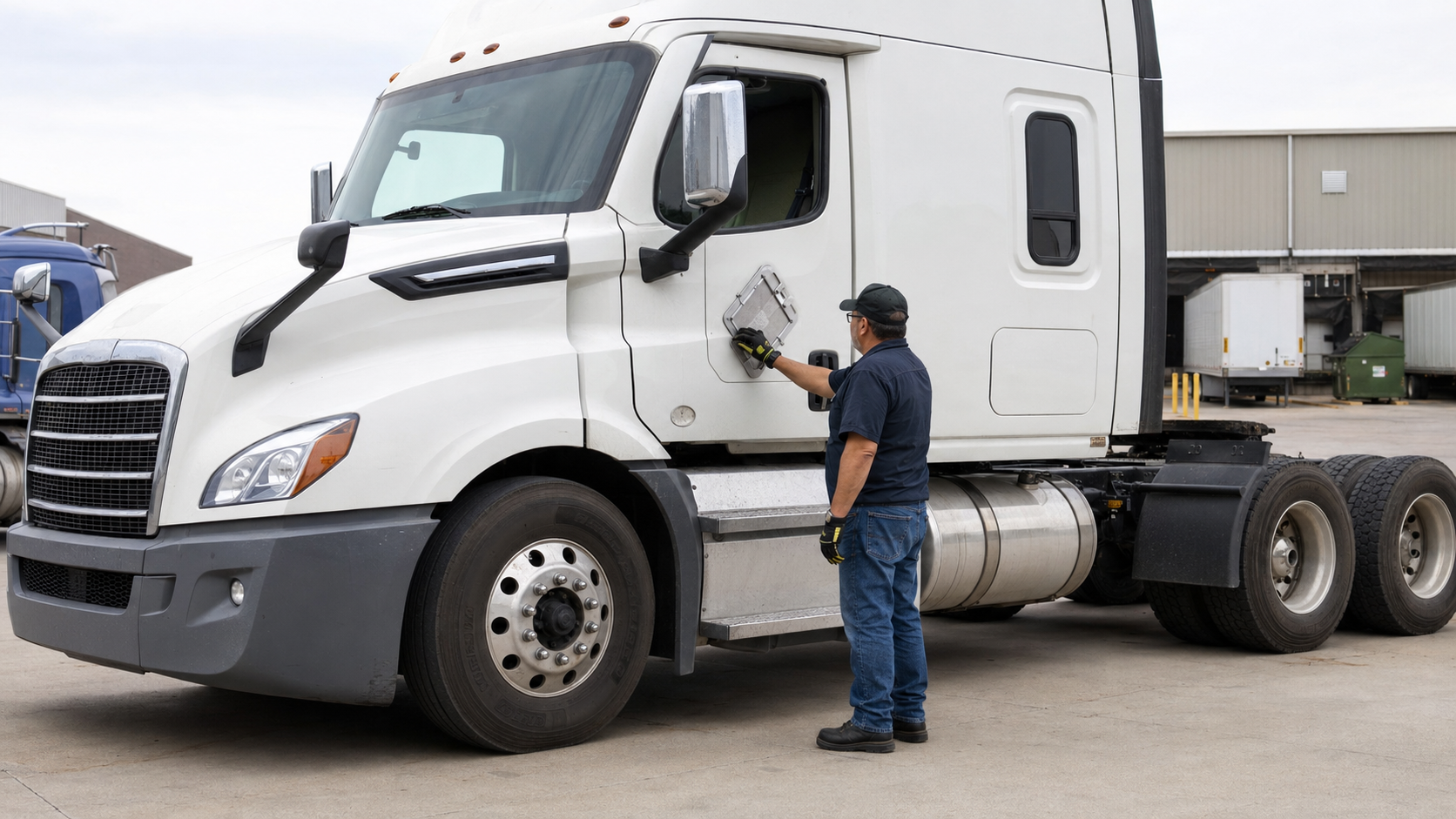
Inspect packages for leakage, damage or improper orientation. Verify that markings and labels correspond with the shipping papers. Then verify the vehicle placards required for the load are correct, visible and in suitable condition.
Do not guess based on color alone. Use current PHMSA materials and the applicable Hazardous Materials Regulations because quantity, packaging and hazard class can change the placarding requirement.
Plan for securement and emergencies
Hazmat cargo must also satisfy ordinary cargo-securement rules. Check blocking, bracing and compatibility, then repeat en-route inspections at the required times. Route and parking restrictions may apply to particular materials.
Carry the current emergency-response information required for the shipment. If a leak, fire or collision occurs, protect people first, move uphill and upwind when practical, call emergency services and follow the Emergency Response Guidebook and carrier procedure. Do not improvise cleanup beyond your training.
Separate each requirement in your application plan
Use separate rows for registered-provider training, state testing, security screening and license issuance. Add the official source, status and next action to each row. A practice quiz belongs in a learning column, not in the column recording official completion. Confirm current eligibility before paying for a new step.
Can a study quiz result stand in for a submitted ELDT record?
No. The practice result helps choose what to review. Required training records and licensing steps must be verified separately.
Practical takeaways
- Complete both endorsement qualifications and job-function training.
- Match shipping papers, packages, markings, labels and placards before departure.
- Treat any inconsistency as a stop-and-correct condition.
- Keep emergency information immediately accessible.
- Use current PHMSA references rather than memory or an old placard chart.
Continue with the ProntoCDL Practice Center, review key terms in the CDL Glossary, or open the Study Guides.
Frequently asked questions
Does a Hazmat endorsement replace employer training?
No. The endorsement qualifies the CDL; employers must still provide training appropriate to the employee’s hazmat functions.
Who performs the security threat assessment?
The Transportation Security Administration administers the assessment for drivers obtaining, renewing or transferring a Hazmat endorsement.
Can a driver move a load when the paperwork and placards disagree?
The inconsistency should be corrected before movement. Shipping papers and hazard communication must accurately match the shipment.
Where should I study current placarding information?
Use the current Hazardous Materials Regulations and PHMSA publications such as DOT Chart 17.