
CDL Distracted Driving and Mobile Phone Rules: A Practical Safety Guide
A phone can pull a commercial driver’s eyes, hands and attention away from the road in seconds. Federal rules prohibit texting and restrict hand-held mobile-phone use while driving a CMV—including during red lights and ordinary traffic delays. The professional solution is to set up devices before moving and stop safely before making changes.
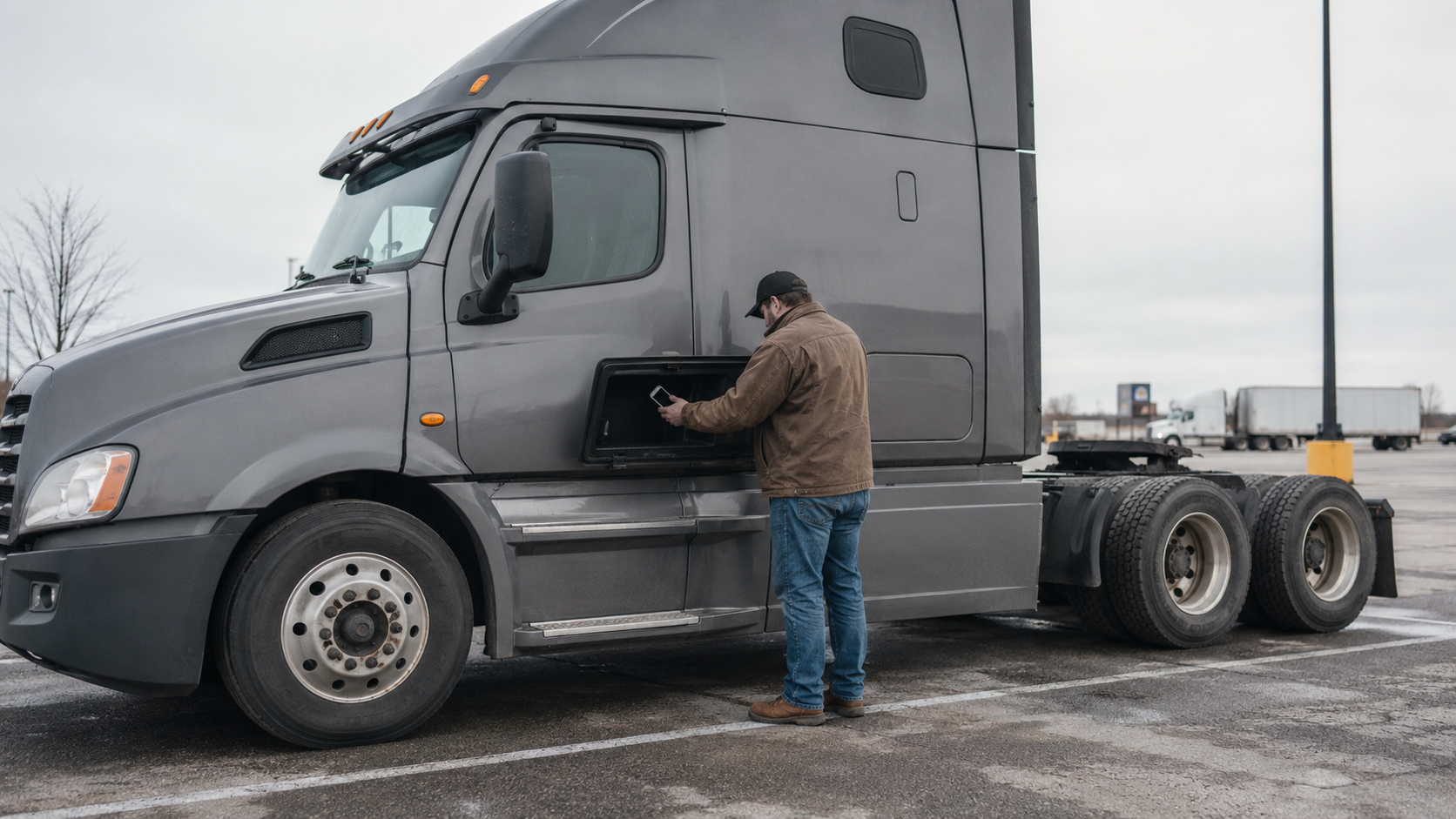
The current federal requirements appear in 49 CFR 392.80, which prohibits texting while driving, and 49 CFR 392.82, which prohibits using a hand-held mobile telephone while driving a CMV. The rules also prohibit motor carriers from allowing or requiring these behaviors.
Understand what “driving” includes
A driver does not become legally parked merely because the wheels stop. Under the texting rule, driving includes operating a CMV with the motor running while temporarily stationary because of traffic, a traffic-control device or another momentary delay. The hand-held phone rule likewise covers a CMV temporarily stopped in traffic on a highway.
That means a red light, congestion, a railroad queue or a brief loading-line delay is not a safe opportunity to read a message, type a response or hold a phone for a call.
The rules distinguish those situations from moving the vehicle to the side of or off a highway and stopping where it can safely remain stationary. A professional driver finds a lawful parking location, secures the vehicle and then handles the device.
Know what the federal phone restriction covers
FMCSA’s mobile-phone guidance explains that prohibited hand-held use includes:
- Holding a mobile phone with at least one hand to make a call
- Dialing by pressing more than a single button
- Reaching for a phone in a way that takes the driver out of the seated driving position while properly restrained
A hands-free label does not make an unsafe reach compliant. If the driver must lean, unbuckle, search on the floor or take attention away from vehicle control, the setup has failed.
Texting means more than sending a text message
For federal CMV rules, texting is broader than SMS. It includes manually entering alphanumeric text into, or reading text from, an electronic device. Common risk points include composing messages, reading dispatch notes, typing an address, entering route changes, browsing, selecting music or interacting with an app.
Some limited actions are treated differently under the regulatory definition, but a driver should not build a safety routine around technical exceptions. If an action requires looking away, typing, scrolling or handling the device, complete it before departure or after safely parking.
Set up the cab before releasing the brakes
A two-minute device check before departure prevents rushed decisions later. Use this sequence:
- Mount: Position an approved device where it can be seen without blocking the windshield or critical controls.
- Route: Enter the destination, review restricted roads, confirm fuel and parking stops, and preview major turns.
- Audio: Set navigation volume and connect the compliant hands-free system.
- Silence: Enable a driving mode that suppresses nonessential notifications.
- Store: Place loose devices, cables and accessories where they cannot fall near the pedals or invite reaching.
- Plan: Decide where you can safely stop if dispatch sends information that requires reading or entry.
Use a one-touch rule for permitted hands-free calls
FMCSA guidance says a compliant hands-free phone should be close enough that the driver can initiate, answer or terminate a call by touching a single button while remaining seated and properly restrained. Voice activation, an earpiece or speaker function may support that setup.
Legal does not always mean wise. Heavy traffic, work zones, backing, bad weather, grades and unfamiliar routes can demand full attention. Let a call go unanswered when conditions are complex. A carrier may also impose a stricter no-call policy.
Build a safe dispatch routine
Dispatch messages often arrive when a driver is moving, but operational urgency does not override safe-driving rules. Use a clear process:
- Allow messages to queue while driving.
- Use an approved audible alert only to know that a message exists—not to read it.
- Continue to a lawful, safe stopping place.
- Set the parking brakes and secure the vehicle.
- Read the entire message, confirm the new plan and update navigation while stationary.
- Send a concise acknowledgment before returning to traffic.
Motor carriers may not allow or require drivers to text or use a hand-held phone while driving. A driver should report any instruction that pressures them to violate the rule through the carrier’s safety process.
Recognize non-phone distractions
Electronic devices are only one source of distraction. Eating, paperwork, loose objects, pets, conversations, climate controls and looking for items can create the same three problems: eyes off the road, hands off the controls and mind off the driving task.
Prepare food, documents and cab controls before moving. Keep the floor and dashboard clear. If something drops, leave it until the vehicle is safely parked. No object is worth losing lane position.
Use a reset procedure after any distraction
If attention is interrupted, do not make a sharp correction based on a partial picture. Return both hands to control, look far ahead, check mirrors, confirm lane position, re-establish following distance and identify an escape path. If you cannot recover full awareness immediately, reduce risk smoothly and stop in a safe location.
Practical takeaways for CDL study
- Texting and hand-held phone use are prohibited while driving a CMV.
- A red light or momentary traffic stop still counts as driving.
- Park safely off the highway before reading, typing or programming a device.
- Hands-free operation must not require holding, multi-button dialing or unsafe reaching.
- Program navigation and silence nonessential alerts before departure.
- Dispatch pressure does not override the federal restrictions.
- Use stricter carrier rules whenever they exceed the federal minimum.
Review safety terms in the ProntoCDL CDL glossary, strengthen hazard-recognition habits with the CDL study guides, and test related concepts in the General Knowledge Practice Center.
Frequently asked questions
Can a CDL driver text while stopped at a red light?
No. The federal texting rule treats a driver as driving while temporarily stationary because of traffic, a traffic-control device or another momentary delay.
Can a CMV driver use a hands-free phone?
Federal guidance permits compliant hands-free use when the phone is close enough to operate while the driver remains seated and properly restrained, and a call can be initiated, answered or ended with a single touch. Safer carrier policies may be stricter.
Can a driver program GPS while the truck is moving?
Typing or entering information into an electronic device while driving can fall within the federal definition of texting. Program the route before moving or stop in a safe location off the highway before making changes.
When is a driver considered safely stopped for phone use?
The federal rules exclude a vehicle moved to the side of or off a highway and halted where it can safely remain stationary. A traffic lane, red light or temporary traffic delay does not qualify.
Is there an emergency exception?
Yes. The rules allow texting or hand-held phone use when necessary to communicate with law-enforcement officials or other emergency services.