
Cargo Securement Inspections: A Practical CDL Driver Checklist
Cargo securement is not finished when the trailer doors close or the last strap is tightened. Loads settle, packaging compresses, and tiedowns can lose tension. A professional driver needs a repeatable inspection routine from departure to delivery.
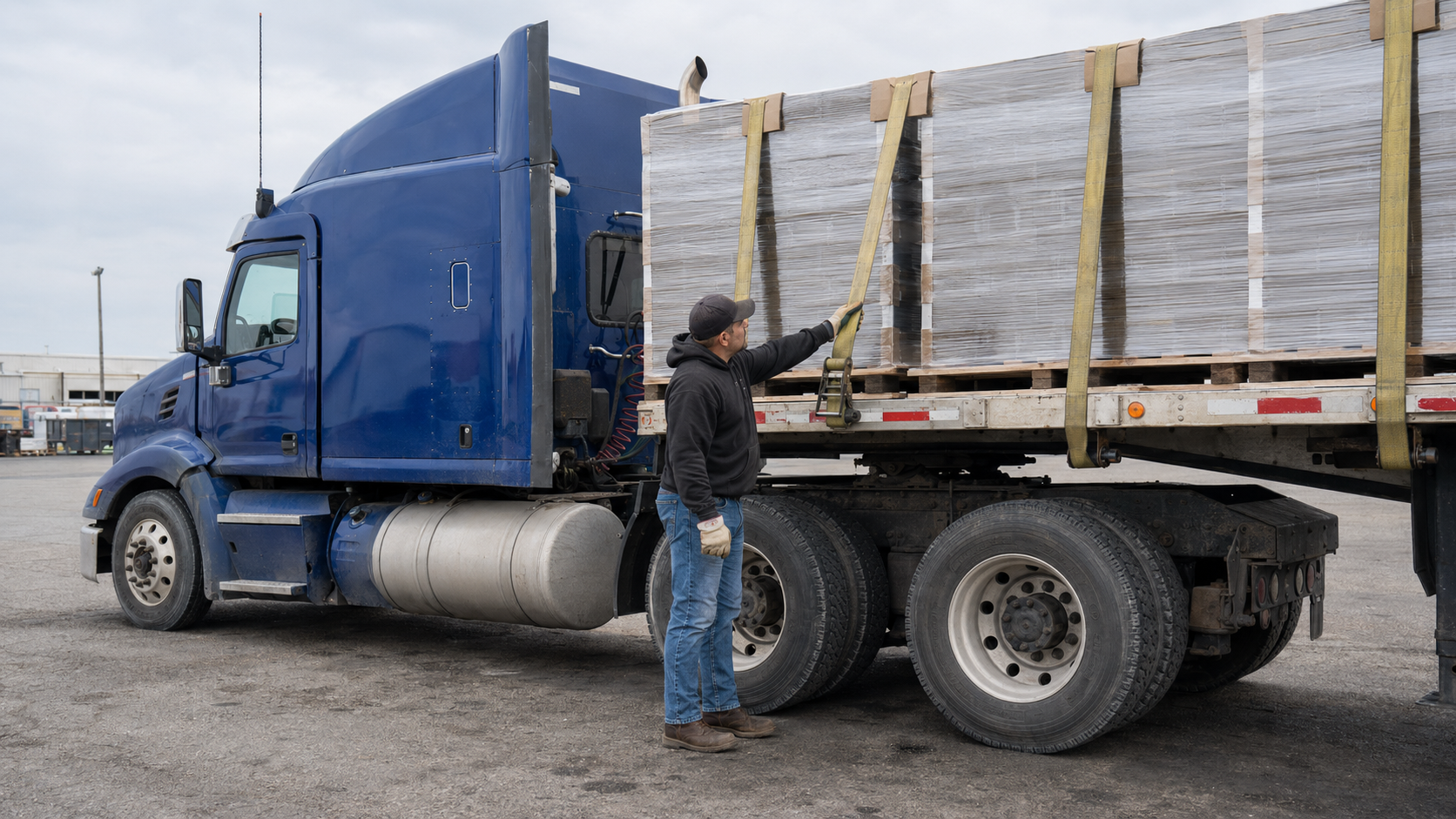
Federal requirements combine the driver inspection duties in 49 CFR 392.9 with the securement standards in Part 393. FMCSA emphasizes that cargo must be immobilized or secured so it does not shift on or within the vehicle or fall from it.
Before driving: verify the load can travel safely
Before operating, confirm the cargo is properly distributed and adequately secured, and that doors, tailgates, spare tires, equipment, and other objects are secured. Cargo should not block the driver’s view, interfere with free movement, prevent access to emergency equipment, or make safe operation impossible.
On an open deck, inspect straps, chains, binders, anchor points, blocking, bracing, dunnage, and edge protection. Look for cuts, abrasion, damaged links, bent components, missing securement, or anything positioned so it may loosen. FMCSA says securement components used for that function must be in proper working order and free of damage or weakness that could adversely affect performance.
The first 50 miles matter
For cargo the driver can inspect, federal rules generally require the driver to examine the load and securement devices within the first 50 miles after beginning a trip. Make adjustments when necessary so cargo cannot shift or fall and so the load does not interfere with safe operation.
This early check is practical, not merely procedural. Packaging can compress, lumber can settle, and vibration can reduce strap tension. Choose a safe, legal location before stopping—never create a new hazard on a shoulder simply to meet an inspection routine.
Know the recurring inspection triggers
After the initial check, the driver generally must reexamine the cargo and its securement when any one of these events occurs:
- The driver makes a change of duty status.
- The vehicle has been driven for three hours.
- The vehicle has been driven 150 miles.
The rule uses whichever event occurs first. Treat those moments as minimum triggers. Recheck sooner after hard braking, abrupt maneuvering, rough roads, unusual noise, a visible load change, or any reason to suspect securement has moved.
Use a consistent walkaround sequence
- Start with vehicle posture. Look for leaning, bulging, shifted freight, or a changed ride height.
- Inspect every visible tiedown. Confirm attachment, tension, routing, and protection from sharp edges.
- Check blocking and bracing. Verify chocks, wedges, dunnage, and braces remain positioned and cannot release.
- Check doors and closures. Confirm hinges, latches, locks, and liftgate components are secure.
- Look below and behind. Search for debris, leaking cargo, loose material, or components contacting tires and brakes.
- Document and correct. Follow company procedures and do not continue until an unsafe condition is resolved.
Understand access exceptions without guessing
The recurring examination requirements do not apply in the same way when cargo is transported in a sealed commercial motor vehicle and the driver has been ordered not to open it, or when the cargo or loading method makes inspection impracticable. A padlock is not automatically a seal: FMCSA guidance says a driver who holds the key still has ready access.
Do not invent an exception based on convenience. Follow the regulation, the bill of lading and seal instructions, carrier procedures, and any commodity-specific requirements.
Securement strength is only part of the answer
FMCSA’s cargo securement overview explains that the aggregate working load limit of a securement system generally must be at least one-half the weight of the article or group of articles. Minimum tiedown counts also apply, and special commodity rules can add more specific requirements for items such as logs, metal coils, concrete pipe, intermodal containers, heavy equipment, and large boulders.
A correct tiedown count does not excuse damaged webbing, poor routing, inadequate edge protection, weak anchor points, or cargo that can roll. Drivers should learn both the calculation and the physical inspection.
Practical takeaways for CDL applicants
- Memorize the first-50-mile check and the three recurring triggers.
- Explain what you are inspecting—not simply that a strap is “secure.”
- Connect cargo movement to braking, steering, rollover risk, and axle loading.
- Study the rules that apply to the actual commodity and trailer type.
- When in doubt, stop safely and correct the condition before continuing.
Build the foundation with the ProntoCDL General Knowledge practice test, review inspection language in the CDL glossary, and use the CDL study guides to reinforce safe-operation concepts.
Frequently asked questions
When must a commercial driver recheck cargo after starting a trip?
For cargo the driver can inspect, federal rules generally require an examination within the first 50 miles and any needed adjustments to the load or securement devices.
How often must cargo be reexamined after the first check?
Generally when the driver changes duty status, after three hours of driving, or after 150 miles—whichever occurs first. Exceptions can apply when the cargo is sealed or impractical to inspect.
Does a padlock make a cargo compartment sealed for this rule?
FMCSA guidance says no when the driver has the key and ready access to the compartment.
Who is responsible if a shipper loaded the trailer?
FMCSA guidance states that the motor carrier and driver remain responsible for ensuring cargo aboard the vehicle is properly loaded and secured, subject to applicable access exceptions.