
Defensive Driving Techniques for Trucks: A CDL Safety Guide
Defensive driving means recognizing a hazard early enough to preserve options. In a commercial vehicle, extra weight, stopping distance, height and off-tracking make early decisions more important than last-second reactions.
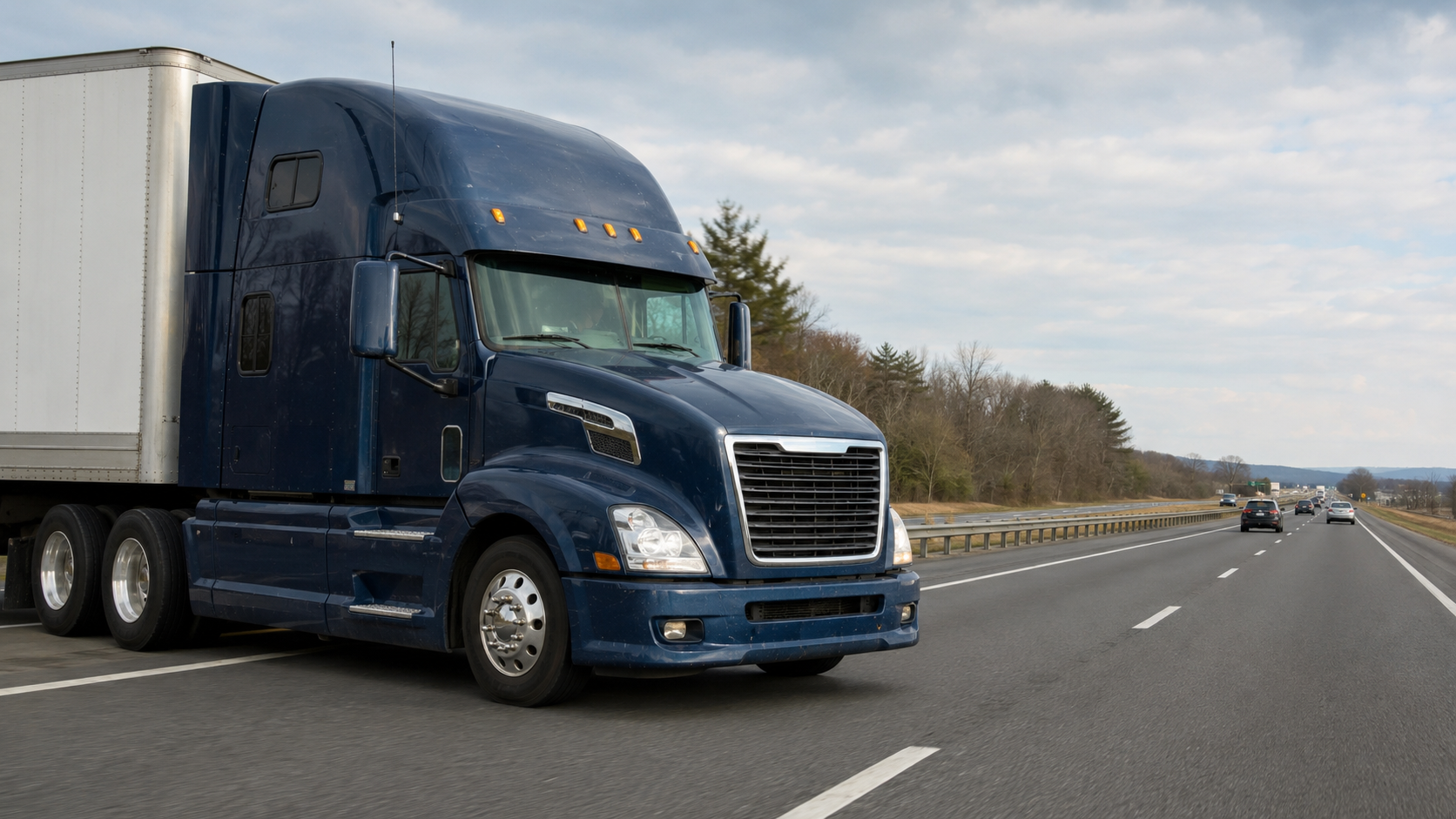
Search far enough ahead
Move your eyes between the road ahead, mirrors, instruments and developing conflict points. Look for brake lights, lane reductions, pedestrians, merging traffic, low-clearance warnings and changing road surfaces before they reach your immediate space.
Avoid staring at one hazard. A fixed gaze can hide a second problem developing beside the truck.
Protect space on every side
Maintain enough following distance to stop smoothly and increase it for rain, darkness, heavy traffic, grades or limited visibility. Avoid traveling beside another vehicle longer than necessary and keep the space ahead open enough to create an escape path.
Remember the no-zones around the tractor and trailer. If you cannot see another vehicle, assume its driver may not understand your limited visibility either.
Choose speed before the hazard
Enter curves, work zones, downgrades and crowded areas at a speed that preserves steering and braking control. Braking hard after entering a curve can increase instability. Select the proper gear before a downgrade and follow the vehicle’s safe speed-control procedure.
Posted limits are maximums under favorable conditions, not a promise that the speed is safe for every truck, load or road condition.
Communicate and keep an exit
Signal early, position the vehicle predictably and use the horn or lights only when appropriate to communicate presence or risk. Before every lane change, confirm the path, signal, recheck mirrors and account for the trailer.
Continuously identify where the truck could move or stop if traffic changes suddenly. A defensive driver does not wait for an emergency to look for an escape route.
Explain the changing gap
Illustrative exercise: traffic compresses ahead while another vehicle enters your following gap. Write down what you need to observe first and what space is available. Then compare smooth speed adjustment and restoring space with an aggressive attempt to prevent another merge. Repeat the explanation with wet pavement and reduced visibility.
Which observation could make your original plan inadequate?
A shorter visible stopping distance, a developing queue or a changed gap can require reassessment. The posted speed limit alone does not settle the decision.
Practical takeaways
- Scan for hazards early and keep the eyes moving.
- Maintain space ahead, beside and behind the combination.
- Reduce speed before curves, grades and congestion.
- Communicate intentions early and predictably.
- Keep an escape route available whenever traffic allows.
Continue with the ProntoCDL Practice Center, review key terms in the CDL Glossary, or open the Study Guides.
Frequently asked questions
How far ahead should a CDL driver look?
Use the visual-search guidance in your current state CDL manual and adjust for speed and conditions. The key is seeing hazards early enough to act smoothly.
Does the speed limit always indicate a safe truck speed?
No. Weather, load, traffic, visibility, curves and grades may require a substantially lower speed.
What is an escape route?
It is available space where the driver could steer or stop if the planned path becomes blocked.
Why avoid driving beside other vehicles?
It reduces available escape space and can keep smaller vehicles in the truck’s blind areas.