
CDL Wheelchair Lift Inspection Guide: Interlocks and Securement
A wheelchair lift is a coordinated safety system, not just a moving platform. A complete passenger-vehicle inspection checks the mounting, surface, barriers, controls, warnings, interlocks and onboard securement area before anyone boards.
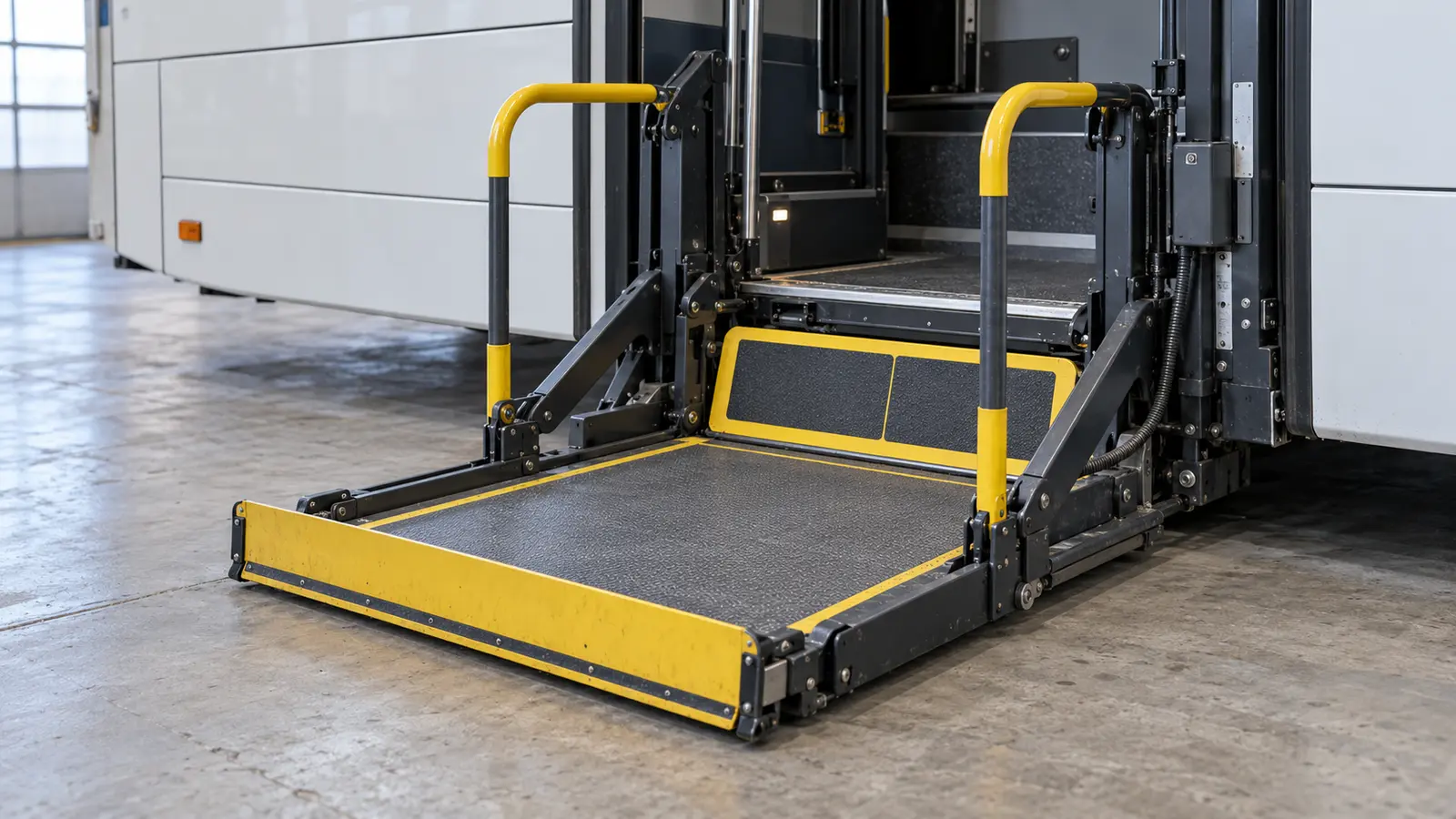
Passenger-endorsement applicants can expect accessibility equipment to appear in both inspection training and real driver duties. The federal Passenger Endorsement ELDT curriculum specifically requires instruction in cycling accessible lifts, inspecting them for function and defects, operating accessibility equipment and properly securing wheeled mobility devices and related apparatus.
That scope matters because several devices work together. The platform changes height. Edge guards and retention barriers keep wheels on it. Interlocks coordinate the lift with the bus. A threshold warning protects the doorway area. Inside the vehicle, a separate securement system controls the mobility device during travel. A driver who checks only whether the platform goes up and down misses most of the system.
Start with the actual lift and its instructions
Lift designs differ. Controls, manual-backup points, barrier shapes and stow sequences are not interchangeable, even when two buses look similar. Begin with the vehicle and lift operating instructions, the carrier procedure and hands-on training for that unit. Simple operating and backup instructions are required near the controls under FMVSS No. 403.
Use a repeatable three-part inspection statement:
- Name the component or function: platform surface, outer barrier, inner roll stop, threshold warning or vehicle interlock.
- Describe the check: secure, undamaged, clear, correctly sequenced and responding to the control.
- State the defect decision: what failed and why the bus stays out of this service until the prescribed response is completed.
This is the same explain-and-demonstrate method used in ProntoCDL's three-part CDL skills-test guide.
Choose a safe deployment area
Before opening the lift door or moving the platform, secure the bus as the vehicle procedure requires. Use level, stable ground with enough side clearance for the complete platform cycle. Check overhead and side clearance, the curb relationship, traffic, pedestrians, poles, snow, standing water, loose gravel and pavement damage. Keep the boarding path and the inside approach to the securement location clear.
No one should stand on, beside or beneath the platform during a pre-trip cycle. Keep hands, feet, clothing and equipment away from hinges and pinch points. Maintain an unobstructed view from the control position; FMVSS No. 403 requires public-use lift controls to be located so the operator can directly view the platform passenger and mobility aid during lift operation.
If the stop does not provide a safe deployment area, do not force the cycle against a curb, slope or obstacle. Follow the route and carrier procedure for selecting a safe boarding position and communicating the change.
Inspect the installed structure before cycling
With the system stowed and power controlled as instructed, inspect the visible installation. Look for loose or missing mounting hardware, cracked welds, distorted brackets, damaged lift arms, leaking hydraulic components, chafed wiring, loose connectors and worn pivot points. The platform must sit squarely in its enclosure and the access door must latch securely.
When the platform is deployed empty, check:
- a solid, slip-resistant platform surface without holes, loose panels or contamination;
- continuous side edge guards without bending, separation or a wheel-catching gap;
- an outer retention barrier that deploys, stays upright during travel and returns to a loading-ramp position only at ground level;
- an inner roll stop or bridging device that moves through the correct sequence and provides a usable transition at the vehicle floor;
- secure handrails without cracks, looseness, sharp edges or interference with the vehicle; and
- contrasting platform-edge markings and lighting that are visible enough for the operating conditions.
Federal lift standards treat these as protective components. FMVSS No. 403 requires edge guards, wheelchair-retention features and an inner roll stop on public-use lifts, and requires a handrail on each side. Do not defeat a barrier because it slows the cycle or makes alignment inconvenient.
Cycle the empty lift in the correct sequence
Stand where the controls, platform and surrounding area remain visible. Follow the posted sequence and maintain the required pressure on momentary controls. Watch the complete cycle: deploy from stow, lower to ground, raise to vehicle-floor height and return to the fully stowed and latched position.
The motion should be smooth and controlled. Stop if the platform binds, jerks, drifts, tilts abnormally, strikes the vehicle or ground, produces an unusual noise, leaks fluid, exposes damaged wiring or fails to stop when the control is released. Confirm that the outer barrier and inner roll stop deploy before platform movement carries them above their protected heights. Never stand on the platform or add an improvised load to “help” a reluctant mechanism.
FMVSS No. 403 also requires a manual backup operating mode for loss of primary power or a lift malfunction. A driver should know where the backup instructions and operating point are, but should perform a backup cycle only as trained and authorized. The backup procedure is equipment-specific.
Prove the warnings and interlocks
A lift that moves can still be unsafe. The federal system requirements in FMVSS No. 403 include logic that prevents:
- forward or rearward vehicle movement unless the lift is stowed;
- lift operation from the stowed position until vehicle movement is inhibited through the installed transmission-and-brake logic;
- automatic stowing when a passenger or mobility aid occupies the platform, except for specifically excluded designs;
- platform travel above the ground-level range unless the outer retention device is deployed; and
- platform travel unless the required inner roll stop has correctly deployed.
Test only the interlock checks prescribed by the vehicle manufacturer and carrier. Do not attempt to move the bus against a person, obstacle or occupied platform, and never bypass a switch to prove it works. The safe check uses the designed control sequence and observes whether an improper command is rejected.
Also verify the threshold warning by the approved procedure. On public-use lifts, FMVSS No. 403 requires both a visual and audible warning when the platform is more than one inch below the threshold and a passenger or mobility aid is in the threshold area. Do not create the condition with a person during a routine inspection. Use the vehicle's prescribed test method.
Inspect the onboard path and securement location
Follow the route from the platform threshold to the designated securement position. The path must be clear of baggage, cleaning equipment, seat parts, loose restraints and other obstacles. Confirm that any movable seats are correctly positioned and latched for the intended service and that floor anchorages are accessible and undamaged.
Inspect the approved tie-downs, retractors, hooks, straps and occupant belt or shoulder harness. Look for cuts, fraying, contamination, twisted webbing, bent hooks, failed retractors, missing hardware and damaged or obstructed floor fittings. Store each device so it cannot become a trip hazard or strike a passenger.
Under 49 CFR 38.23, ADA-compliant buses and vans use a two-part onboard system: one part secures the wheelchair, and a seat belt and shoulder harness serve the wheelchair user. Do not confuse either part with the platform's roll-stop and barrier system.
Use a calm boarding and securement workflow
Once the equipment passes inspection and a passenger needs the lift, speak directly with the passenger and explain each step before moving equipment. Ask what assistance is wanted and follow the trained positioning procedure for the installed lift. Keep the boarding area clear, monitor the mobility device and use the controls from the designated position.
- Secure the bus and prepare the safe boarding area.
- Deploy the lift and confirm the platform, barriers and handrails are ready.
- Guide or assist the passenger as required, without grabbing or operating a mobility device unexpectedly.
- Confirm wheels, feet, bags and equipment remain inside the platform boundary.
- Maintain communication and an unobstructed view through the full lift movement.
- Move into the designated onboard position and apply the approved mobility-device securement system.
- Provide the occupant restraint according to the equipment, carrier policy and applicable service rules.
- Stow loose straps, clear the aisle and confirm the lift is fully stowed before releasing the vehicle interlock.
For transit operations covered by DOT ADA service rules, 49 CFR 37.165 requires personnel to assist with lifts, ramps and securement systems when necessary or requested. It also says a rider cannot be required to transfer from a wheelchair to a vehicle seat. The passenger's dignity and the equipment's safety sequence belong in the same procedure.
Secure the mobility device without improvising
Use the exact securement layout taught for the vehicle. Attach only at suitable structural points and keep straps away from wheels, spokes, control cables, removable footrests and other parts that can bend, detach or interfere with device operation. Remove slack through the approved tensioning method while avoiding pressure on the passenger or damage to the device.
Then apply the occupant belt and shoulder harness as designed, without routing them over fragile device components or allowing them to serve as mobility-device tie-downs. Recheck the aisle, exit access and any oxygen or related equipment before departure. ProntoCDL's bus interior inspection guide covers the broader seat, aisle and baggage checks that surround this task.
Rules can differ by service type and carrier. For DOT-regulated transit service, the FTA's Part 37 guidance explains the separate requirements for using securement equipment, offering assistance and keeping accessible features operative. Train on the policy that applies to the actual operation rather than borrowing a rule from a different kind of passenger service.
Know the defect and service decision
Keep the lift out of service and report the exact condition when a mount, platform, barrier, handrail, control, warning, interlock, backup system or securement component fails its prescribed check. Do not tape over a warning, wedge a switch, hold a barrier by hand or substitute an unrelated strap.
For transportation entities covered by DOT ADA rules, 49 CFR 37.161 requires accessible features, including lifts and securement devices, to be maintained in operative condition and repaired promptly when damaged or out of order. The service response for an inoperative lift depends on the operation and applicable rules, so notify dispatch or supervision and follow the established accommodation and repair procedure.
After any boarding event, confirm the platform is fully stowed, the door is secured, controls are returned to their normal position and no strap or equipment is left in the aisle. Include the lift in the post-trip walk-through along with the checks in ProntoCDL's bus emergency-exit guide.
Practical takeaways
- Learn the controls, barriers, warnings, interlocks and backup system for the specific lift.
- Secure the bus and use a level, clear deployment area.
- Cycle the lift empty during inspection; keep everyone out of pinch and sweep zones.
- Inspect mounting, arms, pivots, wiring, hydraulics, platform surface and edge guards.
- Confirm the outer retention barrier, inner roll stop and handrails are secure and correctly sequenced.
- Verify warnings and interlocks through the approved procedure, never by bypassing them.
- Keep the path from platform to securement position open.
- Inspect mobility-device tie-downs and occupant restraints as separate safety components.
- Communicate with the passenger before assisting or moving equipment.
- Report the exact failed function and follow the carrier's service response before departure.
CDL wheelchair-lift FAQ
Does the federal passenger-endorsement curriculum include wheelchair lifts?
Yes. Appendix C to 49 CFR part 380 requires training providers to teach cycling-accessible lifts and procedures for inspecting them for functionality and defects. It also requires instruction and behind-the-wheel proficiency in handling and securing wheeled mobility devices and other equipment associated with ADA compliance.
Can a bus move while its platform lift is deployed?
A compliant platform-lift system is designed with interlocks that prevent forward or rearward vehicle movement unless the lift is stowed. The lift also should not operate from the stowed position until vehicle movement is inhibited through the installed transmission-and-brake logic. A failed or bypassed interlock is a stop-and-report condition.
Should I load a passenger during the pre-trip lift inspection?
No. Perform the operational inspection with the platform empty and the deployment area clear, following the lift and vehicle instructions. Passenger service begins only after the lift has passed its checks and the boarding location is safe.
Are the lift barriers the same as the wheelchair securement system inside the bus?
No. Edge guards, the outer retention barrier and the inner roll stop help keep a mobility device on the platform while the lift moves. The onboard securement system holds the mobility device in its designated travel location. The passenger restraint is a separate part of the two-part onboard system required on ADA-compliant buses and vans.
May a driver improvise a tie-down point on a wheelchair?
No. Use the approved securement equipment, the designated vehicle anchorages and suitable attachment points identified through training and the equipment instructions. Do not attach to removable footrests, wheels, control cables or another fragile component, and do not substitute a baggage strap or improvised knot.
What if the lift works but a warning, barrier or interlock does not?
Do not treat platform movement alone as a passing inspection. The threshold warning, retention devices, roll stop, controls and vehicle interlocks are part of the safety system. Report the exact failed function and follow the carrier defect and accessibility-service procedure before carrying a passenger who needs the equipment.
Build the rest of your passenger-vehicle routine
Review the P and S credential paths in ProntoCDL's passenger and school-bus endorsement guide, then reinforce inspections and passenger-safety concepts with the CDL study guides and free practice center.