
CDL Engine Brake Guide: Safe Use on Grades and Slippery Roads
An engine brake can preserve service-brake capacity on a long descent, but only when the driver understands the controls, selects speed and gear early, and respects the traction available at the drive wheels.
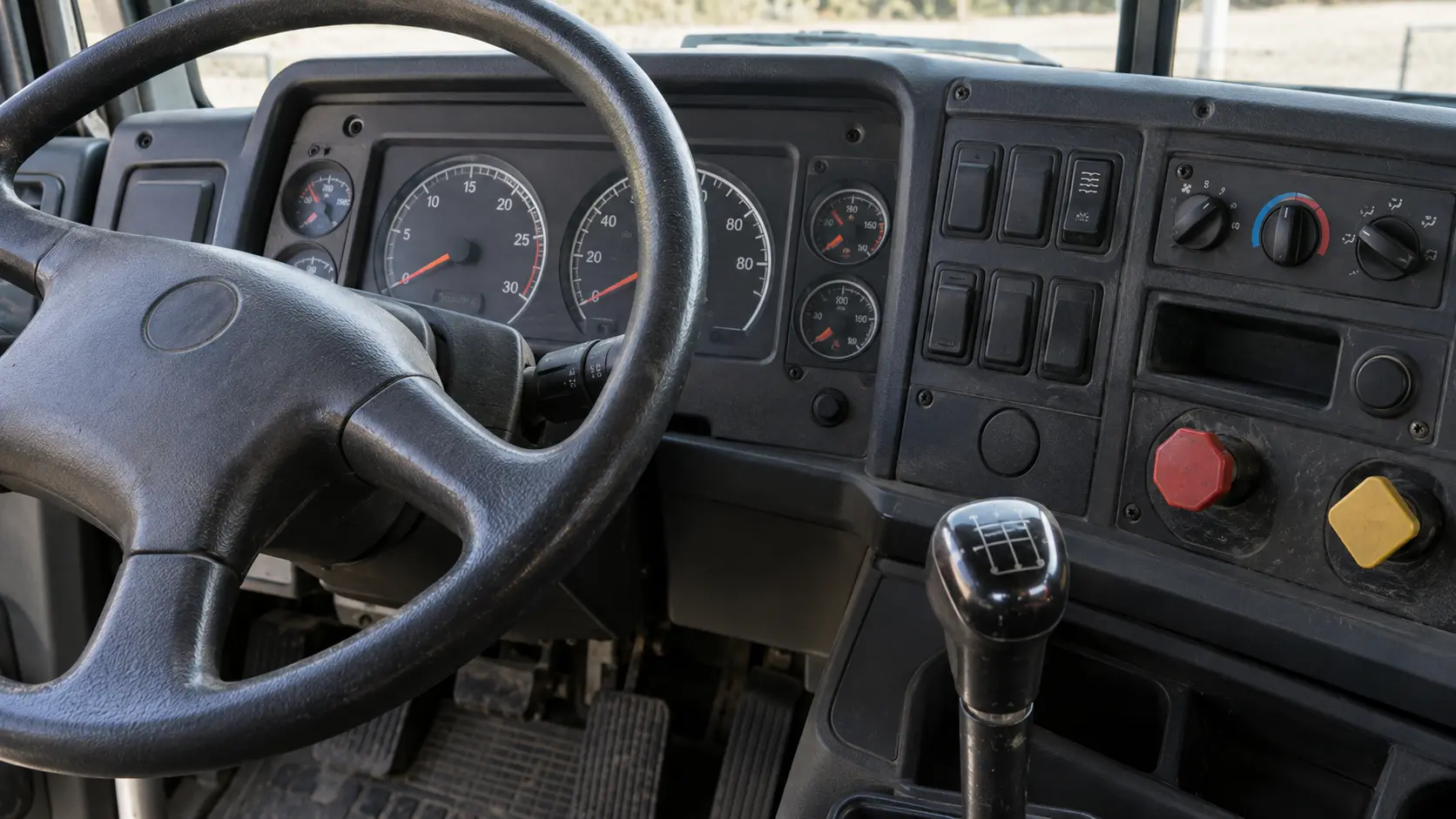
“Engine brake” and “retarder” are often used as if they mean the same thing. An engine brake is one type of retarder. The current New York CDL Manual, Section 2 identifies four basic retarder types: exhaust, engine, hydraulic and electric. Their designs differ, but their driver-level purpose is similar: help slow the vehicle and reduce reliance on the service brakes.
That help has limits. The same manual explains that retarding power is applied through the drive wheels and warns that poor drive-wheel traction can turn retarder use into a skid. A professional driver therefore treats the retarder as one part of a speed-control plan—not as an automatic answer to every hill or surface.
Federal CDL knowledge requirements reinforce the larger skill. 49 CFR 383.111 requires knowledge of CMV controls, shifting, speed management, extreme conditions, skid control and mountain-driving practices, including selection of safe speed, the right gear and proper braking technique.
Know what the retarder can—and cannot—do
A retarder converts vehicle motion into resistance without using the service-brake friction surfaces in the usual way. Depending on the system, that resistance may come from the engine, exhaust, transmission or driveline. On a suitable dry descent, this can reduce the frequency and heat load of service-brake applications.
A retarder is not a replacement for any of the following:
- Service brakes: You still need normal stopping and emergency braking capacity at the wheels.
- Parking brakes: Retarding force does not securely hold an unattended vehicle.
- Correct gear selection: A poor gear choice can let road speed or engine rpm rise beyond the intended range.
- Safe speed: No retarder can make a curve, grade or low-traction surface safe at an excessive entry speed.
- Brake inspection: Auxiliary slowing power never excuses a defect in the foundation brakes or air system.
Review ProntoCDL's air-brake test guide and brake drum and lining guide before treating downgrade control as only a cab-control topic.
Identify the controls before the truck moves
Retarder controls vary. A truck may use an on/off switch, several power levels, a steering-column control or logic tied to the accelerator, clutch, brake pedal, cruise control and transmission. An automated transmission may select gears differently from a manual transmission. Some systems illuminate a status lamp; others show a level on the driver display.
During vehicle familiarization, while parked and secured:
- Locate the retarder control and identify every available setting.
- Read the vehicle-specific operating instructions instead of assuming the control matches another truck.
- Learn what pedal or cruise-control input cancels or changes retarder operation.
- Identify the normal indicator or dashboard message.
- Know the permitted engine-speed range and how the transmission responds.
- Confirm the company procedure for wet, icy, snowy and loose surfaces.
The federal Class A ELDT curriculum requires training on primary and secondary controls, shifting, speed management, steep grades, sharp curves and skid prevention. Knowing where the switch is located is only the first step; the trainee must connect that control to the vehicle's response.
Build the downgrade plan before the crest
The safe decision is made before gravity builds speed. Look for grade length, grade percentage, advisory speed, curves, traffic, surface condition and escape-ramp information. Consider total vehicle weight, road and weather conditions, and the amount of space available ahead.
Then select a safe speed and the proper gear before starting down. The CDL manual warns against waiting until speed has already built to attempt a downshift. A missed gear can remove the engine's braking effect at the exact moment it is needed. ProntoCDL's manual-transmission guide explains controlled downshifts, and the mountain-driving guide covers grade planning and escape ramps in depth.
On a dry surface, use the vehicle-approved retarder setting to help hold the planned speed. Watch the speedometer and tachometer; do not judge control by sound alone. Increase or decrease retarding force smoothly, keep the vehicle in the intended gear and leave enough margin to use the service brakes when needed.
Coordinate the retarder with service brakes
Retarding force supplements a complete downhill braking strategy. If the truck accelerates to the selected safe speed, apply the service brakes firmly enough to produce a definite slowdown. The current CDL manual describes reducing speed to approximately 5 mph below the selected safe speed, releasing the brakes, and repeating when speed returns to the safe value. Its example uses an application lasting about three seconds.
This technique gives the service brakes time between applications rather than holding light pressure continuously. Exact vehicle response depends on the grade, load and equipment, so use the training and operating procedure for the truck. If the planned combination of gear, retarder and service-brake applications cannot control speed without excessive heat, the descent was entered too fast or in an unsuitable gear.
Never “test” a higher retarder level by allowing speed to build first. Make one smooth change at a time, keep steering inputs gentle and maintain space for a slower response than expected.
Turn the retarder off when traction is poor
The most important limitation is simple: the CDL manual directs drivers to turn the retarder off whenever the road is wet, icy or snow covered. It also warns against engine-brake or speed-retarder use on slippery surfaces because the drive wheels can skid.
| Surface or situation | Driver decision | Why it matters |
|---|---|---|
| Dry pavement with stable traction | Use only the vehicle-approved setting and adjust smoothly | Retarding force can support speed control while preserving service-brake capacity |
| Wet, icy or snow-covered road | Turn the retarder off and reduce speed before the hazard | Drive-wheel retarding force can contribute to a skid |
| Loose gravel, mud or uncertain traction | Treat traction as limited; follow the vehicle and carrier procedure | Available grip may change abruptly across the drive axle |
| Curve, ramp or lane change | Set speed first and avoid abrupt retarder changes | Tires must share traction between turning and slowing |
Do not assume ABS makes retarder use safe on ice. ABS helps manage brake-induced wheel lock, but retarder and powertrain integration differs across vehicles. The current CDL manual specifically notes that ABS does not prevent every power or turning skid. Use the conservative control strategy taught for the actual vehicle.
If the drive wheels begin to lose traction, prioritize directional control: remove the cause of the skid smoothly, avoid abrupt steering and follow the vehicle-specific recovery procedure. Review ProntoCDL's skid-control and recovery guide before winter operations.
Use extra care around curves, traffic and changing grades
A retarder can feel strong at one engine speed and weak at another. That changing response matters when a downgrade flattens, the transmission shifts, traffic slows or the road curves. Keep scanning well ahead so a retarder adjustment is planned rather than reactive.
- Before a curve: Establish the lower speed while the vehicle is straight and stable.
- In traffic: Do not rely on retarder deceleration alone to communicate a slowdown. Use the service brakes as needed so following traffic receives normal brake-lamp information under the vehicle's design.
- On a rolling grade: Avoid repeated abrupt on/off changes that disturb speed or traction.
- Near a posted restriction: Obey route signs and applicable operating requirements. Noise rules do not change the need to enter the grade at a controllable speed.
Keep both hands available for steering and complete control changes without looking away from the road. A switch adjustment is an in-cab task, and the same attention rules apply as they do to other dashboard controls.
Recognize abnormal operation
Vehicle designs differ, so compare behavior with the manufacturer description and the truck's normal response. Conditions that deserve a stop, exact report or maintenance direction include:
- the retarder activates when the control is off;
- there is no expected response at an approved setting;
- engagement is delayed, harsh, intermittent or accompanied by wheel slip;
- engine rpm rises toward or beyond the approved range;
- a warning lamp or diagnostic message appears;
- the transmission shifts unexpectedly or will not hold the intended range;
- new exhaust, engine, transmission or driveline noise develops; or
- the service brakes are doing substantially more work than expected to hold the planned speed.
Report observable facts: control level, gear, speed, rpm, road condition, warning indication and vehicle response. “High setting selected at 35 mph in sixth gear; no deceleration and warning lamp appeared” gives maintenance more useful evidence than “engine brake broken.”
Practice the decision sequence, not just the switch
A useful training exercise starts parked. The trainee identifies the retarder type, control levels, cancel conditions, indicators and manufacturer limits. The instructor then uses dry-road scenarios to ask for a complete plan:
- What is the safe entry speed?
- Which gear should be selected before the grade?
- Is the surface suitable for retarder use?
- Which initial setting follows the vehicle procedure?
- When will service brakes be applied and released?
- What conditions require the retarder to be switched off?
- What abnormal response requires a stop and report?
Behind-the-wheel practice belongs in an appropriate CMV with a qualified instructor and safe route. It is not a solo experiment for a permit holder. The goal is a repeatable sequence that protects traction and service-brake capacity.
Practical takeaways
- An engine brake is one type of retarder; system controls and responses vary.
- A retarder supplements service brakes and correct gearing—it replaces neither.
- Identify the controls, indicators, cancel conditions and engine-speed limits while parked.
- Select the safe speed and proper gear before beginning a downgrade.
- On dry pavement, adjust retarding force smoothly and monitor both road speed and rpm.
- Use deliberate service-brake applications when the vehicle reaches the selected safe speed.
- Turn the retarder off on wet, icy or snow-covered roads.
- Do not assume ABS can protect against every driveline-induced skid.
- Set speed before curves and avoid abrupt changes while turning.
- Report the operating conditions and exact response when the system behaves abnormally.
CDL engine-brake and retarder FAQ
Is an engine brake the same thing as a service brake?
No. An engine brake or other retarder helps slow the vehicle through the engine or driveline, while the service brakes act at the wheels. Retarding force can reduce service-brake use, but it does not replace functional service brakes, a parking brake or a complete brake inspection.
Should I use the engine brake on a wet road?
The current CDL manual cautions that retarders apply braking force to the drive wheels and may cause a skid when those wheels have poor traction. It directs drivers to turn the retarder off whenever the road is wet, icy or snow covered. Follow the actual vehicle manual and carrier procedure as well.
Which retarder setting should I use on a dry downgrade?
There is no universal setting. Available levels, transmission logic, engine speed limits and vehicle response differ. Select a safe speed and proper gear before the descent, begin with the manufacturer-approved control strategy and increase or reduce retarding force smoothly while monitoring speed, engine rpm and traction.
Does ABS make engine-brake use safe on ice?
Do not assume it does. ABS is designed to manage brake-induced wheel lock, but engine or driveline retarding can still affect drive-wheel traction. System integration varies by vehicle, and the CDL manual warns against engine-brake or speed-retarder use on slippery surfaces.
Can an engine brake hold a truck on a hill when parked?
No. A retarder is a speed-control aid, not a parking brake. Secure a parked vehicle with the installed parking-brake system and the vehicle or carrier wheel-chock procedure when required.
What should I report if the retarder behaves abnormally?
Report the switch position, road speed, gear, engine rpm, warning indication and exactly what the vehicle did—for example, no response, delayed engagement, unexpected activation, harsh cycling, wheel slip or abnormal noise. Stop using the retarder and seek maintenance guidance when continued operation could affect control or damage the vehicle.
Turn speed-control knowledge into test-ready practice
Review the mountain-driving guide, then reinforce the concepts with ProntoCDL's CDL study guides and free practice center.