
CDL Brake Drum and Lining Inspection: Cracks, Wear and Contamination
Air pressure may apply the brake, but the drum or rotor and its friction material convert motion into heat. A complete CDL inspection therefore looks beyond hoses and chambers to the surfaces that actually slow the wheel.
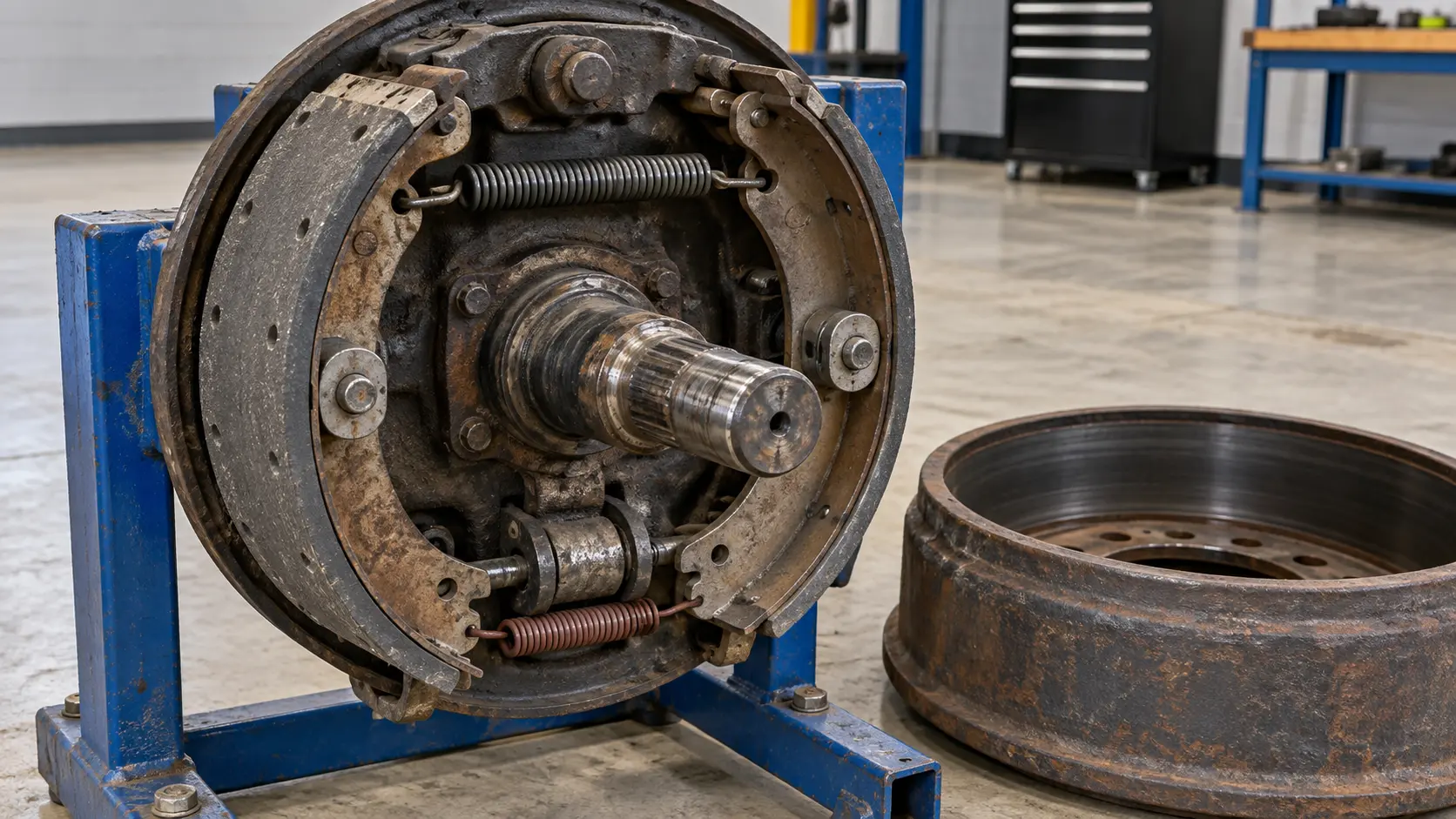
This guide focuses on what a driver can observe safely: missing or broken parts, visible cracks, loose friction material, contamination, inadequate visible thickness and heat clues. It does not turn a roadside walkaround into brake disassembly. Measuring drum diameter, rotor thickness or an uncertain lining belongs to trained maintenance personnel using the correct manufacturer procedure.
49 CFR 393.47 requires brake components to be constructed, installed and maintained for safe, reliable stopping. It specifies lining and pad minimums and says drum or rotor thickness may not fall below the manufacturer’s limit. The federal periodic-inspection standards identify loose or missing brake parts, contaminated friction material, serious drum or rotor cracks and missing material as rejectable conditions.
Know what the friction assembly is doing
| Component | Purpose | Visible concerns |
|---|---|---|
| Brake drum | Rotates with the wheel while shoes press against its inner surface. | External crack, missing piece, severe scoring, heat discoloration or damaged mounting area. |
| Brake shoe and lining | Supports the friction material that contacts the drum. | Loose or missing lining, visible thinness, contamination, cracking, displaced shoe or broken hardware. |
| Rotor | Rotates through the caliper while pads clamp its faces. | Crack, missing material, severe groove, heat damage or thickness below the manufacturer limit. |
| Pad and caliper | Apply friction evenly to both sides of the rotor. | Thin or missing pad material, contamination, loose caliper, damaged retention parts or obvious fluid leak. |
| Springs, rollers and anchors | Locate and return drum-brake shoes after application. | Missing, broken, displaced or loose hardware. |
Start with a safe viewing position
Park on firm, level ground when possible, apply the parking brakes, secure the transmission and follow the carrier’s chocking procedure. Keep the key controlled so no one can move the truck. Use a flashlight and the vehicle’s inspection openings or visible inboard areas without placing your body under an unsupported vehicle.
Do not crawl beneath a roadside truck, reach into a brake assembly, release spring brakes, or depend on air suspension, a jack or the parking brake as the only protection. Wheel removal, drum removal and brake application during inspection require an approved shop procedure with trained personnel and secure supports.
A repeatable wheel-position inspection
- Identify the brake type. Confirm whether the position uses a drum or disc system before describing its parts.
- Look at the external drum or rotor area. Check visible metal for cracks, missing material, severe grooves, fresh impact marks and unusual heat discoloration.
- View the friction material. Through an approved opening, confirm that visible lining or pad material is present, firmly attached and not obviously worn beyond its limit.
- Check for contamination. Look for wet oil, grease or brake fluid on the lining, pad, drum, rotor or backing area. Find the evidence; do not touch or smell it.
- Account for visible hardware. Springs, retaining parts, rollers, anchor hardware and caliper components should appear present and secure.
- Compare the opposite side. A major difference in visible wear, color, clearance or component position can reveal a developing problem.
- Connect the brake to nearby systems. Check the hub for leaks, the hose and chamber for damage, and the tire and wheel for conditions that could affect or hide the brake.
Use the correct lining and pad limits
One memorized thickness does not fit every brake. Under section 393.47, steering-axle air drum lining on a truck, tractor or bus may not be below 3/16 inch at the shoe center for a continuous strip, below 1/4 inch for a shoe with two pads, or past a marked wear indicator. Steering-axle air-disc pads may not be below 1/8 inch.
On non-steering axles, air-drum lining may not be below 1/4 inch at the shoe center or past the wear indicator, and air-disc pads may not be below 1/8 inch. Hydraulic and electric brake limits differ. When the design, measuring point or remaining thickness is uncertain, record the concern and have qualified maintenance measure it correctly.
Separate a real crack from a guess
A defined crack, separated edge, displaced piece or opening that changes during an approved brake application needs immediate evaluation. Federal periodic-inspection criteria reject external drum or rotor cracks that open on application and any portion that is missing or in danger of falling away.
Short hairline heat checks are not the same as flexural cracks, but a driver should not make that diagnosis from a poor angle. Photograph the condition under carrier policy if it is safe, note the wheel position and let a qualified inspector determine what the line represents.
Contamination changes the stop decision
Oil, grease or brake fluid on friction material can change how the brake applies and how heat develops. The source may be a hub seal, hydraulic leak, lubrication problem or another defect nearby. Cleaning the visible surface does not prove that the lining or pad is usable.
The federal periodic-inspection standards reject lining or pad material saturated with oil, grease or brake fluid. Report both the contaminated brake and the leak evidence so maintenance addresses the source, not only the symptom.
Read heat and performance clues together
A sharp hot-brake odor, smoke, a wheel area that is much hotter than the others, pulling during braking, reduced stopping response or a new vibration can indicate dragging, contamination, uneven application or heat damage. Do not touch a suspected hot drum or rotor, and do not use water to cool it.
Stop in a safe location, keep people away from the wheel area and follow the carrier’s emergency procedure. A brake that has overheated needs qualified inspection before the truck returns to service, even if it appears cooler later.
What a CDL applicant should say during inspection
Name the parts, visible condition and safety purpose without claiming a hidden measurement:
“At each visible wheel position, the brake drum or rotor has no obvious crack or missing material. The lining or pad appears present, firmly attached and free of oil, grease or brake fluid, and the visible hardware is secure. I would have qualified maintenance measure any uncertain wear or manufacturer limit.”
State skills-test wording varies. Follow the examiner’s directions and the current official manual for the licensing jurisdiction while keeping the explanation tied to the actual vehicle.
Stop and report these findings
- An external drum or rotor crack, missing piece or material in danger of separating.
- A missing, broken, loose or displaced shoe, pad, spring, roller, anchor, caliper or retaining part.
- Lining or pad material that is loose, missing, visibly below its limit or at the wear indicator.
- Friction material saturated with oil, grease or brake fluid.
- Smoke, active overheating, a strong hot-brake odor or one wheel area much hotter than its mate.
- Pulling, vibration, grinding, weak response or any change that suggests uneven or unreliable braking.
Use the carrier’s defect-reporting process and identify the exact wheel position. The ProntoCDL post-trip and DVIR guide explains how precise observations connect the driver with maintenance.
Common inspection mistakes
- Checking only air pressure. A normal gauge reading does not prove that every drum, rotor, lining or pad is sound.
- Using one thickness number everywhere. Axle position and brake design change the applicable minimum.
- Calling every line a crack—or every line harmless. Record the evidence and let qualified personnel distinguish heat checks from structural damage.
- Ignoring a hub leak. The leak may contaminate the brake even before a large puddle appears.
- Touching a hot brake. Compare safely from a distance and follow the carrier’s heat-check procedure.
- Entering an unsafe space for a better view. Limited visibility is a reason to request shop inspection, not to defeat the support procedure.
Connect friction hardware to the full brake system
Continue with the air-brake component inspection for hoses, chambers and slack adjusters, the in-cab air-brake test, the wheel and rim guide and the tire inspection guide. Review heat management on grades in the mountain-driving guide.
Practical takeaways
- Secure the vehicle and inspect only from approved, safely visible positions.
- Identify drum versus disc hardware before naming the defect.
- Look for cracks, missing material, loose friction material, contamination and heat clues.
- Use the correct thickness rule for the axle position and brake design.
- Never estimate drum or rotor thickness from a visible edge or groove.
- Compare paired wheel positions and connect leaks with possible friction-material contamination.
- Report the exact wheel position and observable condition before the truck moves.
CDL brake drum and lining inspection FAQ
What should a CDL driver inspect on a brake drum?
From a safe visible position, look for external cracks, missing material, severe scoring, unusual discoloration and anything loose or displaced. A driver should not remove a wheel or drum during a routine walkaround; hidden concerns belong to qualified maintenance.
How thick must air-brake linings and pads be?
Federal minimums depend on axle position and brake design. For air drum brakes, non-steering axle lining generally must be at least 1/4 inch at the shoe center or above the wear indicator. Steering-axle air drum limits depend on whether the shoe uses a continuous strip or two pads. Air-disc pads must generally be at least 1/8 inch. Use the applicable rule and manufacturer procedure rather than one number for every brake.
Is every small line on a brake drum a failure?
No. Federal periodic-inspection standards distinguish short hairline heat checks from external cracks that open during brake application. Drivers should report the location and appearance without trying to prove the crack by operating or striking the assembly.
Can a truck operate with oil or grease on a brake lining?
A lining or pad saturated with oil, grease or brake fluid is a rejectable condition under the federal periodic-inspection standards. The contamination source must be found and corrected, and qualified maintenance must determine the required brake service.
Can a driver measure a brake drum through the wheel?
A routine walkaround can identify visible damage, but confirming drum or rotor thickness requires the manufacturer limit and an approved measurement procedure. Do not estimate remaining thickness from an edge or surface groove.
What should a driver report after finding brake damage?
Identify the vehicle, wheel position and exact visible condition, such as “right rear drive brake drum has an external crack at the outer edge.” Avoid vague notes such as “bad brake,” and keep the vehicle out of service until the carrier or qualified maintenance confirms it is safe.
Inspect the part that creates the stopping force.
Connect the air system with the drum, rotor, lining and pad at every wheel position.
Start free CDL practice