
CDL Defroster and Cab Heater Inspection: Visibility, Airflow & Fume Checks
A defroster check is a visibility test, not a comfort check. The driver must know which controls send air to the glass, confirm that the windshield stays clear and recognize when a heater or exhaust condition makes the cab unsafe.
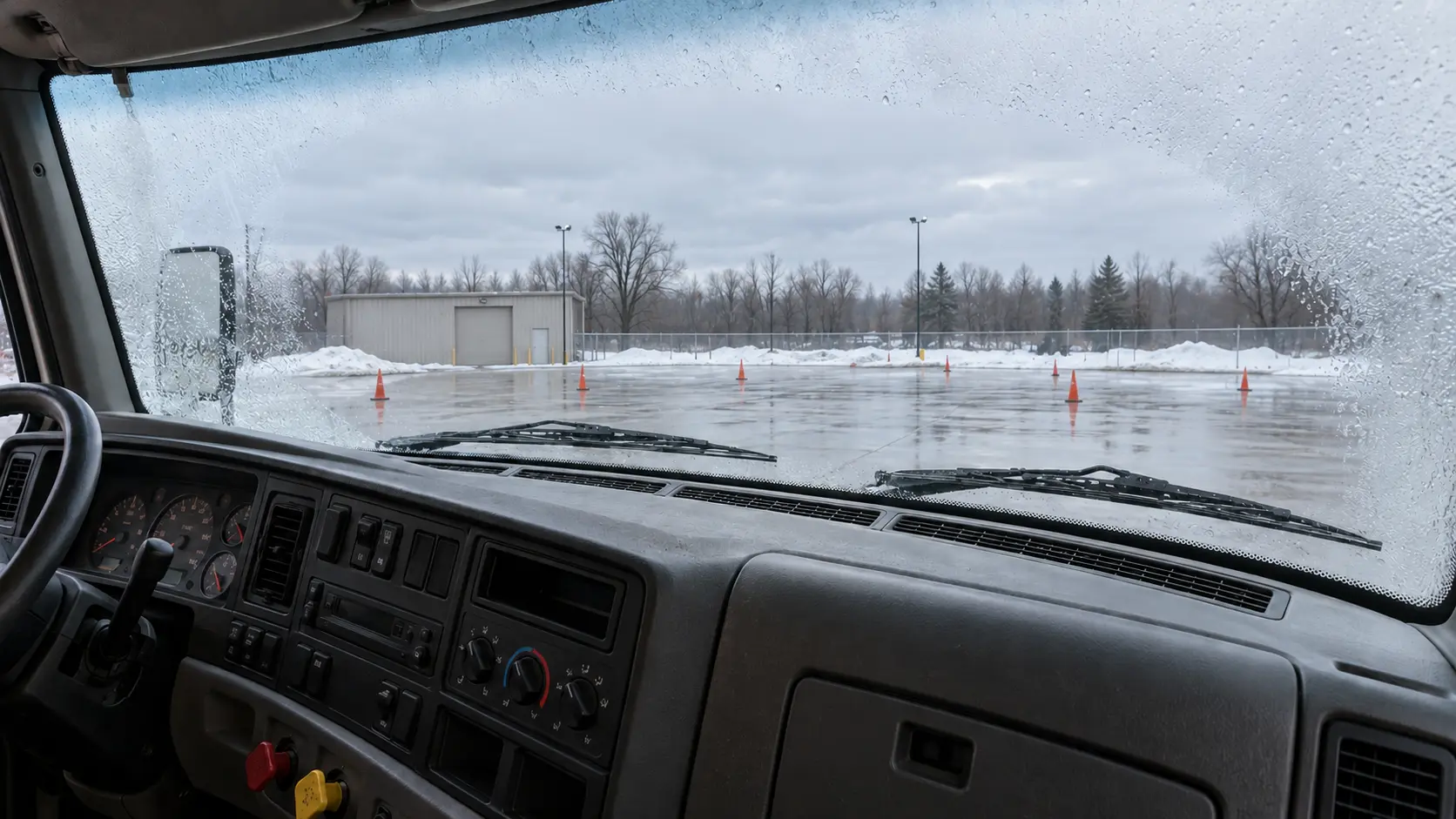
49 CFR 393.79 requires qualifying commercial vehicles to have a windshield defrosting and defogging system, while 49 CFR 393.77 addresses how cab heaters may be constructed and installed. The federal Class A ELDT curriculum also expects trainees to identify and correctly use a commercial vehicle's primary and secondary controls.
Use this routine with ProntoCDL's windshield, wiper and mirror inspection, fuel and exhaust inspection and dashboard gauge guide. The systems overlap, but each check answers a different safety question.
What the federal rules actually require
For vehicles manufactured on or after December 25, 1968, section 393.79 ties the required defrosting and defogging system to the Federal Motor Vehicle Safety Standard applicable when the vehicle was manufactured. A vehicle manufactured before that date must still have a means of preventing ice, snow, frost or condensation from obstructing the driver's view.
That manufacture-date structure matters. The rule does not give every driver one universal “clear the glass in exactly this many minutes” field test. Use the vehicle's approved controls and manufacturer procedure, then make the operational decision that matters before movement: can the system establish and maintain a clear, usable field of view?
Section 393.77 is just as practical. It prohibits heaters that route engine-compartment air or exhaust gas into occupied spaces, heaters that leak fuel, most unenclosed-flame or solid-fuel heaters and portable heaters in occupied areas. It also requires secure mounting and protection of hot or moving parts. A heater is not acceptable merely because it produces warmth.
Start with a safe, stationary setup
Park on a level area when practical, apply the parking brake and place the transmission in neutral or park as appropriate. Before starting, look through the entire windshield from the normal driving position. Note interior fog, exterior frost, ice, snow, road film, chips and cracks. Clear exterior accumulation with appropriate tools rather than expecting the blower or wipers to scrape heavy ice.
Find the fan-speed control, temperature control, windshield-defrost mode and any separate side-window demister vents. Identify fresh-air, recirculation and air-conditioning functions only if installed. A student who cannot find the mode control while parked is not ready to troubleshoot a fogging windshield in traffic.
Do not cover the long outlets at the base of the windshield with paperwork, gloves, a clipboard or electronic equipment. Inspect the visible grille for cracks, missing pieces and debris. A blocked or redirected outlet may leave a dangerous cold spot even when the fan sounds normal.
Use a seven-step defroster and heater check
1. Test every fan speed
With the electrical system configured according to the vehicle procedure, move the blower through its operating range. Listen for a stable fan sound and feel for a meaningful change in airflow. A fan that works only at one speed, cuts in and out, squeals or vibrates deserves a specific report. Noise alone does not prove air is reaching the windshield.
2. Select the windshield mode and verify the outlets
Choose the defrost or defog position and confirm that air exits across the windshield base rather than only from the floor or face vents. Compare the left, center and right portions without placing fingers deep into a grille. Weak air on one side can indicate an obstructed outlet, damaged duct or mode-door problem.
3. Give the heating system time to respond
On many trucks, the cab heater depends on engine coolant and will not produce full heat immediately after a cold start. Follow the approved warm-up procedure and watch the engine instruments rather than raising rpm simply to force warm air. As the system becomes ready, confirm that discharge temperature changes in the expected direction.
A slow warm-up on a very cold morning is not the same as no heat, but a system that never responds, produces erratic temperature or accompanies an abnormal coolant reading needs attention. Connect the HVAC observation to the engine-compartment inspection without opening a hot cooling system.
4. Watch the clearing pattern
The system should open a useful viewing area and continue expanding it without leaving a persistent opaque band directly in the driver's line of sight. Observe the pattern, not just one clear spot. Uneven clearing can reveal a blocked grille, separated duct or airflow imbalance.
Never wipe a small peephole and treat the truck as ready. The driver needs enough visibility to scan the road, mirrors, intersections and vulnerable road users. If conditions exceed the system's ability to keep the glass clear, delay movement or stop in a safe place.
5. Check side visibility
Confirm that the side windows and mirror sight lines remain usable. Some vehicles use dedicated demister outlets; others rely on the main HVAC setting and cabin airflow. Remove exterior snow and ice from the mirrors, then keep the interior glass clean enough that moisture does not cling to an oily film.
6. Test wipers and washer as the companion system
Defroster airflow clears interior moisture and helps with frost, but the wipers and washer manage exterior precipitation and grime. Check blade condition, sweep, park position and washer delivery. Use fluid suitable for expected conditions. Do not run frozen blades across the glass or operate the wipers over heavy ice.
7. Recheck after the cab is occupied
Breathing, wet clothing and tracked-in snow add moisture. After the cab warms, confirm that the windshield does not immediately refog when doors close or operating conditions change. Learn how the assigned truck manages fresh air, recirculation and air conditioning in defrost mode; do not assume another truck's switch sequence is identical.
Separate an airflow fault from a fume hazard
| Observation | Likely category | Safe driver response |
|---|---|---|
| Fan silent at every speed | Electrical, blower or control fault | Do not depend on the system; report it before movement in conditions that can obstruct the windshield |
| Fan sounds normal but little air reaches the glass | Blocked outlet, damaged duct or mode-control fault | Check visible obstructions, avoid dismantling the dash and request repair |
| Airflow is strong but never warms after normal warm-up | Heater, coolant-flow or control issue | Check related instruments and report the exact condition; do not open a hot cooling system |
| Fog repeatedly returns across the driver's view | Moisture load, wrong control selection or inadequate system output | Adjust approved controls, reduce risk and stop safely if a clear view cannot be maintained |
| Exhaust, fuel, burning or electrical odor appears | Possible heater, exhaust or electrical hazard | Stop safely, shut down as appropriate, exit to fresh air and contact emergency or maintenance support |
| Smoke, visible fuel leak or physical heater damage | Immediate unsafe condition | Do not operate the heater or continue the trip; secure the area and follow emergency procedure |
The current New York CDL manual warns that exhaust leaks are especially dangerous where cab ventilation is poor and notes that carbon monoxide can cause sleepiness and death. Do not use odor as the only test—carbon monoxide itself has no useful warning smell. Treat exhaust-system damage, unusual cab air and unexplained drowsiness as reasons to reach fresh air and get qualified help.
Never compensate for a failed installed system with a household space heater, camp heater or open flame. Federal rules specifically prohibit portable heaters in occupied portions of the vehicle except during loading or unloading. Improvised equipment can add fuel, fire, electrical and ventilation hazards without solving the inspection defect.
Make a clear go, delay or stop decision
Go only when the installed controls work as expected, air reaches the windshield, heat responds when available, the glass and mirror sight lines are clear and no unsafe odor or smoke is present. Recheck during the trip as temperature, precipitation and humidity change.
Delay movement when heavy exterior ice still needs removal, the engine has not yet provided enough heat, a minor control question remains unresolved or the system has not demonstrated that it can maintain visibility. Waiting in a safe location is an operational control, not a test failure.
Stop and report when visibility is becoming inadequate, the blower or mode control fails, the windshield repeatedly refogs, smoke appears, a heater leaks fuel or the cab develops a suspicious exhaust, burning or electrical condition. Slow smoothly, increase space and choose a safe stopping location; do not troubleshoot while moving.
Use precise CDL test language
A useful explanation names the control, the observation and the decision: “I select the windshield-defrost mode, operate the blower through its speeds and confirm airflow across the windshield outlets. After normal warm-up, I confirm the system produces heat and clears a broad driving view without unusual odor, smoke or damage. I also check the side-window sight lines, wipers and washer. I will not move if the windshield cannot remain clear.”
Point to the actual controls as you explain them. Avoid claiming that every truck must use the same fan speed, temperature setting or recirculation position. State skills-test wording varies, but accurate observation and a safe no-go decision transfer to any vehicle.
Practical takeaways
- Treat the defroster as required visibility equipment, not a comfort accessory.
- Clear heavy exterior ice and snow before testing; do not make the blower or wipers do scraper work.
- Verify fan speeds, windshield-mode airflow, clearing pattern and side-window sight lines.
- Allow a coolant-based heater a normal warm-up opportunity without forcing engine speed.
- Keep paperwork and equipment off the windshield-base outlets.
- Use the installed HVAC, wipers and washer as one visibility system while inspecting each separately.
- Do not improvise with a portable heater or open flame in an occupied cab.
- Stop when the glass will not stay clear or when smoke, a leak or a suspicious fume condition appears.
CDL defroster and heater FAQ
Is a working defroster required on a commercial truck?
Federal rule 49 CFR 393.79 requires a windshield defrosting and defogging system on vehicles manufactured on or after December 25, 1968, meeting the Federal standard applicable on the manufacture date. Older vehicles must still have a means of preventing ice, snow, frost or condensation from obstructing the driver’s view.
How quickly must a truck defroster clear the windshield?
Section 393.79 does not give drivers one universal field-inspection time for every truck. The applicable vehicle standard, manufacturer procedure, ambient conditions and system design matter. A driver should confirm useful airflow, heat when the engine is ready to provide it and a clear field of view before moving.
Can a driver use a portable heater inside the cab?
49 CFR 393.77 prohibits portable heaters in the occupied portion of a commercial motor vehicle, except while loading or unloading. Do not improvise with a space heater, open flame or other device that was not designed and installed for the vehicle.
Why does the defroster blow cool air just after a cold start?
Many engine-coolant-based heaters need warm coolant before they can deliver substantial heat. Confirm that the fan and windshield mode produce airflow, follow the vehicle warm-up procedure and judge heat output after the system has had a reasonable opportunity to respond.
Should I use recirculate or fresh air to clear fog?
There is no universal switch position for every HVAC design and weather condition. Fresh or drier air often helps remove moisture, while some vehicles automatically manage air conditioning or recirculation in defrost mode. Use the assigned truck’s controls and manufacturer instructions.
What should I do if the windshield refogs while driving?
Increase following space, reduce speed smoothly and reach a safe stopping location before visibility becomes inadequate. Use the installed defrost, wipers and washer correctly, but do not continue blindly or attempt a complicated repair while moving. Secure the vehicle and report a system that cannot maintain a safe view.
Practice the control sequence before the weather changes.
A clear windshield starts with knowing the assigned truck's controls and recognizing the conditions that make movement unsafe.
Start free CDL practice