
CDL Cab Entry Inspection: Doors, Steps & Handholds
A safe cab entrance is a connected system: the door must open and latch correctly, each step must provide dependable footing, every handhold must stay secure, and the driver must use the equipment without jumping or carrying items that break three-point contact.
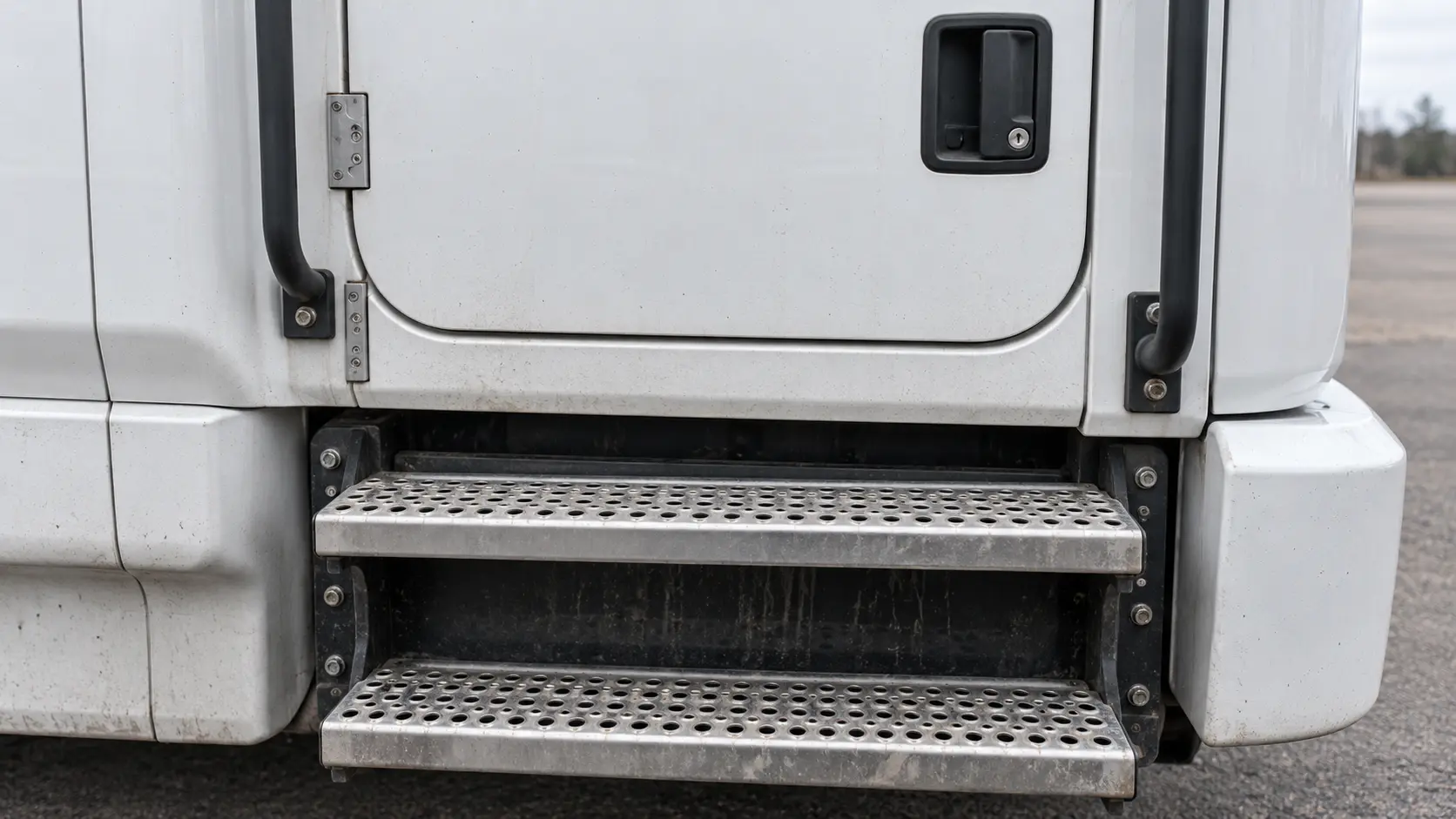
49 CFR 393.203 sets direct federal requirements for cab doors and cab-to-frame mounting hardware. 49 CFR 396.13 also requires the driver to be satisfied that the vehicle is in safe operating condition before driving. This guide turns those duties into a practical entry-area routine. Pair it with the frame and cab-mount guide, engine-compartment guide and post-trip and DVIR guide.
Begin from the ground
Inspect the entrance before putting body weight on it. Stand on firm pavement, keep clear of traffic and compare the whole climbing path from the ground to the door sill. Look for a missing step, bent bracket, loose handle, misaligned door or contamination that could turn the first movement into a fall.
Use a flashlight where a fairing or step box hides the mounts. Do not crawl beneath the truck, pull on wiring or air lines, or use a step as a lever. A driver inspection identifies conditions and reports them; it does not replace qualified repair.
A repeatable cab-entry inspection
- Check the ground and approach. Remove loose debris when it is safe to do so. Treat ice, oil, diesel, mud and standing water as a change in the climbing plan—not a cosmetic issue.
- Inspect each step surface. Confirm the tread, perforations or serrations are present and usable. Look for cracks, bending, sharp edges, worn anti-slip material and packed debris.
- Follow the step mounts. Trace brackets, welds, bolts and the structure they attach to. Watch for missing fasteners, cracked paint around a moving joint, rust trails, fresh polished metal or a step sitting lower on one side.
- Check every handhold. Confirm each handle is present, secure, reachable and free of sharp edges or slippery buildup. Apply only a controlled hand check; do not use a suspect handle to lift your full weight.
- Inspect the door and hinges. Look for missing or broken parts, sag, damaged hinge pins, loose fasteners and contact marks showing that the door rubs the opening.
- Operate the latch from a safe position. The door should open without uncontrolled movement, remain manageable, close fully and latch at the striker. Do not accept rope, wire or an improvised restraint as a substitute for working hardware.
- Scan visible cab mounts. Check accessible brackets and fasteners that secure the cab or body to the frame. Report looseness, missing hardware, cracks or movement marks.
- Check back-of-cab access separately. If the job requires a deck plate to connect air or electrical lines, inspect its walking surface, supports and clearance before stepping onto it.
Component, defect clue and decision
| Inspection point | Defect clue | Safe response |
|---|---|---|
| Step tread | Crack, bend, missing section, packed ice or oil | Do not use until the path is cleaned or the component is evaluated |
| Step bracket | Loose bolt, lifted weld, rust trail, flex | Keep body weight off the step and report the exact mount |
| Grab handle | Movement, damaged grip, sharp edge, poor clearance | Do not climb using that handle; arrange inspection or repair |
| Door and hinges | Sag, binding, missing part, incomplete latching | Hold the vehicle when the entrance or exit cannot work correctly |
| Cab mount | Missing fastener, crack, shifted bracket, polished contact | Report and obtain a qualified safety decision before operation |
| Deck plate | Loose panel, severe corrosion, slippery surface, missing support | Make connections from another approved position only if the equipment and procedure permit it |
What the federal rules say—and what they do not
Section 393.203 says cab entrance or exit doors and door parts may not be missing or broken. A door may not sag so badly that it cannot be properly opened or closed, and it generally may not be wired shut or otherwise secured closed so it cannot be readily opened. The same section requires cab- or body-to-frame bolts and brackets not to be loose, broken or missing. It also addresses the hood, seats and front bumper.
49 CFR Part 399, Subpart L contains detailed requirements for steps, handholds and deck plates—but its scope is specific. It applies to high-profile cab-over-engine trucks and truck-tractors manufactured on or after September 1, 1982. Within that scope, the access design must allow at least three limbs in contact, provide stable intermediate positions, use slip-resistant step or deck surfaces, and supply suitable handholds. Required equipment must be adequately maintained.
Do not copy Part 399 dimensions onto every conventional highway tractor as if they were universal. A conventional tractor’s access system should be evaluated against the equipment design, manufacturer instructions, carrier procedures and the general federal duty to maintain safety-affecting parts in safe operating condition under 49 CFR 396.3.
Use three-point contact without shortcuts
Face the vehicle while entering and exiting. Move one limb at a time so two hands and one foot—or two feet and one hand—remain supported. Pause on a stable step before changing grips. Keep the body close enough that a slip does not become a backward fall.
- Store the phone, paperwork, drink and tools before climbing.
- Do not jump from the cab, even when the ground looks clear.
- Do not use a tire, fuel tank, fairing, bumper or bodywork as an improvised step.
- Clear snow and ice with a tool from the ground when possible; do not discover a slick tread with full body weight.
- Use extra care when footwear is wet, muddy, oily or worn smooth.
- At night, illuminate the step and landing area before the first movement.
The current New York CDL skills-test manual requires a driver making a permitted outside observation to secure the vehicle, face it while exiting and maintain three points of contact. That is a test rule in New York and a sound daily habit anywhere, but applicants should still follow their own state examiner’s current instructions.
Deck plates and back-of-cab access
A deck plate is a working surface, not cargo storage. Before coupling or uncoupling lines, inspect the plate, supports and nearby frame area. Confirm the surface is not loose, severely corroded, obstructed or coated with oil, ice or debris. Check that air lines and the electrical cable can be reached without standing on the frame rail, tire or another non-walking surface.
Maintain three points of contact during the transition from a step to the deck plate. Keep clear of pinch points between tractor and trailer, secure the vehicle and follow the carrier’s coupling procedure. Review ProntoCDL’s air-line and glad-hand guide and fifth-wheel coupling guide before treating back-of-cab access as a separate task.
CDL test language that proves understanding
Point to the actual components and connect condition to function: “The cab door and hinges are not missing or broken; the door opens, closes and latches properly. The steps are present, secure, free of damage and provide a clean anti-slip surface. The handholds are secure and usable. Visible cab mounting hardware is not loose, broken or missing.”
Use the wording that fits the test vehicle. Do not claim a third step, deck plate or exterior handle that is not installed. The Class A ELDT curriculum requires instruction and demonstrated proficiency in pre-trip, en-route and post-trip inspections; the goal is a reliable inspection, not a speech detached from the equipment.
Report defects precisely
A useful report identifies the side, component, location and condition. Record whether the part moves, flexes, binds, fails to latch or is contaminated. Photographs can help when carrier policy permits, but they do not replace a written description or an appropriate repair decision.
Do not climb on suspect hardware to “see whether it holds.” A step or handhold can support a light touch and still fail under a dynamic body load. If the only safe cab access is damaged, stop and arrange the proper response rather than improvising.
Practical takeaways
- Inspect the complete climbing path from the ground before using it.
- Trace every tread, bracket, weld, bolt and grab-handle mount.
- Confirm the cab door opens, closes and latches without sag or an improvised restraint.
- Apply Part 399’s detailed access rules only to the high-profile COE vehicles within its stated scope.
- Face the vehicle and preserve three-point contact through every transition.
- Use only designed steps, handholds and deck plates—not tires, tanks or bodywork.
- Keep hands free and inspect for ice, oil, mud and poor lighting before climbing.
- Report the exact component, location, condition and movement.
CDL cab entry inspection FAQ
What should a CDL driver inspect at a truck cab entrance?
Check the cab door, hinges, latch and striker; every step and tread; each grab handle; visible mounting brackets and fasteners; and any deck plate used for back-of-cab access. Look for missing parts, cracks, looseness, deformation, sharp edges, slippery contamination and anything that prevents the door or access system from serving its intended function.
Does federal law require every Class 8 tractor to have the same step and handhold layout?
No. The detailed dimensional and strength rules in 49 CFR Part 399, Subpart L apply to high-profile cab-over-engine trucks and truck-tractors manufactured on or after September 1, 1982. Conventional tractors may use different manufacturer-designed access systems, but those systems still need a careful safety inspection and the carrier must maintain safety-affecting parts.
What does 49 CFR 393.203 require for cab doors?
Cab entrance and exit doors or door parts may not be missing or broken. A door may not sag so badly that it cannot be properly opened or closed, and it generally may not be wired shut or otherwise secured closed so that it cannot be readily opened.
Should a driver use three-point contact on a conventional tractor?
Yes as a safe work practice. Face the vehicle and keep two hands and one foot, or two feet and one hand, in contact while moving between stable positions. New York also scores safe exit and three-point contact during permitted outside looks on its basic vehicle-control skills test.
Can a driver step on a fuel tank, tire or body panel to reach the cab?
Use only the manufacturer-designed steps, handholds and walking surfaces. A tank, tire, fairing, bumper or body panel may be slippery, curved, damaged or unable to support a climbing load, and it does not provide a predictable hand-and-foot sequence.
What should a cab-entry defect report say?
Name the vehicle side and component, then describe the exact condition and movement. “Driver-side lower step cracked at rear bracket and flexes under light hand pressure” or “upper grab handle loose at lower mount” gives maintenance a usable starting point.
Inspect the path before you climb.
A clean tread is only the beginning: follow every step, mount, handhold and door component, then enter and exit with controlled three-point contact.
Start free CDL practice