
ELD Yard Move vs. Personal Conveyance: CDL Logging Guide
Yard move and personal conveyance are not two names for short driving. They are separate ELD categories with different duty statuses, different purposes and different compliance consequences. The correct choice begins with why the commercial vehicle is moving—not how slowly, how far or whether a trailer is attached.
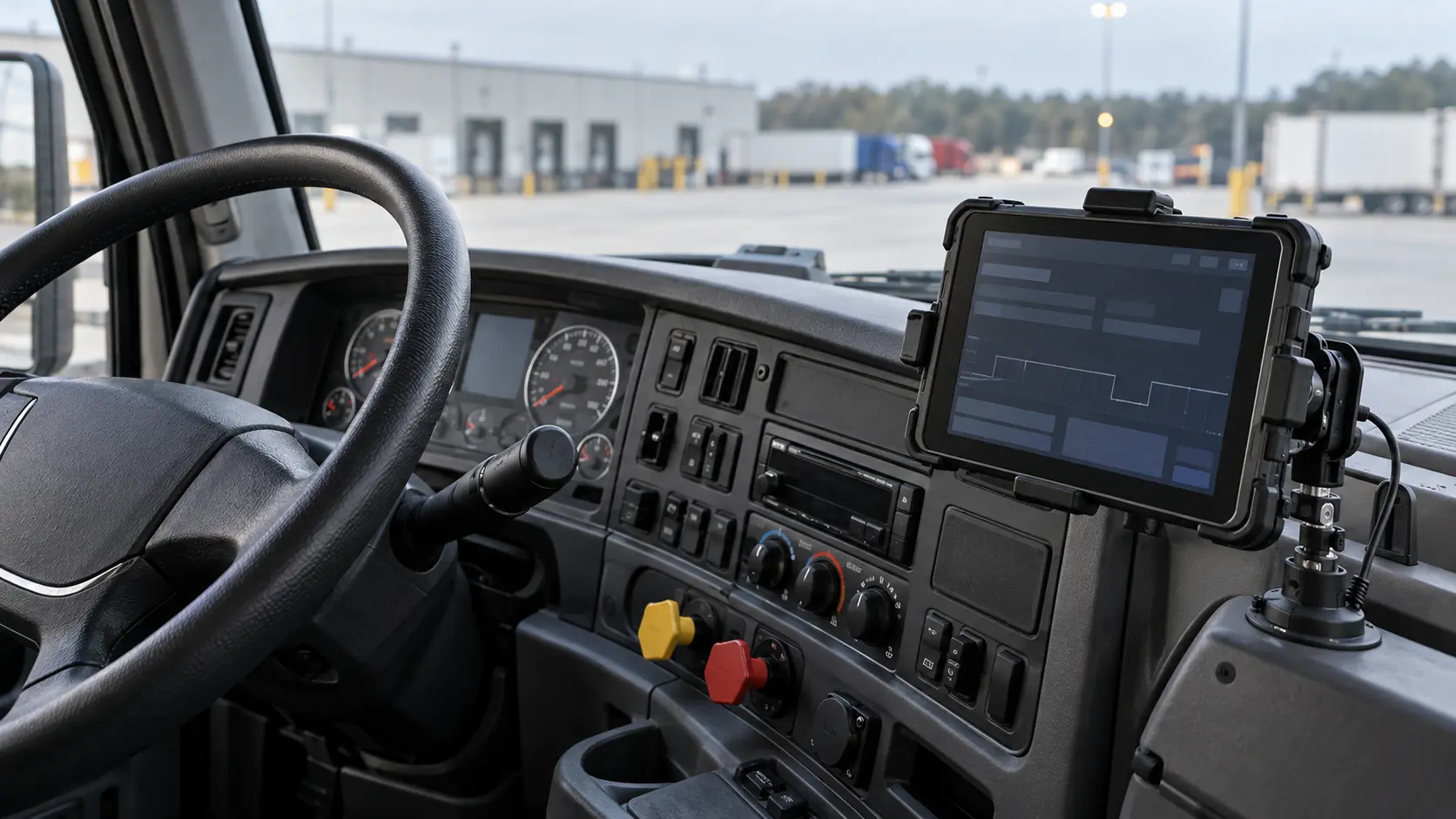
This guide explains the federal baseline for property-carrying drivers. Use it with the ProntoCDL hours-of-service basics, 34-hour restart and recap guide and ELD malfunction guide. A carrier may impose a narrower policy, and a driver must follow the applicable regulation, carrier instructions and ELD procedure.
The one-line difference
| Category | Duty status | Basic purpose |
|---|---|---|
| Yard move | On-duty not driving | Authorized movement that qualifies as a yard movement under the carrier’s compliant policy. |
| Personal conveyance | Off duty | Authorized personal use after the driver has been relieved from work and all responsibility for performing work. |
| Normal CMV movement | Driving | Movement that serves the trip, carrier, load, dispatch or another business purpose and does not qualify for a special category. |
The federal ELD specification makes this distinction directly. When yard move is selected before motion, the device keeps the record on-duty not driving. When authorized personal use is selected with off-duty status, the record remains off duty. If neither applies, the ELD automatically records driving when the CMV moves.
What federal rules say about on-duty time
49 CFR 395.2 defines driving time as all time spent at the driving controls of a CMV in operation. It also defines on-duty time as the period from when a driver begins work or must be ready to work until the driver is relieved from work and all responsibility for performing it. Inspection, loading, unloading, carrier work and attending a disabled CMV are among the activities included as on duty.
That definition prevents a common shortcut: selecting a label cannot turn carrier work into off-duty rest. A movement made to stage equipment, continue a delivery, reach maintenance, meet dispatch or prepare the carrier for its next assignment remains work even if it covers only a few feet.
How yard move works
Yard move is a special driving condition—not a fifth duty-status line. Under the ELD functional specifications, the driver first uses on-duty not driving and then indicates yard move. The ELD records the category, requires an annotation and displays that period separately on the graph.
Examples that may fit a carrier’s yard-move policy include repositioning a tractor between numbered spaces inside a controlled terminal, moving a combination from a dock to an inspection lane, or shifting equipment within a private distribution yard. These examples are not automatic approvals. The driver must know the carrier’s authorized locations and procedure before moving.
A low speed does not create a yard move. Neither does bobtailing, being empty, remaining under one mile or moving after the driver’s driving limit is exhausted. The operating purpose and location must actually fit the authorized category.
How personal conveyance works
FMCSA defines personal conveyance as CMV movement for personal use while off duty. The driver must be relieved from work and all responsibility for performing work. The vehicle can be laden; the decisive question is whether the movement is for the driver’s personal purpose rather than the carrier’s commercial benefit at that time.
FMCSA examples of appropriate use include travel from en-route lodging to a restaurant, an authorized commute between a terminal and the driver’s residence, movement to the first nearby reasonable safe place to obtain required rest after loading or unloading, and movement requested by a safety official during off-duty time. Each example still depends on the full facts and a carrier may prohibit or limit personal conveyance.
Personal conveyance cannot be used to improve the carrier’s operating position. FMCSA lists movements toward the next pickup or delivery, repositioning a tractor or trailer at carrier direction, travel to maintenance and returning to a terminal after loading or unloading as examples that do not qualify.
Five decision questions before selecting a category
- Am I fully relieved from work? If the carrier still requires the movement or the driver remains responsible for a task, personal conveyance is not the correct status.
- Who benefits from the movement? A movement that advances a load, positions equipment, reaches maintenance or prepares the next assignment serves a business purpose.
- Is this a carrier-authorized yard and movement? Do not invent a yard boundary or assume every customer lot qualifies.
- Which duty line should remain visible? Yard move remains on-duty not driving; qualifying personal conveyance remains off duty.
- Can I explain the event in one factual annotation? The note should identify purpose and location without vague phrases such as “moving truck.”
Common scenarios compared
| Scenario | Likely treatment | Reason |
|---|---|---|
| Moving from a terminal parking row to its fuel island while working | Yard move if authorized; otherwise driving | The movement is carrier work and cannot be personal conveyance. |
| Driving from a truck stop to a nearby restaurant after being fully relieved | Personal conveyance if carrier-authorized | The movement is personal and does not advance the load. |
| Bobtailing toward tomorrow’s shipper to reduce the morning distance | Driving | Being empty does not remove the business purpose. |
| Moving from a receiver to the first nearby reasonable safe parking location for rest | May qualify as personal conveyance | FMCSA guidance permits the first reasonably available rest location when the driver is relieved. |
| Taking the tractor to a repair shop | On-duty driving | FMCSA identifies travel to maintenance as a non-qualifying use. |
| Repositioning trailers inside a controlled distribution yard | Yard move if authorized | The time remains on duty even though the ELD special category may prevent line 3 driving. |
These are study examples, not permission for a specific trip. The exact property, route, carrier policy, dispatch instruction and driver release status control the answer.
Carrier controls built into the ELD
The ELD standard requires motor carriers to configure which special categories are available to each driver. A new account defaults to none being enabled. The carrier can authorize or remove personal conveyance and yard move separately, and FMCSA allows a carrier’s personal-conveyance policy to be more restrictive than the federal guidance.
If the button is missing, do not borrow another driver’s login, create an unidentified event or select an inaccurate duty status. Record the movement under the proper available status and contact the carrier through its documented process.
Annotations that help instead of hide
The ELD prompts for an annotation when a special driving category is selected. Use a short, factual explanation that can stand beside dispatch messages, gate records, fuel receipts and location data.
- Useful yard-move note: “On-duty yard move: dock 18 to terminal inspection lane.”
- Useful personal-conveyance note: “Off duty: first available safe parking after receiver released driver.”
- Weak note: “YM,” “PC,” “needed parking” or “dispatch said okay.”
An annotation explains the record; it does not make an ineligible movement legal. Choose the category before moving, describe the real purpose and end it when that purpose ends.
Power cycles and status checks
The ELD specification normally resets a special-driving indication after the engine or device powers off and back on. Authorized personal use is the exception: the ELD may ask the driver to confirm that it continues. Without confirmation, motion defaults away from the special condition.
Build a three-second habit before every movement: verify the driver profile, current duty status and special-driving indicator. At the end, cancel the category, choose the accurate duty status and review the event on the graph.
Correcting a mistake
An ELD must preserve the original record and the history of edits. Driver edits require annotations, carrier-requested edits require the driver’s confirmation or rejection, and automatically recorded driving time generally cannot be shortened or erased except for limited assignment corrections.
- Stop changing statuses until the vehicle is safely parked.
- Review the event, vehicle, driver profile, location and actual purpose.
- Use the ELD’s correction or annotation function and state what happened.
- Notify the carrier under its log-correction procedure.
- Accept only an edit that makes the record true; reject an edit that would conceal work or driving.
- Re-certify the affected day after the record is corrected.
If the problem is a device malfunction rather than a selection error, follow the separate backup-record process in the ELD malfunction guide.
Practical takeaways
- Choose by purpose, responsibility and location—not distance, speed, load status or trailer connection.
- Yard move is on-duty not driving; personal conveyance is off duty.
- Carrier authorization is required because the carrier enables the categories and may use a stricter policy.
- Personal conveyance cannot advance a load, reposition equipment for business or move the truck toward the next assignment.
- Select and annotate the category before moving, then end it as soon as the qualifying purpose ends.
- Review the graph and certify an accurate record; never use an edit to hide automatically recorded driving.
ELD yard move and personal conveyance FAQ
Is a yard move off-duty time?
No. On a compliant ELD, yard move is paired with on-duty not driving. The special category prevents qualifying yard movement from being displayed as line 3 driving, but the time remains on duty and counts toward the driver’s applicable limits.
Can a driver use personal conveyance in a loaded truck?
A loaded CMV is not automatically disqualified. FMCSA guidance allows personal conveyance while laden only when the driver is relieved from work and the movement is genuinely personal, not transporting the load for the carrier’s commercial benefit at that time. Carrier policy may be more restrictive.
Can personal conveyance be used to move closer to the next pickup?
No. Moving the vehicle to improve the carrier’s operational position—such as bypassing an available rest location to get closer to the next pickup or delivery—is not personal conveyance under FMCSA guidance.
Does every ELD have to show personal conveyance and yard move buttons?
The ELD technical standard supports the categories, but the motor carrier controls whether each category is enabled for a particular driver. New driver accounts default to none of the special categories being available until the carrier configures them.
What happens to yard move after the engine is shut off?
The ELD special-driving indication normally resets after a power cycle. Personal conveyance is treated differently: the device may prompt the driver to confirm that authorized personal use continues. Drivers should verify the displayed status before any movement.
Can automatically recorded driving time simply be changed to yard move later?
ELD rules do not allow automatically recorded driving time to be shortened or erased except for limited assignment corrections. If a status was selected incorrectly, preserve the original record, add an accurate annotation and follow the carrier’s correction process rather than trying to conceal the movement.
Make the status match the real movement.
Know who directed the trip, who benefits from it and which duty line must remain visible before the wheels turn.
Start free CDL practice