
CDL Roadside Inspection Guide: Levels, Documents and Driver Readiness
A roadside inspection becomes easier when the driver can present one accurate compliance story: the correct credential, a current log, organized trip documents and a vehicle that was inspected before dispatch. Preparation matters more than trying to predict which inspection level will occur.
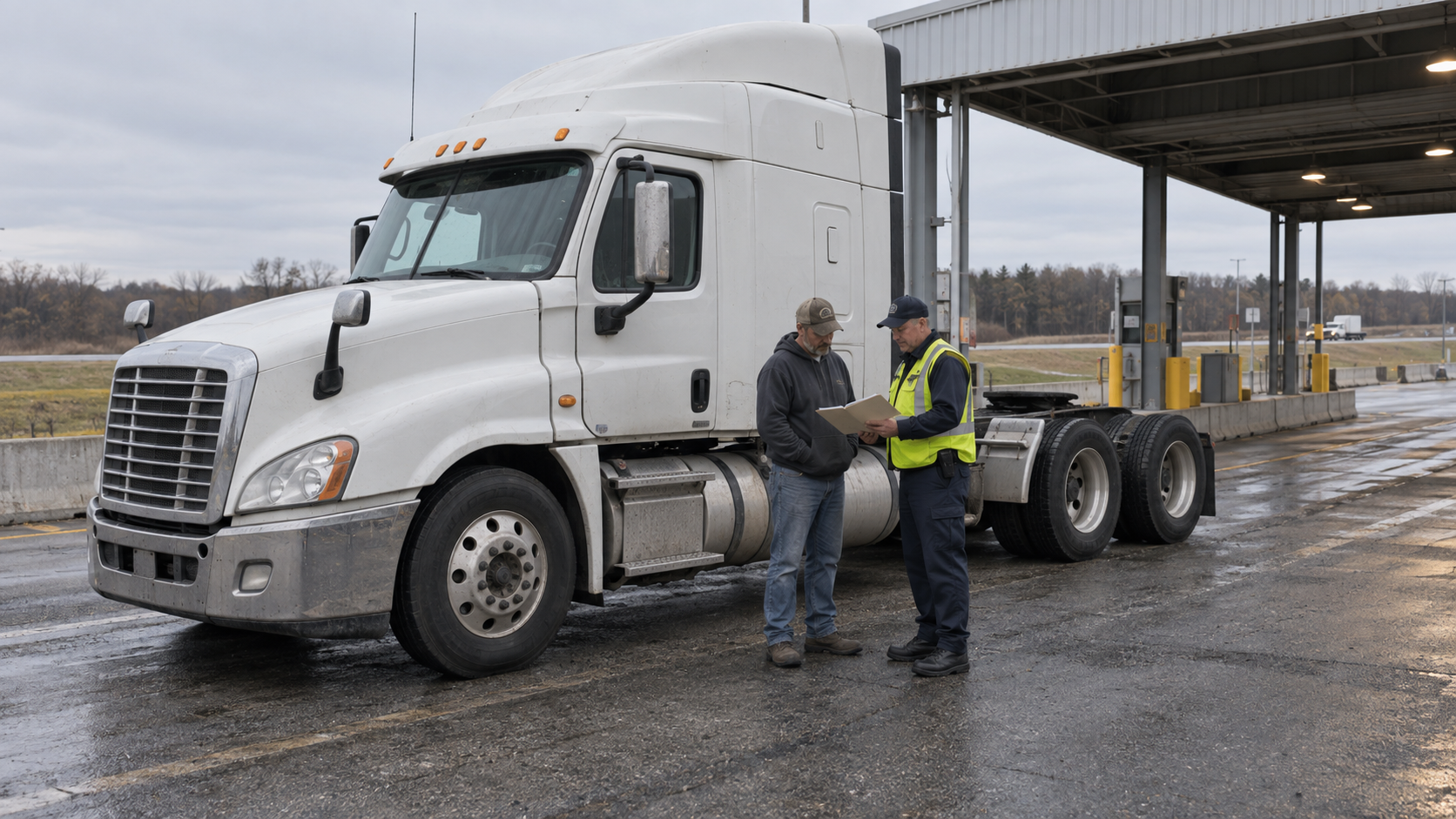
Roadside inspections may happen at weigh stations, border checkpoints, terminals or after an enforcement stop. Not every traffic stop becomes a formal inspection, and not every inspection examines the same items. This guide explains the current North American Standard inspection levels and turns federal requirements into a practical driver routine.
The eight roadside inspection levels
The Commercial Vehicle Safety Alliance publishes eight inspection levels used within the North American Standard framework. Drivers will most often hear about Levels I, II and III, but understanding the complete list prevents the common mistake of treating every inspection as the same event.
| Level | Primary scope | Driver takeaway |
|---|---|---|
| I | North American Standard driver and vehicle inspection | Credentials, HOS and many vehicle systems are examined; the procedure includes items beyond a walk-around |
| II | Walk-around driver and vehicle inspection | Includes applicable driver items and vehicle components that can be examined without physically getting under the vehicle |
| III | Driver, credential and administrative inspection | Focuses on license, medical status when applicable, HOS records, seat belt, carrier identification and related records |
| IV | Special inspection | Usually targets one item for a study or suspected trend |
| V | Vehicle-only inspection | Covers the Level I vehicle items without the driver present |
| VI | Selected radioactive-material shipments | Adds specialized radiological requirements to enhanced Level I procedures |
| VII | Jurisdiction-mandated inspection | Covers a local program that does not meet another level, such as certain school-bus or intrastate inspections |
| VIII | Electronic inspection | Required data is checked electronically or wirelessly while the vehicle is moving, without direct officer interaction |
The exact definitions and minimum items appear on the CVSA inspection-level page. Inspection procedures are for certified personnel; a driver’s job is to cooperate safely and keep the operation ready.
Organize the document set before dispatch
Do not build a roadside folder from memory after being stopped. FMCSA’s vehicle and driver inspection readiness card tells carriers and drivers to confirm that required in-vehicle and driver documents are current before dispatch.
The applicable packet may include:
- Driver’s license or CDL with the class and endorsements required for the vehicle and load
- Medical Examiner’s Certificate, waiver or Skill Performance Evaluation certificate when applicable
- Current record of duty status and the ability to display or transfer required ELD records
- Registration for the power unit and each trailer being operated
- Periodic inspection documentation for each applicable vehicle
- Shipping papers, bills of lading and cargo-specific documentation
- Hazardous-material permits, route plan and emergency information when applicable
- Insurance and jurisdiction-specific credentials such as IFTA or IRP documents when required
Electronic medical reporting has changed what many CDL holders carry, and temporary exceptions can affect paper-proof expectations. Review the ProntoCDL medical-card guide and verify current State record status before driving.
Make the ELD presentation routine, not improvised
Before the trip, log in under the correct driver account, review unidentified-driving events, certify records as required and know how the device displays and transfers logs. 49 CFR 395.22 requires an in-vehicle information packet with transfer instructions, malfunction instructions and enough blank graph-grid records for at least eight days.
During the inspection, use the supported transfer method the official requests. Do not hand over a personal password or guess through menus while driving. If the device cannot record or transfer correctly, follow the documented malfunction process in the ProntoCDL ELD malfunction guide.
The vehicle check starts before the inspection lane
Federal rules place responsibility on both the carrier and the driver. Under 49 CFR 396.3, carriers must systematically inspect, repair and maintain controlled vehicles so parts and accessories remain in safe and proper operating condition. Before driving, 49 CFR 396.13 requires the driver to be satisfied that the vehicle is safe, review the last required DVIR and acknowledge required repair certification.
Build one consistent walkaround rather than a separate “inspection-week” routine. Pay special attention to systems that appear in the Level I and II descriptions:
- Service and parking brakes, visible hoses, chambers and connections
- Steering, suspension, frame, axles, wheels, rims, hubs and tires
- Headlamps, stop and turn lamps, clearance lamps and required reflectors
- Coupling devices, driveline and trailer connections
- Cargo securement, doors and load-specific equipment
- Fuel and exhaust systems, windshield and wipers
- Emergency equipment and seat-belt condition
Use the ProntoCDL DVIR guide to connect one driver’s defect report to the next driver’s pre-trip decision, and review the tire inspection guide for a repeatable wheel-position check.
What to do when directed into an inspection
- Follow the lane and officer’s signals. Slow early, avoid abrupt moves and stop exactly where directed.
- Secure the vehicle. Set the parking brake, use the transmission position instructed for the procedure and wait for further direction.
- Communicate clearly. Answer the question asked, identify the document or system accurately and say when you need clarification.
- Present current records. Retrieve the organized packet and operate the ELD only as directed.
- Do not perform unrequested actions. Wait before opening the hood, releasing brakes, switching lamps or leaving the cab.
- Read the result. Before departing, understand every noted violation, warning, restriction and required next step.
Roadside communication is ordinary safety work. The ProntoCDL English-proficiency guide offers realistic preparation for answering official questions and explaining trip, log and equipment information.
Log the inspection correctly
FMCSA guidance says roadside inspection time is logged as on duty, not driving. If the vehicle is stopped for at least 30 consecutive minutes with no driving, the agency says that period can satisfy the property-carrier 30-minute break requirement. It remains on-duty time and still counts where on-duty hours apply. See the FMCSA roadside-inspection HOS FAQ.
Understand the four practical outcomes
- No violations noted. Keep the report under carrier procedures and return to service when released.
- Violation without an out-of-service order. A defect can still require prompt correction even when movement is allowed.
- Vehicle placed out of service. The vehicle cannot be operated until all repairs required by the notice are satisfactorily completed.
- Driver placed out of service. The driver cannot operate until legally permitted to do so under the applicable order and rules.
Do not treat “not out of service” as “safe to ignore.” Notify dispatch or safety promptly, follow the report and do not conceal, erase or minimize a condition that affects safe operation.
After the inspection: report, repair and retain
49 CFR 396.9 governs the vehicle inspection report. The driver must deliver a copy to the carrier at the next terminal or facility; if not scheduled to arrive there within 24 hours, the driver must immediately transmit the report. Intermodal-equipment operations have an additional delivery duty to the applicable provider.
The carrier or intermodal equipment provider must examine the report and correct noted violations or defects. Within 15 days of the inspection, it must certify that the violations were corrected, return the completed form if requested by the issuing State agency and retain a copy for 12 months. A separate driver out-of-service order under 49 CFR 395.13 must be delivered or mailed by the driver within 24 hours to the carrier-designated recipient.
Practical takeaways
- Prepare for Levels I–III without assuming which procedure will occur.
- Verify credentials, logs, registrations, inspection proof and shipping documents before dispatch.
- Know the ELD display and transfer steps while the truck is parked.
- Use the same complete vehicle-inspection routine every operating day.
- Follow inspection-lane directions and communicate with accurate, direct answers.
- Log roadside inspection time as on duty, not driving.
- Transmit the report promptly and never move a vehicle or driver that remains out of service.
CDL roadside inspection FAQ
Is every roadside inspection a full Level I inspection?
No. Inspectors use different procedures depending on the inspection level and circumstances. A Level I combines driver and vehicle items, Level II is a walk-around driver and vehicle inspection, and Level III focuses on driver, credential and administrative items.
Which documents should a CDL driver have ready?
The exact set depends on the operation, but it may include the CDL, medical or exemption documents when applicable, record of duty status, vehicle registrations, periodic inspection documents, shipping papers, permits and cargo-specific records. Verify the dispatch packet before departure.
How should roadside inspection time be logged?
FMCSA guidance says time spent in a roadside inspection is on-duty, not driving. If the stop includes at least 30 consecutive minutes with no driving, that period can satisfy the property-carrier 30-minute break requirement, but it does not become off-duty time.
Can a vehicle move after it is placed out of service?
Generally, no. A vehicle marked out of service may not be operated until every repair required by the out-of-service notice is satisfactorily completed. The towing exceptions in 49 CFR 396.9 are narrow and should be handled by the carrier and qualified professionals.
What must a driver do with the inspection report?
Deliver or transmit it to the carrier promptly under the timing in 49 CFR 396.9. The carrier must address noted violations, certify correction within 15 days, return the form if the issuing State requests it and retain a copy for 12 months.
Does a clean inspection mean the next inspection can be skipped?
No. Inspection selection and level are determined by enforcement procedures and current circumstances. Readiness is a daily operating habit, not a document that prevents future inspections.
Build a roadside-ready routine
Practice the vehicle walkaround, organize the trip packet and learn the ELD transfer steps before the next dispatch.
Start free CDL practice